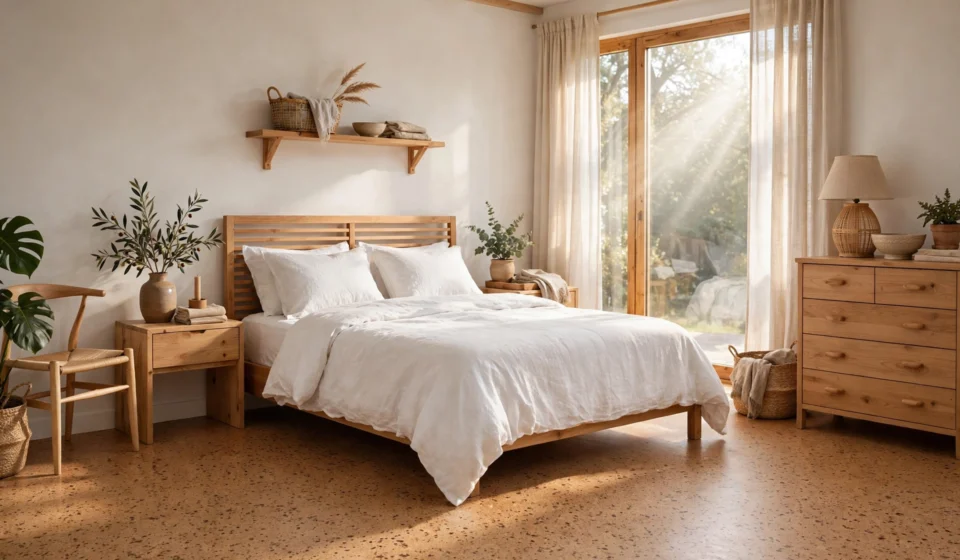

What is cork flooring? It is a floor made from the bark of the cork oak tree, pressed into tiles or planks that feel soft, warm, and quiet underfoot. Cork has been used as a floor for over a century. Yet many buyers still meet it for the first time when they look for a natural floor. It looks like wood or stone in some styles, and like speckled cork in others.
This guide explains what cork flooring is, how it is made, and where it works well. You will learn its pros and cons, which rooms suit it, and how to care for it. By the end, you will know whether cork is the right floor for your home.
What Is Cork Flooring?
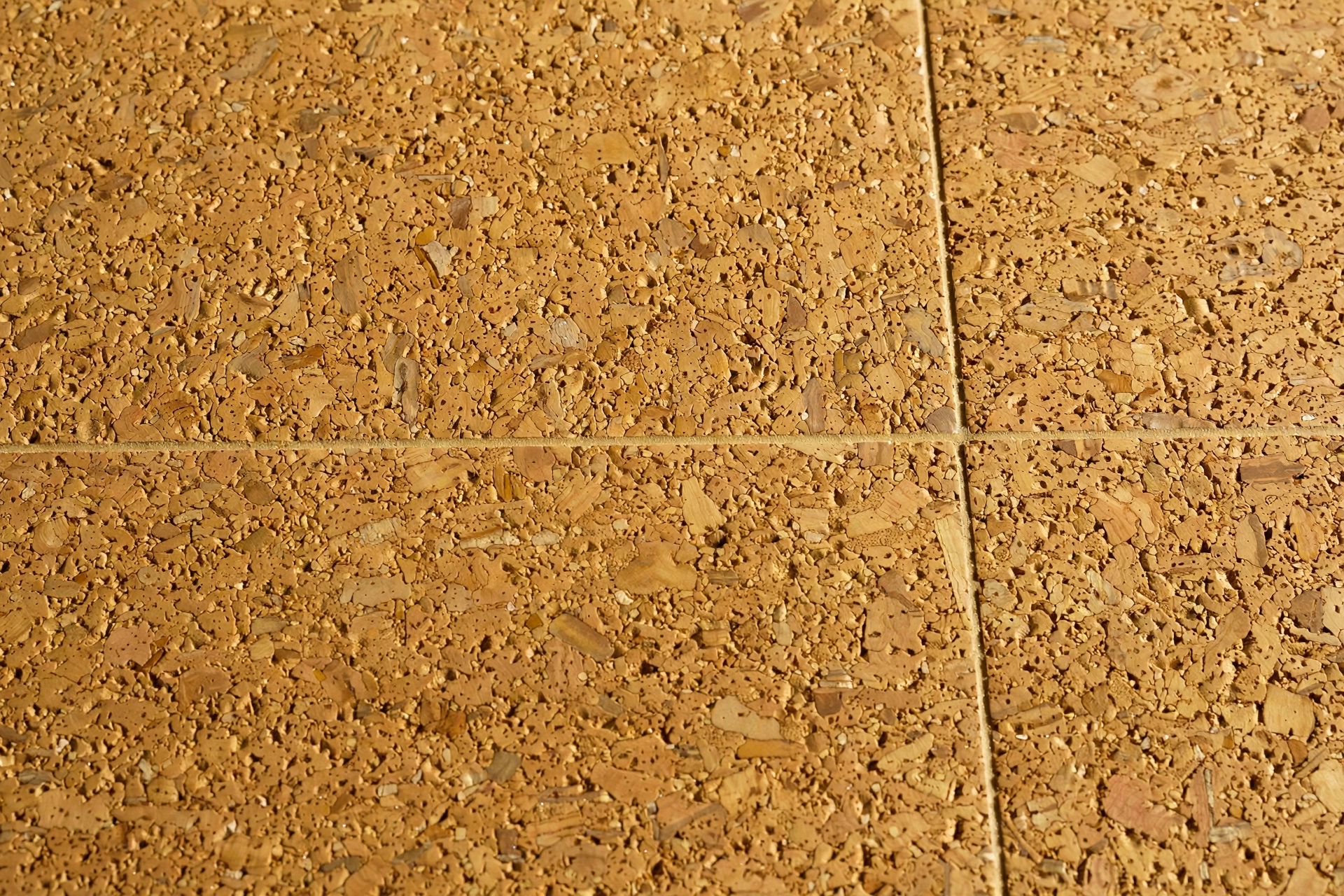
Cork flooring is a floor covering made from cork bark, the thick outer bark of the cork oak tree. The bark is harvested by hand every nine years or so, and the tree is not cut down. The bark grows back, which makes cork a renewable material. The harvested bark is ground into granules, pressed with a binder, and cut into tiles or planks.
A cork floor feels different from any other hard floor. It is soft and springy underfoot, because cork is full of tiny air cells that compress when you step on them. It feels warm to the touch, even in winter, and it absorbs sound well. Many people choose cork for a bedroom, a study, or a playroom, where comfort and quiet matter most.
Cork flooring comes in two main forms. Glue-down tiles are thin cork tiles stuck to the subfloor with adhesive. Floating planks have a cork top on a fibreboard core, and they click together like laminate. Both forms show the natural speckled look of cork, or a printed wood or stone design.
How It Is Made
Cork flooring starts in a cork oak forest, mainly in Portugal and Spain. Workers strip the bark from the tree by hand, taking care not to harm the living layer below. The tree then grows a fresh layer of bark, and the same tree can be harvested many times over its life. This cycle makes cork one of the most renewable floor materials.
The harvested bark is boiled, dried, and ground into small granules. The granules are mixed with a binder and pressed into large blocks under heat and pressure. Those blocks are sliced into tiles or planks, then sanded smooth and finished. A clear seal or a wax finish protects the surface from water and stains.
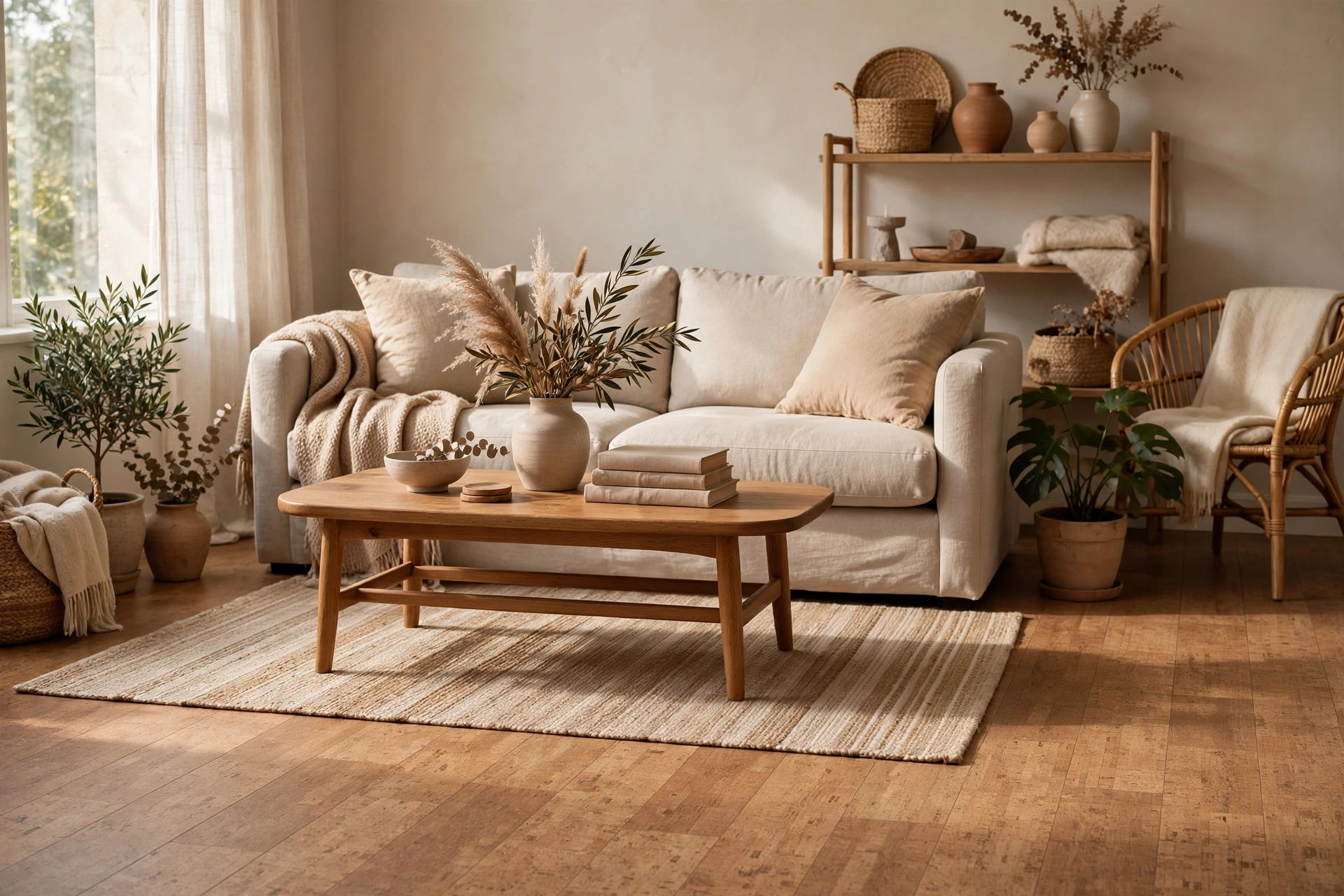
Some cork floors add a printed design layer on top of the cork. These floors copy wood planks or stone tiles, with the soft cork feel below. The print is sealed under a wear layer, so the design stays clear with normal use. Whether plain or printed, the cork below gives the floor its warmth and spring.
Pros of Cork Flooring
Comfort is the first strength of cork flooring. The air cells in cork compress under your feet, so the floor feels soft and forgiving. It is kind to knees and joints, and it is a good pick for rooms where you stand for long periods. Dropped glasses are less likely to break on cork than on tile or stone.
Warmth is the second strength, and it shows in winter. Cork is a natural insulator, so it does not feel cold under bare feet. It also insulates against sound, which makes rooms quieter and reduces noise between floors. A cork floor in an upstairs bedroom can make the room below noticeably quieter.
Cork is also a natural and renewable choice. The bark grows back after harvest, and the tree stays alive for many cycles. Cork resists mould and mildew, and it does not hold dust the way carpet can. For buyers who want a natural floor with a soft feel, cork is hard to match.
Cons of Cork Flooring
Cork flooring has real limits, and water is the first one. Cork can absorb water if it is not sealed well, and standing water can stain or swell it. It is not a good pick for a bathroom, a laundry room, or any room where water pools. Even in a kitchen, spills need quick cleaning to avoid marks.
Dents and scratches are the second limit to know. Heavy furniture can leave dents in cork, because the soft surface compresses under weight. Sharp heels and pet claws can scratch the finish, though a good seal helps. Felt pads under furniture and rugs in busy spots reduce most of this wear.
Sunlight is a third limit that buyers often miss. Strong direct sun can fade cork over time, especially the natural speckled styles. Curtains or blinds in a sunny room help a lot. Cork also needs resealing every few years, because the finish wears down with use. That upkeep is simple, yet it is more than vinyl or tile needs.
Where It Works Best
Cork works best in rooms where comfort, warmth, and quiet matter most. Bedrooms are a natural fit, because cork feels warm under bare feet in the morning. A study or a home office suits cork too, since it is quiet and kind to feet during long hours at a desk. Playrooms benefit from the soft surface, which cushions falls.
Living rooms can suit cork as well, if the traffic is moderate and furniture has felt pads. A cork floor with a wood-look print can blend into a living room without drawing attention. Dining rooms work too, though chairs need pads to avoid dents and scratches.
Cork also suits flats and upstairs rooms, because it cuts sound between floors. A landlord or a flat owner may pick cork to reduce noise for the neighbours below. It is less suited to entryways, where wet shoes and grit wear the finish fast. For those rooms, a harder floor is a better pick.
Where It Does Not Work
Wet rooms are the main place to avoid cork flooring. Bathrooms, laundry rooms, and shower areas expose the floor to standing water, which cork cannot handle well. Even a sealed cork floor can swell or stain if water sits on it. A wet room needs a tile or vinyl floor instead.
Kitchens are a borderline case that needs care. Cork can work in a kitchen if spills are wiped up fast and the floor is sealed well. Yet the sink and the dishwasher are constant water risks, and a leak can damage the floor. Many owners choose a harder floor for the kitchen and save cork for drier rooms.
Busy commercial spaces are also a poor fit for cork. High heels, heavy trolleys, and constant traffic wear the soft surface fast. Sunrooms with strong direct sun can fade cork over time. If your room is wet, very busy, or very sunny, look at a harder floor. The guide to the best vinyl flooring shows water-friendly options. The guide to the best laminate flooring covers hard-wearing wood-look floors.
Care and Maintenance
Caring for cork flooring is simple if you follow a few rules. Sweep or vacuum often, because grit and sand scratch the finish. Use a soft brush head on the vacuum, not a beater bar. Damp mop with a well-wrung mop and a mild cleaner made for cork or wood floors. Never flood the floor with water, and wipe up spills as soon as you see them.
Furniture needs protection on a cork floor. Put felt pads under chair and table legs, and use wide castor cups under heavy items. Lift furniture to move it, rather than dragging it across the floor. Rugs in busy spots help a lot, yet use a rug without a rubber backing, which can trap moisture.
Resealing keeps a cork floor in good shape. Check the finish each year, and reseal when water stops beading on the surface. A thin coat of the right sealant restores the protection. If a tile is badly damaged, a glue-down tile can be replaced on its own. Floating planks can also be swapped, though the job is fiddlier.
Is Cork Flooring Right for You?
Cork is right for you if you want a warm, quiet, and natural floor. It suits buyers who spend a lot of time at home, work from a home office, or have children who play on the floor. It is also a good pick if you want a floor with a small environmental footprint.
Cork is less right for you if your rooms are wet, very busy, or in strong sun. A bathroom, a busy hallway, or a sunroom will wear cork fast. If you have large dogs, their claws can scratch the finish, so you may need a harder floor. Match your rooms to the floor before you buy.
Cost is another factor to weigh. Cork flooring often costs more than basic vinyl, yet it can cost less than solid hardwood. Think about the full cost, including sealing and upkeep, not just the tiles. If the price fits and your rooms suit cork, it is a floor that rewards its owners.
FAQ: What Is Cork Flooring?
Is cork flooring waterproof?
No, cork flooring is not waterproof, though a good seal makes it water resistant. Standing water can stain or swell cork, so spills need quick cleaning. Cork is not a good pick for bathrooms or laundry rooms.
How long does cork flooring last?
A well-cared-for cork floor can last for decades in a dry room with moderate traffic. The finish needs resealing every few years, and heavy wear can dent the surface. With simple care and timely resealing, cork stays comfortable for a long time.
Is cork flooring good for bedrooms?
Yes, cork is a strong pick for bedrooms. It feels warm under bare feet, absorbs sound, and is soft to walk on. It also suits studies, playrooms, and upstairs rooms where quiet matters.
Can you put cork flooring in a kitchen?
Cork can work in a kitchen if spills are wiped up fast and the floor is sealed well. The sink and dishwasher are water risks, so many owners pick a harder floor for the kitchen instead. If you choose cork, seal it well and keep a mat by the sink.
Does cork flooring scratch easily?
Cork can scratch from sharp heels, pet claws, and grit under shoes. Felt pads under furniture, rugs in busy spots, and regular sweeping reduce most scratches. A good finish also helps, and it can be resealed when it wears.
Is cork flooring eco-friendly?
Yes, cork is one of the most renewable floor materials. The bark is harvested by hand and grows back, while the tree stays alive. Cork is also natural, and it does not hold dust the way carpet can.
Free Tool: Flooring Cost Estimator
Before you buy, it helps to know what your floor might cost in total. The Flooring Cost Estimator works out a rough cost for your room from its size and the type of floor you pick. Try it here: Flooring Cost Estimator
Conclusion
What is cork flooring? It is a natural floor made from cork oak bark, soft and warm underfoot, quiet, and kind to feet and joints. It suits bedrooms, studies, and playrooms, where comfort and quiet matter most. It is renewable, easy to care for, and it brings a warm, natural look to a room.
Cork is not the right floor for wet rooms, very busy spaces, or strong sun. It needs sealing, quick spill cleaning, and felt pads under furniture to stay in good shape. Match the floor to the room, care for it simply, and cork will give you a warm and comfortable floor for many years.