


The best rubber gym flooring is chosen on two numbers: thickness for impact and density for stability under a rack. Everything else, from tile size to edge pieces, is layout convenience once those two are settled.
We researched eight top-rated gym flooring options, from thick rubber-topped puzzle tiles to a denser TPE tile, verifying thickness, coverage, and construction against each listing. There are no lab tests and no prices here, only the practical differences in density, coverage, and locking design that decide which floor protects both the weights and the room beneath.
Quick Verdict
Best Overall: AIRHOP 0.56in 48 Sq Ft — a rubber top over high-density foam, with enough coverage for a full rack area
Best for Heavy Lifting: Baselayer Performance 1/2 in TPE — denser TPE tiles that resist compression under heavy equipment
Best Value Coverage: SUPERJARE 30×30 56.3 Sq Ft — the largest coverage per set in this comparison
Quick Comparison Table
| Product | Best For | Key Spec / Feature | Check Price |
|---|---|---|---|
 AIRHOP 0.56in 48 Sq Ft Gym Flooring | Free weights and machines | 0.56in thick, 48 sq ft, rubber top over EVA foam | Check Price on Amazon |
 Baselayer Performance Interlocking Tiles | Racks and plate storage | 1/2 inch TPE tiles, 30 sq ft, 12 pack | Check Price on Amazon |
 SUPERJARE 30×30 Exercise Equipment Mats | Largest coverage per set | 30 x 30 inch tiles, 0.56 inch thick, 56.3 sq ft | Check Price on Amazon |
 AIRHOP 0.79in Thick Gym Flooring | More cushioning, same footprint | 0.79 inch thick, 48 sq ft, rubber top | Check Price on Amazon |
 SUPERJARE 0.56in Rubber Top Gym Flooring | Rubber surface for less | 0.56 inch thick, 48 sq ft, rubber top over EVA | Check Price on Amazon |
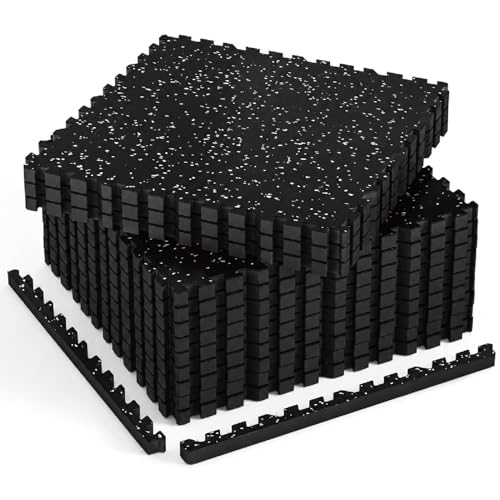 AIRHOP 1in Ultra-Thick Gym Flooring | Damping impact noise | 1 inch thick, 48 sq ft, rubber top | Check Price on Amazon |
 Haulcove 18 Pc EVA Foam Floor Tiles | Small stretching areas | 18 tiles, 12.6 x 12.6 x 0.4 inch, 18 sq ft | Check Price on Amazon |
 SUPERJARE 0.79in Extra-Thick Mats | More cushion at mid-range | 0.79 inch thick, 48 sq ft, 12 tiles | Check Price on Amazon |
Thickness and Density for Lifting — What This List Actually Checked
This list is for home gyms, garages, and basement training spaces where equipment weight and floor protection both matter.
- Thickness in inches, since impact absorption scales with it
- Density and material, because foam compresses where rubber resists
- Coverage per set, which decides how much floor you actually get
- Interlocking edges and expansion gaps, because tiles move under load
Read the comparison table and each pick’s Best for and Skip if line, then open full reviews only for the options whose coverage matches your space.
These are researched picks from current listings rather than lab-tested claims, and every thickness and coverage figure was verified on the product page.
1. AIRHOP 0.56in 48 Sq Ft Gym Flooring — Best Overall Rubber-Top Mat
Best for: Home gyms with free weights and machines that need a mid-thickness rubber surface. | Skip if: You plan to drop loaded barbells from overhead.
Check On The Amazon.comDisclosure: As an Amazon Associate, I earn from qualifying purchases.
| Spec | Detail |
|---|---|
| Thickness | 0.56 inches |
| Coverage | 48 sq ft (12 tiles) |
| Construction | Rubber top, high-density EVA foam |
| Tile size | 24 x 24 inches |
Reasons to Buy
- Rubber surface resists wear from shoes and equipment
- Twelve tiles cover a useful training footprint
- Puzzle edges hold together under foot traffic
Reasons to Avoid
- Foam core compresses under very heavy racks
- Joins can open if laid without expansion space
The rubber top is what makes this practical, because it resists abrasion while the foam core keeps the mat manageable to handle. At 0.56 inch it suits dumbbells, benches, and machines rather than dropped barbells, which is the realistic use case for most home gyms.
2. Baselayer Performance Interlocking Tiles — Best for Heavy Equipment
Best for: Racks, plate storage, and heavier equipment where compression matters. | Skip if: You want the cheapest possible coverage.
Check On The Amazon.comDisclosure: As an Amazon Associate, I earn from qualifying purchases.
| Spec | Detail |
|---|---|
| Thickness | 0.5 inches |
| Coverage | 30 sq ft (12 tiles) |
| Material | TPE, rubber-like, not foam |
| Origin | Made in USA |
Reasons to Buy
- Denser TPE resists compression under equipment
- Odour-free compared with many rubber tiles
- Interlocking design suits a fixed rack footprint
Reasons to Avoid
- Thirty square feet is modest for a full room
- Higher outlay than foam-based options
Density is what separates a gym floor that lasts from one that develops soft spots under a rack, and TPE tiles resist that compression better than foam cores. With 30 square feet you are buying a lifting platform area rather than a whole room, which is the honest trade at this density.
3. SUPERJARE 30×30 Exercise Equipment Mats — Best Coverage per Set
Best for: Larger home gym areas where coverage matters more than tile count. | Skip if: Your space is small and nine large tiles would need cutting.
Check On The Amazon.comDisclosure: As an Amazon Associate, I earn from qualifying purchases.
| Spec | Detail |
|---|---|
| Thickness | 0.56 inches |
| Coverage | 56.3 sq ft (9 tiles) |
| Tile size | 30 x 30 inches |
| Surface | Rubber top over EVA foam |
Reasons to Buy
- Largest coverage in this comparison
- Larger tiles mean fewer seams to manage
- Rubber top resists scuffing
Reasons to Avoid
- Big tiles are harder to handle alone
- Fewer pieces means less flexibility in odd rooms
Coverage per set is the number that decides how much of your floor actually gets protected, and 56.3 square feet is the most here. Larger tiles also mean fewer joints, which is where foam-based mats usually start to separate under load.
4. AIRHOP 0.79in Thick Gym Flooring — Best Mid-Thick Option
Best for: Training spaces that need more cushioning without a full platform build. | Skip if: You need maximum density under a heavy rack.
Check On The Amazon.comDisclosure: As an Amazon Associate, I earn from qualifying purchases.
| Spec | Detail |
|---|---|
| Thickness | 0.79 inches |
| Coverage | 48 sq ft (12 tiles) |
| Construction | Rubber top, EVA foam core |
| Tile size | 24 x 24 inches |
Reasons to Buy
- Nearly 0.8 inch of cushioning for floor protection
- Same 48 square feet as the thinner version
- Rubber surface resists daily wear
Reasons to Avoid
- Thicker foam feels softer under heavy loads
- Heavier to move and reposition
Thickness buys protection for the floor underneath, and 0.79 inch is a meaningful step up from the mid range. The trade is softness: more cushion means more compression under a heavy rack, so it suits dumbbells and cardio equipment rather than a loaded squat stand.
5. SUPERJARE 0.56in Rubber Top Gym Flooring — Best Mid-Range Value
Best for: Garage gyms that want a rubber surface without a premium outlay. | Skip if: You need the densest tile available.
Check On The Amazon.comDisclosure: As an Amazon Associate, I earn from qualifying purchases.
| Spec | Detail |
|---|---|
| Thickness | 0.56 inches |
| Coverage | 48 sq ft (12 tiles) |
| Construction | Rubber top, EVA foam |
| Colour | Black and grey |
Reasons to Buy
- Rubber top at a mid-range position
- 48 square feet covers a bench area
- Interlocking tiles assemble without tools
Reasons to Avoid
- Foam core is softer than TPE tiles
- Colour options are limited
This sits where most home gyms actually land: enough rubber to handle shoes and dumbbells, and enough thickness to protect a garage floor. It is not the densest option, and for a bench-and-dumbbell setup it does not need to be.
6. AIRHOP 1in Ultra-Thick Gym Flooring — Best Maximum Cushioning
Best for: Basements and upper floors where impact noise needs damping. | Skip if: You lift heavy and need a firm surface underfoot.
Check On The Amazon.comDisclosure: As an Amazon Associate, I earn from qualifying purchases.
| Spec | Detail |
|---|---|
| Thickness | 1 inch |
| Coverage | 48 sq ft (12 tiles) |
| Construction | Rubber top, high-density EVA |
| Use | Home gym, floor protection |
Reasons to Buy
- One inch of cushioning damps impact noise
- Protects floors in basements and upper rooms
- Rubber surface handles daily traffic
Reasons to Avoid
- Very soft under heavy lifts
- Bulky to store or move
An inch of foam is about noise and floor protection rather than lifting performance, because that much cushion makes heavy squats unstable. For a basement or an upstairs room where impact sound matters, that is the right trade to make.
7. Haulcove 18 Pc EVA Foam Floor Tiles — Best Budget Starter Set
Best for: Small workout corners and stretching areas rather than weight rooms. | Skip if: You plan to put a rack or heavy dumbbells on it.
Check On The Amazon.comDisclosure: As an Amazon Associate, I earn from qualifying purchases.
| Spec | Detail |
|---|---|
| Thickness | 0.4 inches |
| Coverage | 18 sq ft (18 tiles) |
| Material | EVA foam |
| Tile size | 12.6 x 12.6 inches |
Reasons to Buy
- Very low outlay for a starter area
- Small tiles suit odd-shaped spaces
- Light enough to move or store
Reasons to Avoid
- Foam compresses under weights
- Only 18 square feet of coverage
This is a stretching and bodyweight mat rather than a weight-room floor, and judged that way it makes sense. Small tiles fit awkward corners, and the low outlay suits someone testing whether a home workout habit will stick before investing in rubber.
8. SUPERJARE 0.79in Extra-Thick Mats — Best Extra-Thick Value
Best for: Garage gyms that want more cushioning at a mid-range outlay. | Skip if: You need firm density under a heavy bar.
Check On The Amazon.comDisclosure: As an Amazon Associate, I earn from qualifying purchases.
| Spec | Detail |
|---|---|
| Thickness | 0.79 inches |
| Coverage | 48 sq ft (12 tiles) |
| Construction | Rubber top, high-density EVA |
| Colour | Black and grey |
Reasons to Buy
- Thicker foam for floor protection
- 48 square feet of coverage
- Rubber top resists wear
Reasons to Avoid
- Soft under heavy loads
- Tiles are bulky to handle alone
This is the value version of extra thickness: nearly 0.8 inch of cushioning across 48 square feet without moving into a denser material. It suits a home gym where the floor needs protecting and the weights are dumbbells rather than a loaded bar.
Quick Decision
The picks below are based only on product features — every bullet comes from that pick’s own spec table or its own Reasons to Buy.
Best overall: AIRHOP 0.56in 48 Sq Ft Gym Flooring
- Rubber top resists wear
- 48 square feet of coverage
- Interlocking assembly
Best for heavy lifting: Baselayer Performance Interlocking Tiles
- Dense TPE resists compression
- Odour-free material
- Suits a fixed rack footprint
Best coverage: SUPERJARE 30×30 Exercise Equipment Mats
- 56.3 square feet
- Fewer seams
- Rubber top
What Rubber Gym Flooring Actually Protects
It Protects the Floor, Not the Bar
A mat absorbs impact and spreads load so the slab or timber beneath survives. It does not make a bar bounce, and expecting that leads people to buy thicker foam than they need.
Density Beats Thickness Under Load
A denser 0.5 inch tile resists compression better than a soft 1 inch foam mat under a rack. Thickness protects the floor; density protects the mat itself.
Expansion Gaps Matter
Tiles move slightly under load and temperature change, so leaving a small gap at walls prevents buckling. That is why installations that butt tight against skirting tend to lift at the edges.
What was left out and why: foam-only yoga mats and commercial roll rubber were excluded because this list covers interlocking home gym tiles, and options without stated thickness or coverage were dropped rather than estimated. Impact attenuation is not independently measured here.
FAQ: Rubber Gym Flooring
How thick should home gym flooring be?
Around half an inch suits dumbbells, benches, and machines. An inch is for impact noise rather than lifting, and heavy racks need density more than thickness.
Will foam tiles hold up under weights?
They compress and eventually tear under concentrated load. Rubber-topped or TPE tiles resist that far better.
Do I need expansion gaps?
Yes, a small gap at walls prevents buckling as tiles move under load and temperature change.
Is rubber gym flooring smelly?
New rubber can off-gas for a few days. TPE options are usually lower odour, which matters in a spare room rather than a garage.
Conclusion
For most home gyms the AIRHOP 0.56 inch set is the sensible choice, because a rubber top over a foam core balances wear resistance with manageable weight. Choose the Baselayer TPE tiles for a rack and the SUPERJARE 30 inch set when coverage is the priority.
Next, measure the footprint you want to protect and decide whether density or cushioning matters more for your equipment, then check coverage per set. Order about ten percent extra so edges and cuts can be squared off without running short.


