


A bagless canister vacuum gives you the two smartest ideas in floor care at once. First, a slim wand slides under furniture while the body trails behind. Second, a clear bin ends bag purchases forever. That convenience carries one honest price — you trade bags for a small maintenance loop of emptying, rinsing filters, and wiping the bin.
We compared five bagless canisters pulled from the live Amazon catalog, sorting by cyclone design, bin hygiene, and the surfaces each floorhead genuinely serves. The field runs from an honest entry-level starter to a premium German cyclone, with a pet-hair specialist and a feature-loaded mid-range machine between them.
The sections below decode how cyclonic separation loads filters and why the emptying cloud is the real cost of bagless life. They also cover which heads suit bare floors versus rugs. If sealed disposal matters more to you than skipping bags, our bagged canister vacuum guide covers that trade the other way.
Quick Verdict
Best Overall: Eureka WhirlWind NEN110A — the balanced bagless canister for mixed floors and honest budgets
Best Budget: BISSELL Zing 2156A — a tidy entry-level canister that keeps ownership costs near zero
Best Premium: Miele Blizzard CX1 — engineered cyclonic airflow that holds suction where cheaper bins fade
Quick Comparison Table
| Product | Key Specs | Check Price |
|---|---|---|
| Eureka WhirlWind NEN110A Bagless Canister Vacuum | Lightweight bagless canister for carpets and hard floors, blue | Check Price on Amazon |
| BISSELL Zing 2156A Canister Bagless Vacuum | Compact entry-level bagless canister, washable Cyclonic layout | Check Price on Amazon |
| Aspiron 1600W Bagless Canister Vacuum, 4Qt | 1600W motor, auto cord rewind, H13 HEPA, 4-quart bin, 5 tools | Check Price on Amazon |
| Kenmore 500 Series Bagless Canister Vacuum | 2-motor cyclonic pull, HEPA filtration, 24 ft auto cord rewind, hair eliminator brushroll | Check Price on Amazon |
| Miele Blizzard CX1 Turbo Team Bagless Canister | Engineered cyclonic airflow, turbo brush for hard floors and low-medium pile | Check Price on Amazon |
The Picks
1. Eureka WhirlWind NEN110A Bagless Canister Vacuum — Best Overall
 Check On The Amazon.com
Disclosure: As an Amazon Associate, I earn from qualifying purchases.
| Type | Bagless canister |
| Surfaces | Carpets and hard floors |
| Weight | Lightweight class |
| Filters | Rinseable |
| Cord | Corded |
| Best for | Mixed-floor homes |
The NEN110A wins the center of this category by refusing extremes. It stays light enough to trail all day, capable enough on carpet, and honest on bare floors, with a washable filtration loop that never mentions bags. For most households, this is the canister the decision actually needs.
Respect its two boundaries: empty it weekly rather than when stuffed, and expect filter rinsing to join your monthly rhythm. Meet it there and it runs for years without drama.
✅ Reasons to buy
- Handles carpets and bare floors without head-swapping drama
- Light, slim body slides under beds and sofas willingly
- Washable filters keep the running cost close to zero
- Compact canister is easy to carry between rooms
❌ Reasons to avoid
- Single-cyclone layout loads the filter faster than multi-cyclone rivals
- Modest bin wants emptying weekly in busy homes
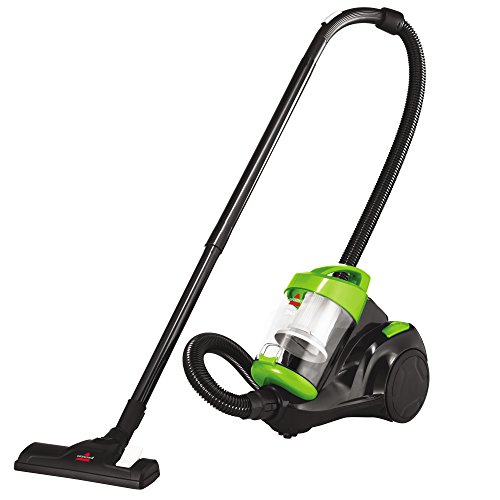
2. BISSELL Zing 2156A Canister Bagless Vacuum — Best Budget
 Check On The Amazon.com
Disclosure: As an Amazon Associate, I earn from qualifying purchases.
| Type | Bagless canister |
| Class | Entry price |
| Bin | Compact, washable |
| Filters | Rinseable |
| Use | Small homes, dorms, apartments |
| Best for | Tight budgets |
The Zing makes the bagless canister case at an entry-level price: a compact body, a washable bin and filter loop, and nothing complicated enough to break. Apartments, student flats, and first homes are exactly its jurisdiction.
It is a small-machine experience by design, so treat frequent emptying as part of the deal. For tight spaces and tighter budgets, it remains the default answer.
✅ Reasons to buy
- The cheapest honest bagless canister in this field
- Compact body stores in closet gaps bigger machines cannot use
- Simple layout means fewer parts to fail or clog
❌ Reasons to avoid
- Shorter wand and narrower head slow big rooms down
- Filter rinsing needs discipline and the small bin fills fast
3. Aspiron 1600W Bagless Canister Vacuum, 4Qt — Best for Pet Hair
 Check On The Amazon.com
Disclosure: As an Amazon Associate, I earn from qualifying purchases.
| Type | Bagless canister |
| Motor | 1600W |
| Filtration | H13 HEPA |
| Bin | 4-quart large |
| Tools | 5-piece set |
| Best for | Pet-hair homes |
Pet homes multiply two problems at once — hair volume and airborne dander — and the Aspiron answers both. A genuinely large 4-quart bin survives shedding season, and an H13 HEPA stage stops the invisible half from recycling back into the room.
The five-tool kit reaches sofa seams, crevices, and car seats where hair hides. Handle the HEPA cartridge gently during washes and it repays you for years.
✅ Reasons to buy
- Four-quart bin swallows shedding-season hair volume without daily dumps
- H13 HEPA stage traps the dander that triggers the sneezes
- Five tools cover upholstery, crevices, and the car in one kit
- Auto cord rewind keeps storage tidy
❌ Reasons to avoid
- Bigger body than the budget canisters, so storage needs a real spot
- Wash the HEPA stage gently or its life shortens
4. Kenmore 500 Series Bagless Canister Vacuum — Best Mid-Range Feature Set
 Check On The Amazon.com
Disclosure: As an Amazon Associate, I earn from qualifying purchases.
| Type | Bagless canister |
| Suction | 2-motor cyclonic |
| Filtration | HEPA |
| Cord | 24 ft auto rewind |
| Brushroll | Hair eliminator |
| Best for | Feature-rich mid-range |
The 500 Series is the mid-range argument in one sentence. Keep the bagless bin, then add a second motor, HEPA media, a hair-dismissing brushroll, and a genuinely long auto-rewind cord. Homes with rugs, pets, and long rooms get the whole toolkit in one purchase.
You pay for the extras in weight and price, both fair trades at this tier. If your shortlist has a feature checklist column, this row fills it fastest.
✅ Reasons to buy
- Two motors push cyclonic pull deeper into rugs than single-motor peers
- Hair eliminator brushroll actively sheds wrap instead of storing it
- Auto cord rewind at 24 feet ends the wrapping ritual
- HEPA media keeps exhaust air clean for sensitive noses
❌ Reasons to avoid
- Heaviest of the non-premium picks on this list
- Feature set costs more than the plain-layout budget picks
5. Miele Blizzard CX1 Turbo Team Bagless Canister — Best Premium
 Check On The Amazon.com
Disclosure: As an Amazon Associate, I earn from qualifying purchases.
| Type | Bagless canister |
| Cyclone | Engineered Miele airflow |
| Head | Turbo brush |
| Pile | Low to medium |
| Filtration | Maintenance-free exhaust |
| Best for | Premium build seekers |
The CX1 exists for buyers who want the bagless idea executed without the usual compromises. Miele’s cyclone architecture holds airflow at depth, the bin-and-filter cycle is engineered for clean emptying, and the exhaust air comes out genuinely filtered.
Deep plush carpet is the wrong job for its turbo head, as with most of this category. On bare floors, rugs, and low-to-medium pile, it is the bagless canister finished properly.
✅ Reasons to buy
- Cyclonic engineering keeps airflow flat where cheaper bins sag
- Build quality measured in seasons of weekly duty, not months
- Sealed exhaust stage protects the air you just cleaned
❌ Reasons to avoid
- Premium price of the list by a wide margin
- Turbo head tops out at low-to-medium pile carpet
Bagged or Bagless: Pick Your Chore
Bagless ends bag spending forever, but it asks for a rinse-and-wipe loop in return. Empty the bin weekly, rinse the filters monthly, and accept that emptying releases a small dust puff indoors. Bagged machines flip the deal. Sealed bags keep your hands and air away from dust, at the cost of buying bags for the life of the machine.
Airflow tells the same story: bagged suction stays flatter as the bag fills, while bagless suction tracks your maintenance discipline. The honest decision is not about specs — it is about which chore you would rather own.
How Cyclonic Separation Decides Suction
Bagless does not mean filterless; it means the cyclone is the first filter. Multi-cyclone layouts spin fine dust out of the airstream before it reaches the media, so the washable filter loads slowly and suction persists. Single-cyclone bins let more fines through, which loads filters fast and quietly strangles airflow between rinses.
The practical takeaway beats the marketing: multi-cyclone machines tolerate lazy maintenance better, while single-cyclone buys demand disciplined rinsing. A visible dust layer forming on the filter after each session is the early warning that your layout is loading fast.
Bin Hygiene and the Emptying Cloud
Every bagless design eventually releases a puff of reintroduced dust at the bin, and machines differ only in how much. Bottom-door bins emptied low into a tall trash stream release the least, while lid-flip designs held at chest height indoors release the most. Static-charged fine dust clings either way and deserves a damp wipe after the dump.
One habit solves most of it: carry the bin to an outside door or deep utility sink, empty low and slow, then wipe the seams. Allergy sufferers should pair the habit with a sealed-HEPA model, covered in our HEPA vacuum cleaner guide.
Matching the Floorhead to Your Floors
Canisters live or die by their floorhead, not their motor. Bare floors want soft bristles or felt set low, so grit is swept rather than sprayed across the room. Rugs want the brush raised and airflow opened, while mixed-floor homes want a head that switches without tools.
Check the head before the horsepower. All five picks above carry bare-floor-capable heads, and the Eureka and Miele rows are the safest pure-hard-floor choices. For rugs buried in pet hair, our canister vacuum guide for pet hair ranks machines by brushroll behavior.
Frequently Asked Questions
Do bagless canisters lose suction as the bin fills?
Yes, gradually: cyclones slow as the bin crowds, and filters shed airflow as they load. Emptying at two-thirds full and rinsing filters on schedule keeps the loss mostly theoretical.
Are bagless canister vacuums good for pet hair?
The right ones are. Look for a large bin to hold shedding volume, an H13-class HEPA stage for dander, and a tangle-minded brushroll. The Aspiron and Kenmore rows above were picked on exactly those three traits.
How often should I wash a bagless canister filter?
Rinse when the filter looks gray, typically monthly under weekly duty. Let it dry a full day before refitting, because a damp filter installed early grows the mildew smell owners wrongly blame on the machine.
Why does my bagless vacuum smell after cleaning?
Residue in the bin seams and a persistently damp filter are the two usual sources. Wash the bin with warm soapy water monthly, dry both parts fully, and the sour note leaves with them.
Are bagless vacuums bad for allergies?
Not if the exhaust is sealed and the emptying happens low, outdoors or at a sink. The risk point is the dump, not the cleaning itself, and HEPA-exhaust models plus a careful emptying habit close most of the gap.
Bagless or bagged canister: which should I buy?
Choose bagless to end bag spending and accept a rinse routine. Choose bagged for sealed disposal, flatter airflow, and zero contact with dust at empty time.
🔍 Free Tool: Vacuum Finder Quiz
Answer 6 quick questions — get your top 3 vacuum matches.
Conclusion
Buy the cyclone and the bin, not the watts. The Eureka NEN110A wins balance, the Zing covers tight budgets and small homes, and the Aspiron rules wherever pet hair sets the volume. The Kenmore 500 earns the feature-list vote, while the Blizzard CX1 justifies its premium price with premium build.
Adopt the empty-low habit and the wash-day rhythm, and the bagless promise finally pays off. If you want the full form-factor picture, our canister vacuum guide ranks bagged and bagless machines side by side.


