

The best carpet for pets is a carpet that can handle claws, muddy paws, and accidents without holding smells or showing stains. Pets bring joy to a home, yet they also bring dirt, hair, and the odd mess. A carpet chosen for looks alone can turn into a problem within months.
The good news is that modern carpets are far tougher than the ones your parents had. Stain-treated fibres, low pile, and smart backing choices make a real difference in a pet home. This guide explains what to look for, which carpet types work best, and how to keep your carpet fresh.
What Makes Carpet Pet-Friendly?

Stain resistance is the first thing to look for in a pet-friendly carpet. A stain-treated fibre resists spills and accidents, giving you time to blot and clean before a mark sets. Look for carpets sold as stain resistant or pet friendly, and ask what the treatment covers. Some treatments resist food and drink well, yet struggle with pet urine, so read the details.
A low pile is the second key feature. Short, dense fibres are easier to vacuum and harder for claws to snag. They also dry faster after cleaning, which helps stop smells from settling in. Deep, shaggy carpet traps hair and dirt, and it takes far longer to clean well.
Colour and pattern matter more than many people think. A mid-tone carpet with a flecked or patterned design hides pet hair and light dirt between vacuums. Very pale carpet shows every mark, while very dark carpet shows light hair clearly. A warm mid-tone is often the most forgiving choice for a pet home.
Best Carpet Types for Pets
Nylon is often called the best carpet fibre for pet homes, and it earns that name. It is strong, springs back after foot traffic, and takes stain treatment well. Nylon resists crushing from heavy furniture and pet traffic, so it keeps its look longer than softer fibres. It costs more than some other fibres, yet the extra life often makes it worth the price.
Polyester is another good choice for pet owners. It is naturally stain resistant, since its fibres do not absorb liquids as fast as some others. Polyester feels soft underfoot, which pets and people both enjoy. Its main weakness is that it can crush under heavy traffic, so it suits bedrooms and low-traffic rooms better than busy hallways.
Triexta, often sold under the SmartStrand name, is a newer fibre that handles pet messes very well. It resists stains at the fibre level, not just on the surface, so accidents are easier to clean. Triexta is soft, strong, and holds its shape well. Wool is the fibre to avoid in most pet homes, since it absorbs liquids, stains easily, and costs a lot to clean.
Carpet Pile and Construction
Pile height shapes how a carpet behaves with pets. A low pile, under a quarter inch, is the easiest to clean and the hardest for claws to catch. It also dries fast after a spill or a deep clean. Medium pile can work in bedrooms, yet it traps more hair and needs more vacuuming.
Loop pile carpets, such as Berber, look smart and resist crushing well. Yet the loops can snag on pet claws, and a pulled loop can unravel into a run. If you have a cat that scratches or a dog with long nails, a cut pile is a safer choice than a loop pile.
Cut pile carpets have fibres cut at the top, so there is nothing for a claw to hook. A dense, short cut pile is the best mix for a pet home. Check the carpet density by bending a sample back: if you can see the backing easily, the carpet is too thin for heavy pet traffic. A dense carpet with a good backing lasts longer and cleans better.
What to Avoid
Deep shag carpet is the worst choice for a pet home. Its long fibres trap hair, dirt, and smells, and they are very hard to vacuum well. Pet claws catch in the fibres, and accidents sink deep where cleaning cannot reach. Shag may look cosy, yet it becomes a chore within weeks.
Light-coloured carpet is another risk. White and pale cream carpets show every muddy paw print and every stain. Even with stain treatment, a pale carpet in a pet home needs constant care. If you love a light look, save it for a room your pets rarely enter.
Avoid carpets with a weak backing or no stain treatment. A thin backing lets liquids reach the underlay, where smells settle and grow. Untreated natural fibres such as wool and sisal absorb pet messes fast and are hard to clean. For stairs, where pets run up and down all day, the guide to the best carpet for stairs is worth a look. It covers dense, hard-wearing options that hold up under paws.
Cleaning and Maintenance

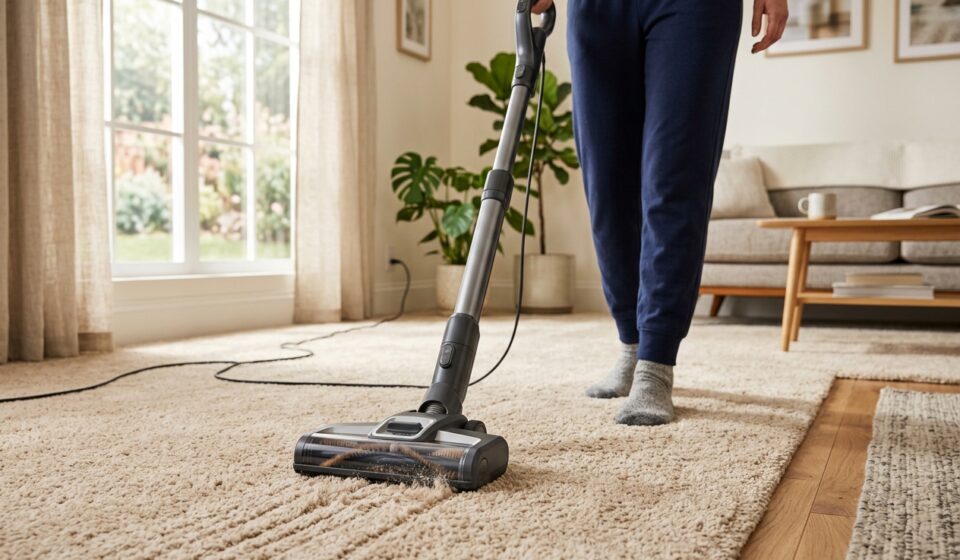
Daily vacuuming is the single best habit for a pet carpet. Pet hair builds up fast, and a vacuum with a pet hair tool lifts it before it works deep into the pile. Vacuum slowly, and go over busy areas twice. Empty the vacuum often, since a full bag or bin cuts suction.
Blot accidents right away, and never rub them. Rubbing pushes the mess deeper into the fibres. Blot with paper towels, then clean with a pet-safe carpet cleaner. An enzyme cleaner works best for pet urine, since it breaks down the compounds that cause smell. Avoid cleaners with ammonia, since the smell can draw a pet back to the same spot.
Deep clean your carpet every few months with a carpet cleaner or a hired machine. A steam clean lifts dirt that daily vacuuming misses, and it freshens the whole room. Dry the carpet fully after cleaning, since damp carpet can grow smells. Open windows and run a fan to speed drying. Check the carpet padding too, since a soaked pad can hold smells long after the carpet looks clean. If a spot still smells after cleaning, the pad below may need to be replaced in that area.
Dealing with Pet Hair and Smells
Pet hair is a daily fact of life in a pet home, yet the right tools make it easy. A rubber broom or a squeegee lifts hair from carpet fast, and a vacuum with a rotating brush finishes the job. Vacuum the edges and corners too, since hair gathers along skirting boards.
Smells come from accidents, damp fur, and dirt ground into the pile. Baking soda helps a lot: sprinkle it over the carpet, leave it for half an hour, then vacuum it up. It absorbs smells without harsh chemicals. For a stubborn smell, an enzyme cleaner or a professional deep clean is the next step.
Wash pet bedding often, since a dirty bed spreads smells to the carpet around it. Keep a washable rug near the door where your pet comes in, and shake it out daily. These small habits keep the whole room fresher between deep cleans. A strong vacuum matters as much as the carpet itself. The guide to the best vacuum cleaner for pet hair shows which models lift pet hair from carpet best.
FAQ: Best Carpet for Pets
What is the best carpet fibre for pets?
Nylon is the best all-round fibre for pet homes, since it is strong, resilient, and takes stain treatment well. Triexta is also excellent for stain resistance, while polyester suits low-traffic rooms. Wool is best avoided, since it stains easily and is hard to clean.
Is Berber carpet good for pets?
Berber can work in a pet home, yet its loop pile can snag on claws. A dog or cat with long nails can pull a loop and start a run. If you like Berber, keep nails trimmed and avoid it in high-traffic pet zones.
How do I get pet urine out of carpet?
Blot up as much as you can with paper towels first, then clean with an enzyme cleaner made for pet messes. Enzyme cleaners break down the compounds that cause the smell. Do not use steam on a urine stain, since heat can set it. Blot, clean, and air dry the spot fully.
How often should I deep clean carpet in a pet home?
Deep clean every three to four months in a pet home, or more often if you have several pets. Daily vacuuming and fast cleaning of accidents matter more than the deep clean itself. A professional clean once a year is a good habit too.
Does stain-resistant carpet really work for pets?
Yes, stain-treated carpet resists spills and gives you time to clean before a mark sets. It is not stain-proof, though, and accidents still need fast cleaning. A stain-treated carpet with a low pile and a good backing is the best mix for a pet home.
📐 Free Tool: Carpet Quantity Calculator
Enter your room size — see exactly how many square yards of carpet you need, waste included.
Conclusion
The best carpet for pets is a low-pile, stain-treated carpet in a strong fibre such as nylon or Triexta. Short, dense fibres resist claws, dry fast, and clean easily, while a mid-tone pattern hides daily hair and dirt. Avoid deep shag, loop pile that snags, pale colours, and untreated natural fibres in the rooms your pets use most.
Daily vacuuming, fast blotting of accidents, and a deep clean every few months keep a pet carpet fresh. An enzyme cleaner handles smells at the source, and washable rugs near doors catch dirt before it spreads. Trim your pet’s nails often, since short nails snag carpet far less than long ones. Check the carpet edges each month too, since pet hair and dirt gather along the skirting. Vacuum the stairs weekly as well, since pets carry dirt up and down every day. A handheld vacuum is handy for stair treads and corners. Choose the right carpet, pair it with a good vacuum, and your home can stay soft, warm, and comfortable for both you and your pets.


