


The best cleaners for engineered wood floors do one job without drama: lift dirt and grime, leave no residue, and never touch the finish with anything harsh. This guide pulls together nine products that fit that brief.
You will find refills for spray mops, unscented solutions, a polish for high-traffic hallways, and a few multi-surface options, each with pros and cons taken from the source review. A comparison table, a five-step routine for dull floors, and a buying guide round out the page. By the end you will know which cleaner matches your floors and your mop.
Top Recommendations
Every product below comes from the original review, with images and affiliate links kept in place. Pros and cons stick to the source material; where a claim wandered off-topic, it was dropped rather than dressed up.
Hardwood Floor Cleaner Refill for Finished Engineered Floors, 128 oz
 Check On The Amazon.com
Disclaimer: As an Amazon Associate, I earn from qualifying purchases.
Pros
- Large 128 oz supply that is cost-effective
- Refills save time
- Convenient for large areas
Cons
- Heavy to transport
- Needs storage space
- Spill risk while handling
This 128-ounce refill cleans, polishes, and seals in one pass, which is why it suits whole-floor maintenance rather than spot jobs. The large jug is built for regular use on finished engineered hardwood.
Value is the story here: one purchase covers months of mopping, and the finish protection means less polishing later. Just plan a storage spot, because a gallon jug has a footprint.
Streak-Free Multi-Surface Floor Cleaner, 32 oz, 2 Pack
 Check On The Amazon.com
Disclaimer: As an Amazon Associate, I earn from qualifying purchases.
Pros
- Leaves surfaces sparkling clean
- No streaks behind
- Two large bottles in the pack
- Easy to use
- Works on many surfaces
Cons
- Might not suit every surface
- The scent may be strong for some people
- Price may be high for some
- You might need more for really grimy surfaces
This is the multi-surface pick: the source notes it clears windows, mirrors, and floors without streaks or residue. Two 32-ounce bottles mean you will not run dry mid-clean.
It earns its place for quick cleanups and households that like one bottle for several jobs. Check the label for engineered-wood suitability before making it your main floor cleaner, since it is a generalist first.
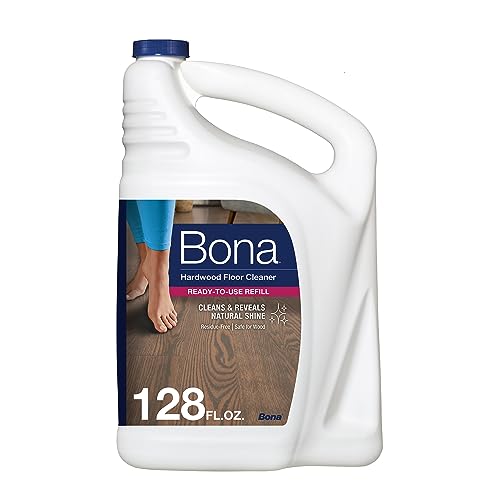
Bona Hardwood Floor Cleaner Refill, Unscented, 128 fl oz
 Check On The Amazon.com
Disclaimer: As an Amazon Associate, I earn from qualifying purchases.
Pros
- Big refill, a lot of cleaning solution for the money
- Unscented, so it will not bother sensitive noses
- Made for wood floors and safe to use on them
- Cleans well and leaves no sticky residue
- Compatible with Bona spray mops and spray bottles
Cons
- Requires a Bona spray mop or bottle; not standalone
- For wood floors only, not other surfaces
- The large jug is bulky to store
- Price per ounce can be higher than some cleaners
Bona needs little introduction in the wood-floor world. This unscented 128 fl oz refill is made for wood floors, cleans without sticky residue, and fits both Bona spray mops and spray bottles.
The trade-offs are honest ones: you need Bona equipment to get the most from it, it is meant for wood rather than tile or vinyl, and the jug needs storage space. For spray mop owners, the cost per clean still lands in your favor.
High-Traffic Hardwood Floor Cleaner and Polish, 2 Pack
 Check On The Amazon.com
Disclaimer: As an Amazon Associate, I earn from qualifying purchases.
Pros
- Gives floors a natural shine
- Hides small scratches
- Adds a protective layer
- Convenient two-pack
- Easy to use
Cons
- May not fix deep scratches
- Needs multiple applications for best results
- Might not suit all hardwood types
- The shine may not last long
- Can be pricey compared to other options
Hallways and entryways take the worst beating, and this two-pack targets exactly that. It adds a natural shine, hides small scratches, and leaves a protective layer with each application.
Set expectations before buying: deep scratches need a refinishing service, shine may need reapplying, and multiple applications give the best result. As a floor wax alternative, it is the scratch cover-up in this guide.
Unscented Residue-Free Wood Floor Cleaning Solution, 32 fl oz
 Check On The Amazon.com
Disclaimer: As an Amazon Associate, I earn from qualifying purchases.
Pros
- Cleans wood floors effectively
- Leaves no sticky residue
- Unscented, so it will not clash with other smells in the home
- Good value at 32 fluid ounces
Cons
- May need multiple applications on stubborn stains
- Might not work as well on very dirty floors
- Check that it is safe for your wood floor type
A simple, unscented 32 fl oz cleaner for wood and engineered wood floors. It cleans without leaving residue, so nothing dulls the finish between washes.
The bottle is easy to handle and the price is friendly. Stubborn stains may need a second pass, and you should confirm it suits your specific finish before the first full mop.
Versatile Floor Cleaner and Polish for Vinyl and Wood, 1 Gallon
 Check On The Amazon.com
Disclaimer: As an Amazon Associate, I earn from qualifying purchases.
Pros
- Cleans vinyl, wood, and engineered hardwood
- One product for multiple floor types
- Saves money compared to separate cleaners
- Convenient one-gallon size
- Polishes wood and engineered hardwood
Cons
- May not be as effective as specialized cleaners
- Might not remove stubborn stains completely
- The scent may not appeal to everyone
- Large jug is inconvenient for small spaces
- Tough messes need more scrubbing
One gallon, three floor types: this cleaner-polish handles vinyl, wood, and engineered hardwood from the same pour. Homes with mixed flooring get to retire several bottles.
It polishes as it cleans, leaving a fresh scent behind. The give-and-take is specialization: dedicated wood formulas may outperform it on stubborn stains, and tough messes need extra scrubbing.
Plant-Based Hardwood Floor Cleaner for Mopping, Bright Lemon Scent, 32 oz
 Check On The Amazon.com
Disclaimer: As an Amazon Associate, I earn from qualifying purchases.
Pros
- Plant-based and environmentally friendly
- Bright lemon scent leaves floors smelling fresh
- Designed for hardwood floors
- Easy to use for mopping
Cons
- You might pay for shipping
- Packaging may look different than expected
- Only a 32-ounce bottle; large areas may need more
- The exact ingredient list is not published
This plant-based formula skips harsh chemicals and leaves a bright lemon scent after mopping. The 32-ounce bottle is sized for regular home use.
It is the eco-conscious pick in this guide. The full ingredient list is not published, so if that matters to you, check the listing before ordering.
N-Floors Hardwood Floor Cleaner
 Check On The Amazon.com
Disclaimer: As an Amazon Associate, I earn from qualifying purchases.
Pros
- Cleans hardwood floors effectively
- Works well on luxury vinyl planks
- Also handles laminate and engineered floors
- Leaves floors shiny
Cons
- Might not remove stubborn stains
- Floors need rinsing afterwards
- The scent may be too strong for some
- Pricier than some other cleaners
N-Floors covers a wide range: hardwood, luxury vinyl planks, laminate, and engineered wood. It cleans without residue and leaves a noticeable shine.
Plan on rinsing afterwards, and expect a scent that some users find strong. Mixed-surface homes get the most value from this one bottle.
Liquid Multipurpose Cleaner for Wood, Tile, Laminate, Vinyl, and Bamboo, Citrus Mint
 Check On The Amazon.com
Disclaimer: As an Amazon Associate, I earn from qualifying purchases.
Pros
- Cleans wood, tile, laminate, vinyl, and bamboo
- Fresh citrus mint scent
- Two 32-ounce bottles give plenty of cleaner
- Works well on hardwood floors specifically
Cons
- May need extra scrubbing for stubborn stains
- Could leave residue on some surfaces; test in an inconspicuous area first
- Price may be higher than some single-surface cleaners
Citrus mint scent, two 32-ounce bottles, and a long list of safe surfaces: wood, tile, laminate, vinyl, and bamboo. It is the multipurpose cleaner for households that never settle on one floor type.
Test it in an inconspicuous area first, since some surfaces can show residue. Tough messes may need extra scrubbing, and it is worth comparing prices against single-surface cleaners.
Cleaner Comparison at a Glance
Nine products compete for the title of best cleaners for engineered wood floors, and they do not all suit the same job. The table maps each pick to the size, type, and cleaning situation it fits best.
| Product | Size | Type | Best For |
|---|---|---|---|
| Hardwood Floor Cleaner Refill | 128 oz | Clean, polish, and seal | Large areas and regular maintenance |
| Streak-Free Multi-Surface Cleaner | 2 x 32 oz | Multi-surface cleaner | Quick cleanups |
| Bona Hardwood Floor Cleaner Refill | 128 fl oz | Wood-floor refill | Spray mop owners |
| High-Traffic Cleaner and Polish | 2 pack | Cleaner and polish | Scratch cover-up in hallways |
| Unscented Residue-Free Solution | 32 fl oz | Wood floor cleaner | Sensitive households |
| Versatile Cleaner and Polish | 1 gallon | Multi-floor cleaner and polish | Mixed flooring homes |
| Plant-Based Lemon Cleaner | 32 oz | Plant-based cleaner | Eco-conscious homes |
| N-Floors Hardwood Floor Cleaner | Not listed | Multi-floor cleaner | Hardwood with LVP and laminate |
| Citrus Mint Multipurpose Cleaner | 2 x 32 oz | Multipurpose cleaner | Many surface types |
How to Make Engineered Hardwood Floors Look New Again
Daily foot traffic, dust, and the wrong cleaning habits dull engineered floors over time. The good news: you can bring back most of the shine without sanding, which engineered floors cannot tolerate repeatedly.
- Remove dust and grit first with a soft-bristle broom or a vacuum with a hardwood setting; our guide to the best vacuum cleaner for engineered wood floors has safe picks. Then mop with a damp microfiber mop and a pH-balanced wood floor cleaner, never steam or harsh chemicals.
- For stubborn spots, mix warm water with a few drops of mild dish soap. Clean small sections at a time and dry each one immediately so moisture cannot seep into the layers.
- Apply a wood floor polish or restorer made for engineered hardwood once the floor is clean and dry. Thin, even coats with a microfiber pad fill minor scratches and add a protective shine.
- Buff the surface with a soft cloth or a floor buffer to lift the shine and smooth light imperfections without sanding.
- Keep the result: felt pads under furniture, rugs or runners in high-traffic lanes, and spills wiped up immediately. A quick pass with a dry microfiber mop keeps dullness from returning.
If the wear runs deeper than the surface, look at a screen and recoat rather than sanding. That lighter refinishing method renews the top layer without thinning it, which is the safe option on engineered boards.
How to Choose the Best Cleaner for Engineered Wood Floors
Nine bottles on one page can blur together, so narrow the field with four questions. None of them require lab equipment; they just require reading labels the way the source review did.
pH Balance and Finish Safety
Engineered wood wears a thin factory finish, and harsh chemicals or abrasive scrubbers scratch it off. Look for a pH-neutral formula labeled for wood floors, and test any newcomer in an inconspicuous corner before the first full mop.
Spray Mops Versus Mop and Bucket
Spray mops, like the Bona system the third pick refills, meter out a light, controlled application. A mop and bucket covers more floor per pass, but the mop must be wrung nearly dry, because excess water is what swells engineered cores.
Residue, Streaks, and Scent
Residue is what leaves engineered floors looking dull after cleaning, so residue-free and streak-free claims matter more than marketing shine promises. Scent is the other divider: unscented picks such as the Bona refill and the 32-ounce solution suit fragrance-sensitive homes, while lemon and citrus mint options divide opinion.
Refills and Value Per Ounce
The picks here run from 32 ounces to a gallon, and the right size depends on habit. Regular whole-floor mopping favors big refills, small homes and first trials favor 32-ounce bottles, and every size trade-off in this guide comes with an honest storage or price caveat.
What Never to Use on Engineered Wood Floors
Steam cleaners top the avoid list: the source review rules them out entirely because steam can cause significant damage to engineered wood. Plain soap and water is the second trap, since soap film builds up and dulls the finish.
Harsh chemicals such as bleach and ammonia also stay off engineered boards. Add vinegar-based solutions and oil-based soaps to the list, which flooring manufacturers warn can erode or cloud the veneer finish over time.
Best Cleaners for Engineered Wood Floors: FAQs
What type of cleaner is best for engineered wood floors?
Use a cleaner designed for wood floors with a pH-neutral formula, like several of the picks above. Avoid harsh chemicals such as bleach or ammonia, and test any new product in a corner before a full mop.
Can I use a mop and bucket?
Yes, but wring the mop extremely well. Excess water is the main enemy of engineered cores, so a damp, not wet, microfiber mop gives the best result.
How often should I clean my engineered wood floors?
Sweep or vacuum regularly, since grit causes micro-scratches. Damp mop weekly, or more often in high-traffic weeks, depending on how much dirt your home tracks in.
What should I do about spills?
Blot spills immediately with a clean cloth. Avoid rubbing, which can scratch the finish, and dry the spot afterwards.
Can I use soap and water?
Plain soap and water can be too harsh for engineered finishes. A dedicated wood floor cleaner like the picks in this guide is the safer route.
Are steam cleaners okay for engineered wood?
No. Steam cleaners can cause significant damage to engineered wood floors, so keep them off your shortlist entirely.
What if my floors look dull?
Start with a proper clean, then apply a wood floor polish designed for engineered wood, like the high-traffic pick above. Follow the product instructions and let it dry fully before walking on it.
Can I use a washing machine to clean my mop?
Yes, but only if the mop is machine-washable. Check the care instructions first, and let the mop air-dry afterwards.
🧹 Free Tool: Mop Finder Quiz
Which mop type actually fits your floors? Answer 3 quick questions.
Conclusion
The best cleaners for engineered wood floors are the ones that match your mop and your routine. Spray mop owners should start with the Bona refill, big-area cleaners get the most from the 128-ounce clean-polish-seal jug, and scratched-up hallways need the high-traffic polish two-pack.
Pair any of them with the five-step restore routine and your floors will keep the finish they came with. Got a favorite cleaner or a hard-won tip? Share it in the comments, and pass this guide to someone still attacking their floors with a steam mop.


