


Most garage floor coatings fail in one familiar place: the patch where warm tyres rest overnight. The film lifts, peels, and leaves bare concrete behind. The cause is rarely a faulty kit, and it is usually a mismatch between chemistry, slab moisture, and surface preparation. Start with the moisture test and honest prep, and any of these kits can last for years.
This guide compares four proven kits for a standard home garage, and it ranks them by solids content, cure time, and hot-tyre resistance. Water-based epoxy suits light use, polycuramine suits daily-driven cars, and 100% solids epoxy suits hard workshop use. If you want the wider background first, our guide to garage floor epoxy explains how a two-part coating bonds to profiled concrete.
Quick Verdict
Best Overall is the Rust-Oleum EpoxyShield 2.5-Car Kit. It pairs proven water-based epoxy with decorative flecks, and it covers a typical two-car garage in one complete kit.
Best Budget is the Rust-Oleum EpoxyShield 1-Car Kit. It carries the same proven chemistry in a smaller kit, and it suits a single bay or a workshop corner.
Best Premium is the Rust-Oleum RockSolid Polycuramine 2.5-Car Kit. It cures in about a day and a half, and its dense film resists hot-tyre pickup better than standard epoxy.
Quick Comparison Table
| Product | Best For | Chemistry | Price |
|---|---|---|---|
| Rust-Oleum EpoxyShield 2.5-Car Kit | Most home garages | Water-based epoxy | Check Price on Amazon |
| Rust-Oleum RockSolid Polycuramine 2.5-Car Kit | Daily-driven cars | Polycuramine | Check Price on Amazon |
| Rust-Oleum EpoxyShield 1-Car Kit | Single garages | Water-based epoxy | Check Price on Amazon |
| Gorilla Epoxy 100% Solids Kit | Heavy workshop use | 100% solids epoxy | Check Price on Amazon |
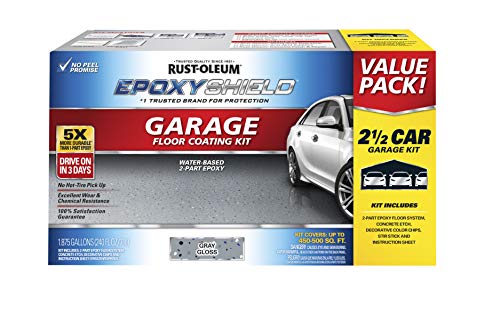
1. Rust-Oleum EpoxyShield Garage Floor Coating, Gloss Dark Gray, 2.5 Car Kit
 Check On The Amazon.com
Disclosure: As an Amazon Associate, I earn from qualifying purchases.
| Type | Epoxy floor paint |
| Coverage | 2.5-car garage floor |
| Mix | Two-part mix |
| Formula | Water-based epoxy kit finishes concrete garage floors in good, sound condition with a gloss |
✅ Reasons to buy
- Water-based epoxy kit finishes concrete garage floors in good, sound condition with a gloss
- Light foot traffic ready in 12-16 hours, normal use in 24-48 hours
- Burst pouch coating, decorative chips and concrete etch are included for a full application
❌ Reasons to avoid
- Costs more than basic models in this class
EpoxyShield has earned its place through years of real garage installs, not through bold claims on the tin. The water-based film goes down smoothly, the flecks hide small slab flaws, and the gloss finish looks finished rather than painted. It resists oil and road grime well, so a working garage stays easy to sweep and clean.
The trade is cure time and film thickness, and both matter for a daily-driven car. You must wait three full days before parking on it, and a heavy vehicle on a hot afternoon can still mark the film. Give it the full cure, keep the slab dry, and this kit serves most two-car garages without drama.
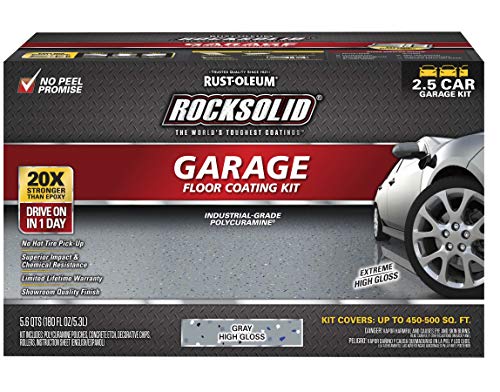
2. Rust-Oleum RockSolid Garage Floor Coating, Gray, 2.5 Car Kit
 Check On The Amazon.com
Disclosure: As an Amazon Associate, I earn from qualifying purchases.
| Type | Epoxy coating kit |
| Coverage | 2.5-car garage floor |
| Mix | Two-part mix |
| Finish | Self-leveling polycuramine coating creates a durable, showroom-quality garage floor finish |
✅ Reasons to buy
- Self-leveling polycuramine coating creates a durable, showroom-quality garage floor finish
- Excellent resistance to salt, oil, gasoline and other harsh chemicals
- Burst pouch coating, foam roller, decorative chips and concrete etch are included
❌ Reasons to avoid
- Costs more than basic models in this class
RockSolid uses polycuramine, a hybrid chemistry built for the exact failure that ruins most epoxy floors. A warm tyre cannot grip its dense cured film the way it grips softer epoxy, so the classic peel patch rarely appears. The kit also returns your garage in about thirty-six hours, which saves a full weekend of waiting.
Speed brings its own demand, because the working window runs short once the two parts meet. Plan the pour in sections, work with a helper, and keep every tool ready before mixing starts. Rushing shows as lap lines, but a calm, planned pour leaves a tough, even finish.
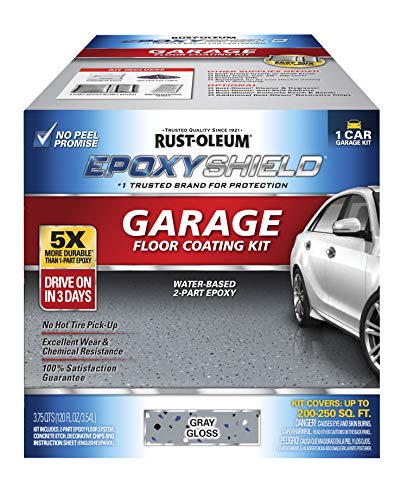
3. Rust-Oleum EpoxyShield Garage Floor Coating, Gloss Gray, 1 Car Kit
 Check On The Amazon.com
Disclosure: As an Amazon Associate, I earn from qualifying purchases.
| Type | Epoxy coating kit |
| Coverage | 1-car garage floor |
| Mix | Two-part mix |
| Formula | Water-based epoxy kit finishes concrete garage floors in good, sound condition with a gloss |
✅ Reasons to buy
- Water-based epoxy kit finishes concrete garage floors in good, sound condition with a gloss
- Light foot traffic ready in 12-16 hours, normal use in 24-48 hours
- Burst pouch coating, decorative chips and concrete etch are included for a full application
❌ Reasons to avoid
- Costs more than basic models in this class
A single bay does not need a large kit, and buying one only wastes coating and effort. This 1-car kit carries the same proven EpoxyShield chemistry at a scale that fits one car plus a workbench. The gloss finish brightens a small garage, and the water-based formula cleans up with soap and water before curing.
Measure the slab before ordering, because a stretched coat cures too thin and peels early. This kit suits one bay only, and it ships without decorative chips at this size. Within those limits, it is the most honest way to coat a small garage properly.
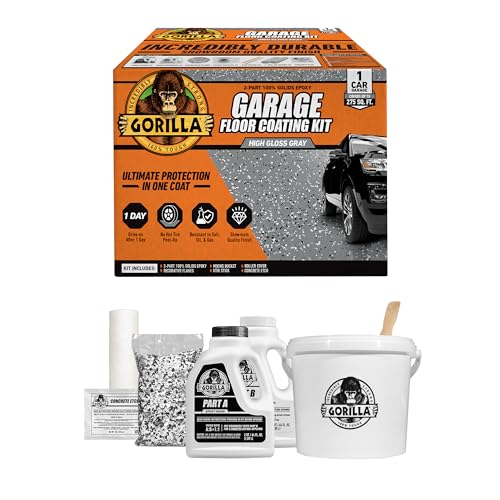
4. Gorilla Epoxy Garage Floor Coating Kit, 7 pc, 1-Car
 Check On The Amazon.com
Disclosure: As an Amazon Associate, I earn from qualifying purchases.
| Type | Epoxy coating kit |
| Coverage | 275 sq ft |
| Finish | High Gloss Finish: Achieve a showroom-quality finish that is crack resistant, peel proof |
| Formula | 7 Pc DIY Kit: Epoxy resin, epoxy hardener, decorative gray blend flakes |
✅ Reasons to buy
- Ultimate Protection in One Coat: 2-part 100% solids epoxy delivers, incredibly durable
- High Gloss Finish: Achieve a showroom-quality finish that is crack resistant, peel proof
- Covers up to 275 sq. ft.: Includes one gallon of premium material – enough for a thick
❌ Reasons to avoid
- Heavier material also asks more of your prep and your back, and the working time still rewards a planned pour.
Gorilla takes a different route, with 100% solids epoxy that cures exactly as thick as it is poured. Nothing evaporates during curing, so the film keeps its full build instead of shrinking like water-based coatings. That density handles floor jacks, tool drops, and solvent drips in a working workshop.
The kit covers one bay, so do not stretch it across a larger floor in search of savings. Heavier material also asks more of your prep and your back, and the working time still rewards a planned pour. For a garage that works hard every week, this thick film earns its place.
Coating or Paint: What Your Garage Floor Actually Needs
Tape a square of plastic sheeting to the slab, seal the edges, and check it after a full day. Condensation underneath means vapour is moving up through the concrete, and no coating survives that pressure for long. Fix the damp slab first, because a coating laid over moisture fails from below whatever the tin promises.
A coating grips concrete through tiny peaks left by etching or grinding, so a smooth troweled slab must be profiled first. Etch with a mild acid wash and rinse until water stops beading, or rent a grinder for the strongest bond. Degrease twice where cars have dripped for years, because old oil breaks the bond just as surely as dust does.
Match the chemistry to your traffic, not to the boldest label on the shelf. Water-based epoxy suits a dry garage with occasional sedan use, while polycuramine suits cars that come home warm every evening. A workshop with jacks and solvents deserves 100% solids epoxy, because its thick film resists marking and chemical drips.
Measure the slab in square feet, then match the kit to that number without optimism. A coat stretched past its coverage cures too thin, and thin film is the most common self-inflicted failure in home coating projects. Buying the next kit size up beats redoing a peeled floor, so round up when the slab sits near a kit limit.
Plan the whole project around cure time, not around paint day alone. Light foot traffic and full vehicle cure are different numbers, and confusing them leaves a permanent tyre imprint in soft film. Keep the garage out of service for the full stated cure, and move cars, tools, and storage out before mixing starts.
If the budget cannot stretch to a full epoxy system, concrete floor paint is the honest fallback for a tired slab. It will not match epoxy for thickness or hot-tyre resistance, but it freshens the floor and resists light oil staining. Read our guide to concrete floor paint before choosing, so you buy with clear expectations about durability.
Decorative flakes do more than decorate, because they hide slab flaws and the first inevitable scratch. A clear topcoat is not required with these complete kits, since hot-tyre resistance comes from chemistry rather than extra thickness. Spend the effort on prep and cure instead, because those two steps decide the result far more than an extra coat.
Coating in cool or humid weather slows curing, so check the kit instructions for temperature limits before starting. Cold slabs and damp air both stretch cure time, and a rushed parking job can ruin an otherwise sound pour. Choose a dry stretch of days, keep the garage ventilated, and let the film cure without interruption.
A second coat only helps when the first coat is sound and within its recoat window. Check the kit instructions for that window, because coating too late means sanding for adhesion first. A rushed second coat over a dusty film creates a weak layer, so clean and scuff the surface when the window has passed.
Keep children and pets out of the garage until the film cures fully, and ventilate well during application. Two-part coatings release fumes while curing, so a respirator and open airflow protect everyone nearby. Store leftover material sealed and upright, away from heat and freezing temperatures.
Frequently Asked Questions
Is epoxy worth it on a garage floor?
Yes, when the slab is dry and the prep is honest. A coated floor resists oil, sweeps clean, and turns storage space into finished space. A coating over a damp or dusty slab only postpones the repair, so test moisture and profile the surface first.
Why did my epoxy peel where the car parks?
A warm tyre pulled the film, or vapour pushed it from below, and both are mechanical failures rather than product defects. Hot-tyre pickup points to a chemistry mismatch, while peeling across the floor points to moisture or poor prep. The fix is polycuramine for warm tyres, plus a moisture test before any recoat.
Can I coat over old paint or a sealed slab?
No, because coatings bond only to raw, profiled concrete. Old paint must be ground or stripped, and a sealed slab needs its sealer removed mechanically first. Skipping this step leaves the new coat sitting on a weak layer that will lift.
How long does a DIY epoxy garage floor last?
Ten years is a fair expectation for correctly prepped water-based epoxy in a light-use garage. Polycuramine and 100% solids kits last longer, and all three wear fastest where tyres run hottest. Honest prep and full cure matter more than brand for reaching that lifespan.
Epoxy or polycuramine: which should I buy?
Buy epoxy for a low-traffic garage on a modest budget, and buy polycuramine for a car that comes home warm each day. The performance gap under warm tyres is real, and so is the gap in cure speed. Workshops fall between the two, where 100% solids epoxy earns its keep.
Do I need a clear topcoat, and what protects the floor after curing?
No topcoat is needed with these complete kits, because hot-tyre resistance comes from chemistry rather than added thickness. Once the floor cures, garage floor mats add a simple layer of protection in parking spots and walkways. Our guide to garage floor mats covers the options that suit a freshly coated slab.
What size kit do I need for a two-car garage?
A 2.5-car kit suits most standard two-car garages, while a 1-car kit suits a single bay only. Measure length and width, multiply for square footage, and compare that number with the kit coverage. When the slab sits close to the limit, step up a size rather than stretching one thin coat.
Can I drive on epoxy after one day?
Only the polycuramine kit in this guide returns to service in about thirty-six hours. Water-based epoxy kits need three full days before a car parks on them, and foot traffic alone still needs its own waiting period. Driving early leaves a permanent imprint, so follow the stated cure for your exact kit.
🎨 Free Tool: Paint Coverage Calculator
Enter your room size — see how many gallons you need, coats included.
Conclusion
Decide by traffic before brand, because that single choice sorts the whole shelf. A car that comes home warm wants polycuramine, a hard-working shop wants 100% solids, and most other garages belong to EpoxyShield. All four kits here state coverage and cure plainly, which already sets them apart from much of the aisle.
Run the plastic-sheet moisture test this week, and the rest of the project decides itself. Prep decides the bond, chemistry decides the lifespan, and cure decides whether parking leaves a triumph or an imprint. For the wider lineup, our guide to DIY garage floor coating shows where each chemistry sits for your next project.


