


The best flooring for a home exercise room protects your floor, cushions your joints, and stays put during hard training. Foam tiles suit stretching, yoga, and bodyweight work, while rubber-top tiles handle dumbbells, kettlebells, and cardio machines far better. Choosing the wrong surface means dented floors, sliding tiles, and sore knees within weeks.
Start with your main workout style, then match thickness and surface to that training. Heavy equipment needs a firm rubber top that resists dents and spreads impact across each tile. Lighter training needs softer foam that cushions landings and keeps bare feet comfortable. Room size matters too, since small tile sets cover corners while larger mats cover whole rooms. This guide compares seven exercise-room floors by thickness, surface, coverage, and fit for different rooms.
Quick Verdict
Best Overall: Haulcove 18-piece EVA foam tiles, with dual-texture grip and 18 square feet of coverage. They suit daily mixed training in spare rooms, apartments, and garage corners alike.
Best Budget: ProsourceFit half-inch puzzle mats, with thick cushioning and a non-skid surface. They cover large areas affordably and clean up fast after sweaty sessions.
Best Premium: GymCope Extra Large exercise mat, with five size options and an 8mm three-layer build. It turns a whole room into a studio floor in under a minute.
Quick Comparison Table
| Product | Best For | Thickness | Coverage | Price |
|---|---|---|---|---|
| Haulcove 18 Pcs EVA Foam Floor Tiles | Best Overall | 0.4 inch | 18 square feet | Check Price on Amazon |
| ProsourceFit Exercise Puzzle Mat, Half-Inch | Best Budget | 0.5 inch | 48 square feet | Check Price on Amazon |
| bemaxx Gym Mats Set, EVA Interlocking Tiles | Best Value | 0.4 inch | 18 square feet | Check Price on Amazon |
| AIRHOP 0.56-Inch Exercise Equipment Mats, 12 Tiles | Best Upgrade | 0.56 inch | 48 square feet | Check Price on Amazon |
| SUPERJARE 0.56-Inch Rubber Top Gym Flooring | Best for Small Spaces | 0.56 inch | 48 square feet | Check Price on Amazon |
| GymCope Large Exercise Mat for Home Workouts | Best for Large Spaces | 7mm | Multiple sizes | Check Price on Amazon |
| GymCope Extra Large Exercise Mat, 8mm | Best Premium Pick | 8mm | Up to 10 by 6 feet | Check Price on Amazon |
1. Haulcove 18 Pcs EVA Foam Floor Tiles, Puzzle Exercise Mat — Best Overall
 Check On The Amazon.com
Disclosure: As an Amazon Associate, I earn from qualifying purchases.
| Fit | Custom fit for the models listed in this guide |
| Material | Rubber, all-weather and wipeable |
✅ Reasons to buy
- Haulcove tiles use dual-texture EVA foam, with grip on top and stability underneath, so feet stay planted during circuits and stretches
- Each tile measures about 12.6 inches square, and the full set covers 18 square feet for a starter training zone
- Puzzle edges lock without tools, so you can lay the floor, lift it, or reshape it in minutes
❌ Reasons to avoid
- It is not a heavy lifting platform, so keep barbells and plate drops on a rubber-top floor instead
- Higher price than basic entry-level alternatives
Haulcove tiles use dual-texture EVA foam, with grip on top and stability underneath, so feet stay planted during circuits and stretches. Each tile measures about 12.6 inches square, and the full set covers 18 square feet for a starter training zone. Puzzle edges lock without tools, so you can lay the floor, lift it, or reshape it in minutes.
This set fits apartments, spare rooms, and garage corners used for yoga, Pilates, stretching, and light cardio. It is not a heavy lifting platform, so keep barbells and plate drops on a rubber-top floor instead. For everyday mixed training, it delivers the comfort and simplicity most home exercisers actually need.
2. ProsourceFit Exercise Puzzle Mat, Half-Inch EVA Interlocking Foam Floor — Best Budget
 Check On The Amazon.com
Disclosure: As an Amazon Associate, I earn from qualifying purchases.
| Fit | Custom fit for the models listed in this guide |
| Material | Rubber, all-weather and wipeable |
✅ Reasons to buy
- ProsourceFit mats use half-inch, high-density EVA foam that cushions knees and joints during floor work and cardio
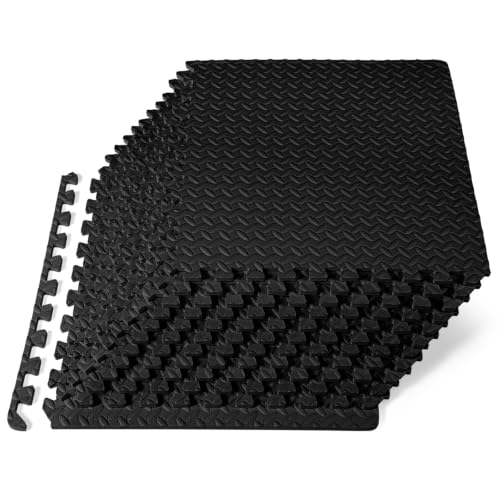
- Each tile measures 24 inches square, and the set includes 12 tiles for broad, even coverage
- The non-skid surface stays steady under footwork, and the water-resistant build wipes clean after hard sessions
❌ Reasons to avoid
- This mat suits larger rooms, garage gyms, and anyone building a budget training floor from scratch
- Higher price than basic entry-level alternatives
ProsourceFit mats use half-inch, high-density EVA foam that cushions knees and joints during floor work and cardio. Each tile measures 24 inches square, and the set includes 12 tiles for broad, even coverage. The non-skid surface stays steady under footwork, and the water-resistant build wipes clean after hard sessions.
This mat suits larger rooms, garage gyms, and anyone building a budget training floor from scratch. Tiles pull apart fast for storage, so renters can pack the whole floor away between sessions. Skip it for heavy dumbbell drops, since thick foam dents faster than a rubber-top surface will.
3. bemaxx Gym Mats Set, EVA Interlocking Foam Floor Tiles — Best Value
 Check On The Amazon.com
Disclosure: As an Amazon Associate, I earn from qualifying purchases.
| Fit | Custom fit for the models listed in this guide |
| Material | Durable all-weather material, easy to clean |
✅ Reasons to buy
- bemaxx ships 18 puzzle pieces plus edge pieces, covering about 18 square feet with a clean, finished border
- The compressed EVA foam feels firm underfoot yet soft enough for floor exercises, stretching, and light cardio
- Edge pieces matter more than they look, since they stop curling corners and tripping hazards at the border
❌ Reasons to avoid
- This set fits home gym owners and renters who want floor protection without a permanent install
- Higher price than basic entry-level alternatives
bemaxx ships 18 puzzle pieces plus edge pieces, covering about 18 square feet with a clean, finished border. The compressed EVA foam feels firm underfoot yet soft enough for floor exercises, stretching, and light cardio. Edge pieces matter more than they look, since they stop curling corners and tripping hazards at the border.
This set fits home gym owners and renters who want floor protection without a permanent install. It works well under light equipment, yoga flows, and bodyweight routines in small rooms. Larger rooms need two or more sets, so measure first and plan the layout before ordering.
4. AIRHOP 0.56-Inch Exercise Equipment Mats, 12 Tiles — Best Upgrade
 Check On The Amazon.com
Disclosure: As an Amazon Associate, I earn from qualifying purchases.
| Fit | Custom fit for the models listed in this guide |
| Material | Rubber, all-weather and wipeable |
✅ Reasons to buy
- AIRHOP pairs a recycled rubber top with a high-density EVA foam base, so equipment scratches less and noise drops during training
- Twelve tiles at 24 inches square cover 48 square feet, enough for a full training corner or a compact room
- Larger interlocking locks hold the layout tight, even when machines shift slightly during use
❌ Reasons to avoid
- It is a strong step up for anyone outgrowing thin foam tiles
- Higher price than basic entry-level alternatives
AIRHOP pairs a recycled rubber top with a high-density EVA foam base, so equipment scratches less and noise drops during training. Twelve tiles at 24 inches square cover 48 square feet, enough for a full training corner or a compact room. Larger interlocking locks hold the layout tight, even when machines shift slightly during use.
This mat fits garage gyms, basements, and home fitness rooms with cardio machines or weight benches. The rubber top handles heavier gear better than plain foam, while the foam base keeps impact and vibration low. It is a strong step up for anyone outgrowing thin foam tiles.
5. SUPERJARE 0.56-Inch Rubber Top Gym Flooring for Home Gym — Best for Small Spaces
 Check On The Amazon.com
Disclosure: As an Amazon Associate, I earn from qualifying purchases.
| Fit | Custom fit for the models listed in this guide |
| Material | Rubber, all-weather and wipeable |
✅ Reasons to buy
- SUPERJARE uses a dual-layer build, with a sturdy rubber top over a high-density EVA foam base
- The rubber surface grips well during HIIT, lifting, and fast footwork, and the foam layer absorbs shock and noise
- Interlocking edges let you assemble, move, or extend the floor without tools or glue
❌ Reasons to avoid
- This flooring fits small rooms where one surface must cover yoga, lifting, and cardio in turn
- Higher price than basic entry-level alternatives
SUPERJARE uses a dual-layer build, with a sturdy rubber top over a high-density EVA foam base. The rubber surface grips well during HIIT, lifting, and fast footwork, and the foam layer absorbs shock and noise. Interlocking edges let you assemble, move, or extend the floor without tools or glue.
This flooring fits small rooms where one surface must cover yoga, lifting, and cardio in turn. It protects the subfloor under weights far better than plain foam, and it stays put during intense sessions. Very large rooms may need extra sets, so check the 48-square-foot coverage against your floor plan.
6. GymCope Large Exercise Mat for Home Workouts — Best for Large Spaces
 Check On The Amazon.com
Disclosure: As an Amazon Associate, I earn from qualifying purchases.
| Fit | Custom fit for the models listed in this guide |
| Material | Rubber, all-weather and wipeable |
✅ Reasons to buy
- GymCope Large comes in six sizes, so solo trainers, couples, and families can each pick a mat that fits their space
- The 7mm high-density PVC surface resists abrasion and scratches from training shoes and light equipment
- A carry bag and straps come included, so the mat rolls up and stores neatly after each session
❌ Reasons to avoid
- Heavy plate drops still need rubber-top tiles, so use this mat for movement training rather than max lifting
- Higher price than basic entry-level alternatives
GymCope Large comes in six sizes, so solo trainers, couples, and families can each pick a mat that fits their space. The 7mm high-density PVC surface resists abrasion and scratches from training shoes and light equipment. A carry bag and straps come included, so the mat rolls up and stores neatly after each session.
This mat fits open rooms where a single roll-out surface beats a puzzle of many tiles. It suits yoga, jump rope, wrestling drills, and general floor workouts without seams underfoot. Heavy plate drops still need rubber-top tiles, so use this mat for movement training rather than max lifting.
7. GymCope Extra Large Exercise Mat, 8mm — Best Premium Pick
 Check On The Amazon.com
Disclosure: As an Amazon Associate, I earn from qualifying purchases.
| Fit | Custom fit for the models listed in this guide |
| Material | Rubber, all-weather and wipeable |
✅ Reasons to buy
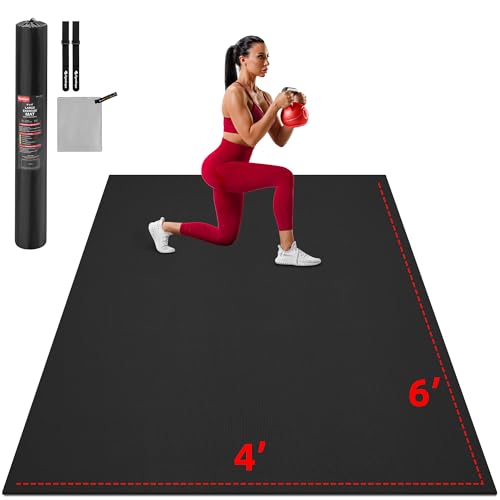
- GymCope Extra Large offers sizes from 6 by 4 feet up to 10 by 6 feet, covering dedicated gyms and living-room studios alike
- Its 8mm three-layer build pairs a wear-resistant top with a cushioned core and a gripping base
- Double-sided anti-slip texture keeps the mat steady on hardwood, concrete, and other hard floors
❌ Reasons to avoid
- Its 8mm three-layer build pairs a wear-resistant top with a cushioned core and a gripping base
- Higher price than basic entry-level alternatives
GymCope Extra Large offers sizes from 6 by 4 feet up to 10 by 6 feet, covering dedicated gyms and living-room studios alike. Its 8mm three-layer build pairs a wear-resistant top with a cushioned core and a gripping base. Double-sided anti-slip texture keeps the mat steady on hardwood, concrete, and other hard floors.
This mat fits households that train daily and want one premium surface for the whole room. It unrolls in under a minute, so there is no assembly before a workout and no puzzle seams to clean. Skip it only if you need a rubber-top floor for repeated heavy drops, since this mat targets movement, not max loads.
How to Choose Exercise Room Flooring
Match the surface to your training
Foam tiles win for yoga, stretching, Pilates, and bodyweight circuits, since soft cushioning protects joints and bare feet. Rubber-top tiles win for dumbbells, kettlebells, benches, and cardio machines, since the tough top resists dents and scratches. Mixed trainers should pick a rubber-top floor for the equipment zone and foam for the stretch zone.
If your room holds heavy gear, read our rubber gym flooring guide before deciding on thickness and density. Rubber floors cost more than foam, but they last longer under weights and protect the subfloor better. Light trainers can save money with foam and still get a comfortable, quiet training surface.
Pick the right thickness
Thin mats around 7 to 8mm suit yoga, stretching, and balance work, where ground feel matters more than impact protection. Half-inch foam suits general cardio and floor exercises, giving knees real cushion without a wobbly feel. Rubber-top tiles near 0.56 inch suit mixed training with light to moderate weights and machines.
Thicker is not always better, since very soft floors can feel unstable during balance moves and heavy lifts. Test your main moves in mind: jumps need cushion, squats need firmness, and machines need dent resistance. Choose the thickness that serves your most frequent workout, not the rare hardest one.
Measure, then buy once
Measure the full training area, including space around equipment for safe movement and mat borders. Small tile sets cover corners well, but whole rooms need larger coverage or multiple sets in one pattern. Roll-out mats avoid seams entirely, which helps for yoga flows and wrestling drills across the surface.
Leave a small gap at walls for expansion and cleaning, and check door clearance over thicker tiles. Interlocking tiles let you add coverage later, while roll-out mats come in fixed sizes that must fit first time. For floor-only routines, our exercise mat guide for floor workouts compares single-mat options in detail.
Check grip, noise, and cleaning
Grip matters most when feet get sweaty, so textured tops beat smooth ones for HIIT and hot yoga sessions. Noise and vibration matter in apartments and upstairs rooms, where foam cores and rubber tops both dampen sound. Closed surfaces wipe clean fast, while open textures trap dust and need deeper scrubbing.
Avoid floors that slide on your subfloor, since shifting tiles cause trips during fast footwork. Test one tile first if possible, or buy a set with edge pieces that lock the border down. A floor that stays put is safer than a thicker floor that creeps across the room.
Frequently Asked Questions
What is the best flooring for a home exercise room?
Haulcove foam tiles are the safest all-round choice for mixed daily training in small to mid-size rooms. ProsourceFit mats cover larger areas on a budget, while GymCope Extra Large suits whole-room studios. Match the pick to your training style first, then to your room size.
Is foam or rubber flooring better for a home gym?
Foam suits light training, stretching, and joint comfort, while rubber suits weights, machines, and dent resistance. Mixed rooms benefit from rubber under equipment and foam in the stretch zone. If you must pick one surface, rubber-top tiles handle the widest range of workouts.
How thick should home exercise room flooring be?
Half-inch foam covers most cardio and floor work well, while 7 to 8mm mats suit yoga and balance training. Rubber-top tiles near 0.56 inch handle light weights and machines without feeling soft underfoot. Go thicker only for repeated drops, and keep balance work on a firmer surface.
Can exercise mats go over hardwood floors?
Yes, interlocking tiles and roll-out mats both protect hardwood from scratches, sweat, and light equipment marks. Choose a non-marking base and lift the mats sometimes to clean trapped dust underneath. Heavy weights still need a rubber-top layer, since foam alone dents under concentrated loads.
How do I clean exercise room flooring?
Wipe closed surfaces with a damp cloth and mild cleaner after each session, then let them dry fully. Puzzle tiles can be lifted and washed one by one when sweat builds up in the seams. Avoid harsh solvents on foam and rubber, since they can dry out the surface and weaken grip.
Conclusion
Haulcove foam tiles are our overall winner for most home exercise rooms, thanks to their grip, easy layout, and daily comfort. ProsourceFit mats stand out on a budget, and GymCope Extra Large covers whole rooms as the premium pick. Each one earns its place by matching a real training style, not by promising everything at once.
Measure your room, name your main workout, and pick the surface that serves that training best. If your space also hosts a dedicated lifting setup, our home gym floor guide can help you plan the heavier zone. Buy the floor that fits your workouts today, and it will still feel right years from now.


