

A lifted seam or a plank that rocks underfoot does not demand a new floor – it demands the right adhesive, applied the right way. The catch: vinyl is fussy about chemistry. Wrong glues cure into rigid spikes that crack with traffic, or their solvents attack the vinyl itself and stain it forever. The six products below are the honest shortlist for 2026 – one for every common vinyl failure, from curled sheet seams to hollowclick planks.
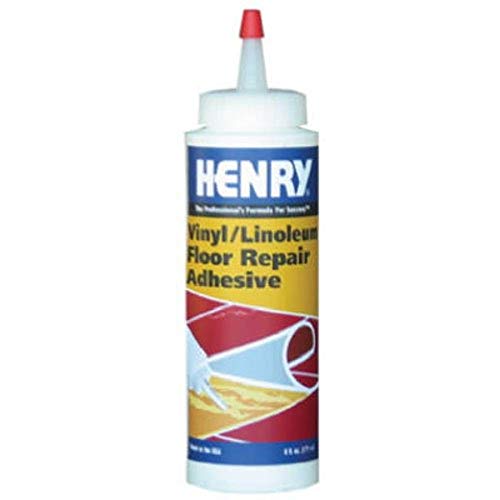
1. Henry 12220 Vinyl Repair Adhesive – best overall for loose LVP and planks
Disclosure: As an Amazon Associate, I earn from qualifying purchases.
| Type | Crepe-style vinyl repair adhesive |
| Use | Re-bonding loose LVP, tiles, sheet edges |
| Cure | Flexible – moves with the floor |
| Best for | Everyday plank repair |
Henry 12220 is the industry’s default answer for vinyl that let go. It stays crepe-flexible after curing, so the re-bonded plank flexes with footprint instead of cracking free again – the failure mode of superglue-type fixes. It spreads thin, grabs both old adhesive residue and fresh backings, and the tube is sized for real repairs, not one plank. For a utility drawer that covers most vinyl emergencies, start here. check current price on Amazon
- ✅ Flexible cure – moves with the floor
- ✅ Re-bonded plank flexes with footprint instead of cracking free
- ✅ Grabs both old adhesive residue and fresh backings
- ✅ Tube sized for real repairs, not one plank
- ❌ Tube size suits spot repairs, not rooms
- ❌ Not the answer when a whole quadrant lets go – that is gallon territory
Disclosure: As an Amazon Associate, I earn from qualifying purchases.
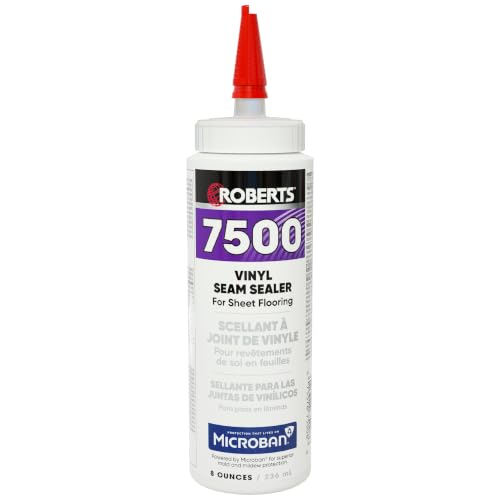
2. Roberts 7500 Vinyl Seam Sealer – best for sheet vinyl seams
Disclosure: As an Amazon Associate, I earn from qualifying purchases.
| Type | Liquid seam sealer for sheet vinyl |
| Use | Seams lifting, edges curling |
| Finish | Bonds the wear layer invisibly |
| Best for | Sheet vinyl seam repair |
Sheet vinyl fails at the seams, and the fix is chemistry-specific: Roberts 7500 is engineered to bond the delicate wear layer without stewing through it – a thing general adhesives reliably ruin. Applied with the bottle needle into a lifted seam, it draws in, bonds the underside, and disappears. If your floor is sheet rather than plank, skip the generalists and start with the specialist. check current price on Amazon
- ✅ Wear-layer-safe seam chemistry
- ✅ Bottle needle reaches under a lifted seam
- ✅ Bonds the underside and disappears visually
- ✅ The specialist answer for what general adhesives ruin
- ❌ Sheet vinyl only, not for LVP joints
- ❌ A seam sealer is not a plank re-bond glue
Disclosure: As an Amazon Associate, I earn from qualifying purchases.
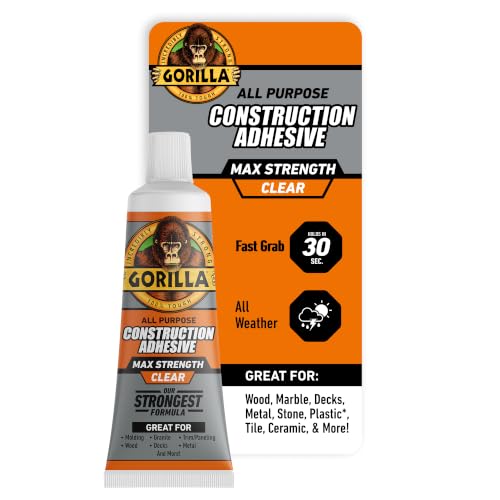
3. Gorilla Max Strength Construction Adhesive (Clear) – best gap-filler for badly damaged planks
Disclosure: As an Amazon Associate, I earn from qualifying purchases.
| Type | Polyurethane clear construction adhesive |
| Strength | Gap-filling, paintable |
| Best for | Planks with broken tongue/groove pieces |
| Caution | Rigid cure – small areas only |
For planks whose locking tabs snapped off (not just un-glued), a flexible re-tack is not enough – something must fill the missing plastic. Gorilla’s clear construction adhesive does that, gripping wood, vinyl and old residue with real structural strength and staying invisible. The honest caution: it cures rigid, so it belongs on damaged planks in low-traffic spots, patch-jobs where replacement is impossible – not whole-room relays. check current price on Amazon
- ✅ Gap-filling strength for snapped tabs
- ✅ Grips wood, vinyl and old residue with structural strength
- ✅ Cures invisibly on the repaired plank
- ✅ The fix when replacement is impossible
- ❌ Rigid cure – low-traffic areas only
- ❌ A patch-job tool, never a whole-room relay
Disclosure: As an Amazon Associate, I earn from qualifying purchases.
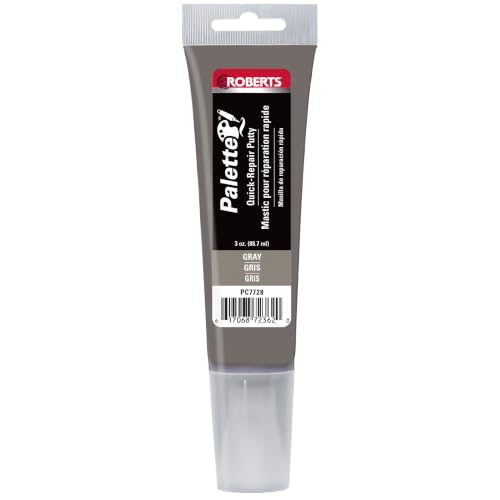
4. ROBERTS Palette Quick-Repair Putty – best for chips and gouges
Disclosure: As an Amazon Associate, I earn from qualifying purchases.
| Type | Colorable putty compound |
| Use | Filling chips, dents, nicks in vinyl/laminate |
| Finish | Blendable to plank color |
| Best for | Cosmetic damage repair |
Not every repair is structural – deep gouges collect dirt and drag the eye long before the plank moves. The Palette putty is a color-blendable filler that fills the dent flush and disappears into the pattern; a couple of minutes with a plastic spreader ends the visual march across your floor. Keep a tub with the felt pads – it is the cheapest floor-preservation tool in the kit. check current price on Amazon
- ✅ Color-blendable, flush cosmetic fill
- ✅ Ends the dirt-collecting gouge in a couple of minutes
- ✅ Disappears into the plank pattern
- ✅ The cheapest floor-preservation tool in the kit
- ❌ Cosmetic only – adds no strength
- ❌ Structural movement needs adhesive, not putty
Disclosure: As an Amazon Associate, I earn from qualifying purchases.
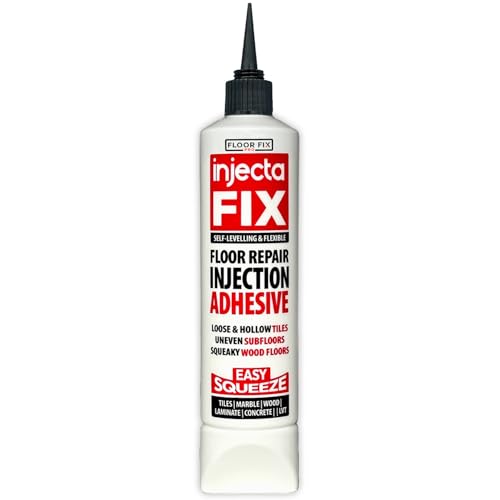
5. Floor & Tile Repair Kit (Self-Leveling Squeeze) – best for hollow-sounding planks
Disclosure: As an Amazon Associate, I earn from qualifying purchases.
| Type | Self-leveling injectable adhesive |
| Use | Hollow spots under planks/tiles |
| Application | Needle-tip through 1/8-inch hole |
| Best for | Click-lock hollow sections |
Hollow-sounding click planks are the sneaky failure: still locked, but debonded beneath, they drum and eventually crack at the joints. This kit’s self-leveling adhesive injects through a shallow-hole drilled in the grout line or seam, flows beneath the plank, and re-bonds the void without lifting the surface. It is the least invasive fix on this list for a problem most owners never knew had a name. check current price on Amazon
- ✅ Fixes hollow spots without lifting planks
- ✅ Re-bonds the void beneath still-locked planks
- ✅ Least invasive fix on this list
- ✅ Ends the drumming that eventually cracks joints
- ❌ Needs a tiny drilled access hole
- ❌ Cannot help planks whose locking tabs snapped
Disclosure: As an Amazon Associate, I earn from qualifying purchases.
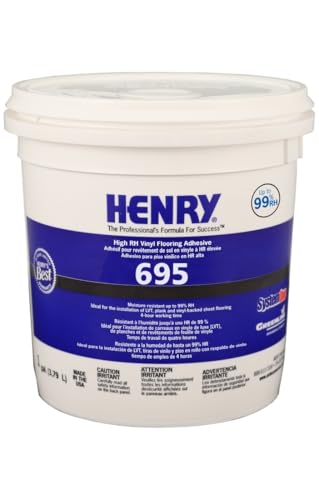
6. Henry 695 Vinyl Flooring Adhesive (Gallon) – best for re-gluing whole sections
Disclosure: As an Amazon Associate, I earn from qualifying purchases.
| Type | Acrylic vinyl flooring adhesive |
| Coverage | Full gallon for multi-plank jobs |
| Use | Glue-down LVP and sheet re-bonds |
| Best for | Room-scale repairs and seams |
When a whole quadrant lets go – failed original adhesive, water event, or a big furniture-move tear-out – tube glue becomes a thousand-tube problem. Henry 695 is the proper trowel-grade acrylic for re-setting gluedown planks or sheet sections by the square yard, at a batch-friendly spread rate. Match its open time to your pace, and a weekend repair outlives the rest of the floor. check current price on Amazon
- ✅ Gallon economy for room-scale re-bonds
- ✅ Trowel-grade spread covers square yards, not tube-squirts
- ✅ Batch-friendly spread rate fits a weekend repair
- ✅ Matched pace means it outlives the rest of the floor
- ❌ Open time demands planned pacing
- ❌ Overkill for a single loose plank – tubes cover that
Disclosure: As an Amazon Associate, I earn from qualifying purchases.
What We Compared (and What This Is Not)
The six picks come from live Amazon listing data pulled in October 2026, organized by failure type rather than brand loyalty: loose planks, sheet seams, snapped tabs, cosmetic gouges, hollow spots and room-scale re-bonds. What this is not: a laboratory test – selections are research-based on manufacturer specifications and contractor usage patterns, stated honestly because adhesive claims are advertising-rich and evidence-poor.
Matching the Glue to the Failure (The 30-Second Version)
A plank that rocks from edge to edge wants flexible re-bonding (Henry 12220). A sheet seam that curls wants wear-layer-safe sealer (Roberts 7500). A plank that cracks underfoot because its tongue snapped wants gap-filling strength (Gorilla clear). A dent you feel with a fingernail wants putty, not glue. A hollow drum underfoot wants injection (self-leveling kit). A whole loose section wants gallon adhesive (Henry 695). Buying the repair for the problem you have – not the biggest tube on the shelf – is the whole skill.
Surface Prep: Where Repairs Are Actually Won
Adhesive bonds to what is underneath, and underneath is usually old adhesive, dust and floor polish. Vacuum the gap, wipe with a barely-damp cloth, and let it dry completely. Heat softens old glue for plank re-seating: a hairdryer warms the plank enough to flatten curled edges before re-bonding. Weight the repair with books through a wax-paper barrier for a full cure day – traffic on a half-cured repair is how floors end up needing the gallon jug.
When Repair Is the Wrong Move
Honesty saves money: water-swollen click planks, mold-smelling underlayment, and whole-room adhesive failure are replacement signals, not glue projects. If more than a quarter of the floor sounds hollow or the underlayment crumbles when probed, patching costs more than re-flooring the room. Every product above fixes localized failure – none of them resurface a dying floor, and any seller claiming otherwise is selling hope.
The Seams-vs-Planks Quick Diagnosis
Before choosing adhesive, know what failed. Sheet vinyl: look at the seam – curling from the top means wear-layer separation (Roberts 7500), while the whole seam edge lifting from the substrate means the original adhesive let go (flexible re-bond or the gallon). Plank floors: rock the plank – movement at both ends with a solid middle is loose perimeter adhesive (Henry 12220 edges), but a center drum with solid edges means debonding underneath, which calls for injection rather than surface re-gluing. Ten seconds of diagnosis prevents buying the wrong chemistry, and the wrong chemistry usually means buying it twice.
Frequently Asked Questions
Can I use super glue on vinyl plank flooring?
No. Cyanoacrylate cures rigid – it cracks on the first flex and often bonds stainably to the vinyl surface. Flexible vinyl-specific adhesives like Henry 12220 exist precisely because rigid glue fails this application.
How do I fix a curled vinyl plank edge?
Warm the edge with a hairdryer until it relaxes flat, clean beneath, apply a flexible vinyl adhesive (Henry 12220), press and weight it with wax paper for 24 hours. For sheet vinyl seams use Roberts 7500 instead – the wear layer is thinner and generic adhesives can bleed through it visibly.
Why does my repaired plank sound hollow?
The plank is bonded at the edges but debonded beneath – injection with a self-leveling kit fills the void without lifting the plank. Drill a tiny 1/8-inch hole at the seam, inject until resistance, weight, and wipe excess before it skins.
Is construction adhesive safe on vinyl flooring?
Only as a gap-filler for damaged planks in low-traffic areas. Its rigid cure and strong grip are assets for broken tabs and a liability for planks that need to flex – and some solvents can stain cheap vinyl. Test on a spare piece if you have one.
Can I glue vinyl plank over old adhesive residue?
Flexible acrylic adhesives (Henry family) bond over thin residue well; thick, crumbling beds should be scraped – imperfection telegraphs through LVP over time. Vacuum and damp-wipe always; dust is the reason most DIY re-bonds fail within a season.
How long before I can walk on a repaired plank?
Follow the tube – typically 24 hours of no traffic for full cure, with weights on the plank. Light careful steps at the edges are usually fine after a few hours, but furniture traffic at full cure time is what separates a one-time repair from a repeated one.
📐 Free Tool: Flooring Calculator
Enter your room size — see exactly how many boxes you need, waste included.
Conclusion
Vinyl repair is matching chemistry to failure: flexible crepe adhesive for rocking planks, wear-layer-safe sealer for sheet seams, gap-filling clear glue for snapped tabs, injection for hollow spots, putty for gouges, and a proper gallon for room-scale re-bonds. Six products above cover every household case with current prices – and surface prep plus patience does more for the result than any tube upgrade. Fix the floor you have; buy a new one only when the floor, not the repair, is what failed.
