


The best industrial vacuum cleaner for fine dust traps tiny particles instead of blowing them back into the room. Drywall powder, sawdust, concrete dust, and cold ash all slip through a weak filter with ease. A sealed dirt path and dense filter media matter more than raw motor power on these jobs. This guide compares five commercial and shop machines built for workshops, crews, and large floors.
Each pick below handles fine dust differently, from bagged canisters to a large wet and dry drum. Bagged models seal dust away at disposal, while wet and dry machines also swallow spills and chips. Capacity, hose reach, and filter upkeep decide how long each machine runs before it stalls. Read the trade-offs, match the machine to your mess, and check the listing before you order.
Quick Verdict
Best Overall: Oreck Commercial XL, a bagged commercial upright built for daily duty on large floors. Its large bag holds plenty of fine dust between changes, and its build suits crews that clean all day.
Best Budget: Hoover Commercial PortaPower CH30000, a light bagged canister for contained jobs, cars, stairs, and detail work. It trades floor coverage for portability and simple dust disposal.
Best Premium: WORKSHOP WS1600VA, a 16-gallon wet and dry shop vacuum for workshops and job sites. Its drum swallows chips, spills, and fine dust with far fewer stops to empty.
Quick Comparison Table
| Model | Type | Filtration | Best For | Price |
|---|---|---|---|---|
| Hoover Commercial PortaPower CH30000 | Bagged commercial canister | Disposable bag | Detail work, cars, and small shops | Check Price on Amazon |
| Oreck Commercial XL | Bagged commercial upright | Disposable bag | Large commercial floors | Check Price on Amazon |
| Kenmore KW3050 | Wet and dry canister | Confirm on the listing | Garages, basements, and spills | Check Price on Amazon |
| Farag Janitorial Wet/Dry | Wet and dry industrial vacuum | Confirm on the listing | Janitorial crews and mixed debris | Check Price on Amazon |
| WORKSHOP WS1600VA | Wet and dry shop vacuum | Confirm on the listing | Workshops and job sites | Check Price on Amazon |
Hoover Commercial PortaPower CH30000
 Check On The Amazon.com
Disclosure: As an Amazon Associate, I earn from qualifying purchases.
| Type | Bagged commercial canister |
| Weight | Eight pounds, easy to carry |
| Dust handling | Disposable bag for contained disposal |
| Best for | Detail work, cars, and stairs |
Reasons to buy
- Lightweight and easy to carry from the van to the job site
- Many attachments for baseboards, stairs, and car interiors
- Strong suction for its small size
- The bag keeps collected dust out of your face at disposal
Reasons to avoid
- The dust bag is small and needs frequent changes
- Cord length may fall short in large areas
- Not built for very heavy-duty, full-floor cleaning
The Hoover PortaPower CH30000 weighs eight pounds, so it travels from the van to the job site without a second trip. Hoover builds it as a professional-grade bagged canister, and the disposable bag keeps collected dust sealed away when the job ends. Its attachments handle baseboards, car interiors, and stairs.
It is not built for full-floor production cleaning, and the small bag fills fast on dusty work. For contained fine-dust jobs, though, it is hard to beat as a portable second machine. Keep spare bags on hand, and it covers the spots a large upright cannot reach.
Oreck Commercial XL Vacuum Cleaner
 Check On The Amazon.com
Disclosure: As an Amazon Associate, I earn from qualifying purchases.
| Type | Bagged commercial upright |
| Dust handling | Large disposable bag, fewer changes |
| Build | Built for daily commercial duty |
| Best for | Large floors in hotels and offices |
Reasons to buy
- Picks up dirt and embedded grit powerfully
- Easy to maneuver around furniture
- Large bag means fewer changes on big floors
- Built to last under daily commercial use
- Cleans various floor types effectively
Reasons to avoid
- Heavy to carry up stairs
- Noisy during operation
- Cord length is a bit short for some users
The Oreck Commercial XL is the upright hotels and offices buy by the dozen. Its suction pulls embedded grit out of carpet, and the large disposable bag holds enough fine dust to cover whole floors between changes. Durability is the selling point, since it is built for daily commercial duty.
It is heavier than a household upright and loud in use, so stairs and quiet spaces are not its strength. On wide, open floors, though, it keeps cleaning long after lighter machines quit. For crews that need steady output shift after shift, it earns the Best Overall spot.
Kenmore KW3050 Wet Dry Canister Vac
 Check On The Amazon.com
Disclosure: As an Amazon Associate, I earn from qualifying purchases.
| Type | Wet and dry canister |
| Tank | 4-gallon capacity |
| Motor | 5 peak horsepower |
| Best for | Renovation debris and wet spills |
Reasons to buy
- Powerful enough for tough workshop messes
- Holds a good amount of water and debris
- Relatively easy to use and maintain
- Handles both wet and dry messes in one machine
Reasons to avoid
- Can be a bit noisy in use
- Hose might be short for some tasks
- Filter can clog easily with fine powder
The Kenmore KW3050 pairs a 4-gallon tank with a 5 peak horsepower motor, enough muscle for renovation debris and wet spills alike. It switches between dry fine-dust pickup and liquid cleanup without a second machine, so a garage or basement crew gets two tools in one body.
Mind the trade-offs: it is noisy, the hose runs short, and fine powder will clog the filter if you let it build up. Fit the correct fine-dust filter and bag before drywall or concrete work, and confirm the filter type on the listing.
Farag Janitorial Wet/Dry Industrial Vacuum
 Check On The Amazon.com
Disclosure: As an Amazon Associate, I earn from qualifying purchases.
| Type | Wet and dry industrial vacuum |
| Tank | Large capacity tank, fewer stops |
| Build | Built for daily crew use |
| Best for | Janitorial crews and mixed debris |
Reasons to buy
- Handles both wet and dry messes in one shift
- Easy to use on a crew rotation
- Powerful enough for tough jobs
- Large capacity tank saves time on big cleans
- Built to last under regular work
Reasons to avoid
- Quite heavy to move between floors
- Cord is not very long
- Storage is a challenge due to its size
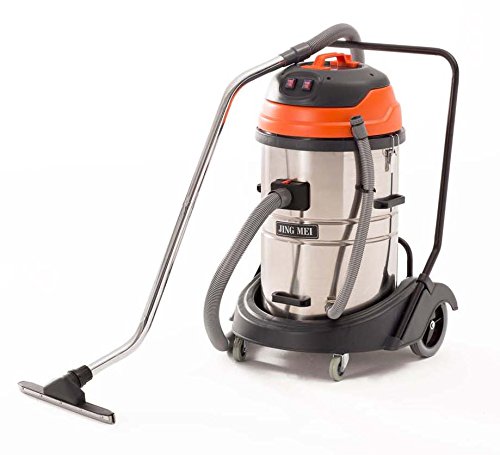
The Farag Janitorial wet and dry vacuum is built for cleaning crews who face liquid and dry debris in the same shift. Fine dust, sawdust, and spills all go into one large tank, so the crew stops less often and covers more floor per pass.
It is heavy, and storage takes planning, which is the trade for a machine meant to run every workday. Some owners find the filter awkward to clean, so check that routine before you commit. Verify tank size and filter type on the live listing before ordering.
WORKSHOP WS1600VA 16-Gallon Wet/Dry Shop Vacuum
 Check On The Amazon.com
Disclosure: As an Amazon Associate, I earn from qualifying purchases.
| Type | Wet and dry shop vacuum |
| Tank | 16-gallon drum |
| Build | Durable construction for job sites |
| Best for | Workshops and full renovation cleanup |
Reasons to buy
- Powerful enough to finish jobs quickly
- Cleans up both wet and dry messes
- Simple, straightforward controls
- Durable construction for site work
- Large capacity means fewer trips to empty
Reasons to avoid
- Can be a bit noisy
- Somewhat heavy to move around
- Cord could be longer on large sites
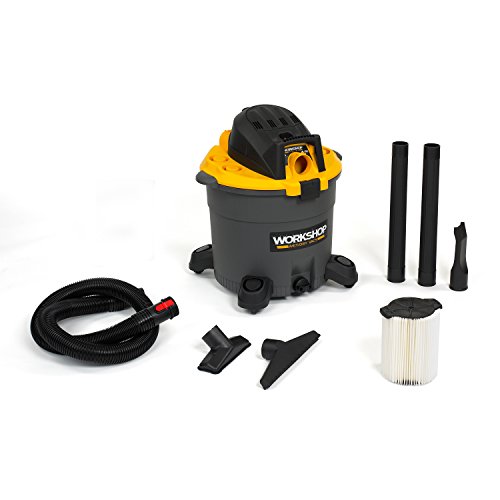
The WORKSHOP WS1600VA is a 16-gallon wet and dry shop vacuum sized for workshop and job-site debris. Chips, sludge, spills, and fine dust all go into the same drum, and the large capacity means fewer stops to empty during a full renovation cleanup.
It is loud and heavy, and the cord can fall short on a large site, so plan power and storage before it arrives. Fit the correct fine-dust filter and bag before drywall or concrete work, and confirm the included filter type on the listing.
How Fine Dust Clogs a Standard Filter
Fine dust means any particle small enough to stay airborne: sawdust from the table saw, drywall sanding powder, concrete and silica dust, cold ash, fine sand, and toner. A household vacuum chokes on this material because the particles pack into the filter and cut suction within minutes. Worse, worn filters let the smallest particles pass straight through and out the exhaust, back into the air you breathe.
That is the exact problem an industrial vacuum for fine dust is built to solve, with denser filter media and a contained dirt path. A true HEPA filter captures 99.97 percent of particles down to 0.3 microns, and higher grades tighten that standard further. If your dust stays airborne long enough to breathe, filtration deserves more weight in your choice than motor size alone.
Clogging also explains why suction fades mid-job. As the filter loads, airflow drops, the motor strains, and dust starts escaping at seals. A machine with a large filter area, a bag that pre-filters the stream, or a drum that holds debris away from the filter keeps suction steadier for longer. Check the filter, empty the bin before it tops out, and replace spent media on schedule rather than waiting for a dust smell.
Bagged machines win on disposal, because a full bag lifts out and the dust leaves with it. Bagless models skip bag costs, but emptying them outdoors is the only way to avoid a dust plume at the bin. Some designs drop filters entirely, as covered in our guide to bagless vacuums without filters, but for fine powder a sealed bag or a fine-dust filter stays the safer default.
Matching the Machine to the Mess: Bags, Wet and Dry Drums, and Capacity
Start from the mess, not the motor. Drywall and concrete dust call for dense filtration and contained disposal, so a bagged commercial vacuum or a shop drum with a fine-dust bag and filter fits best. Mixed shop work with spills, chips, and sludge calls for a wet and dry machine instead, since a dry-only canister cannot swallow a liquid mess. For more on the commercial side of this choice, see our commercial vacuum cleaner guide.
Capacity decides how often you stop. A small bagged canister suits a garage corner or a detail crew, while a 4-gallon canister covers a basement and a 16-gallon drum runs through a full renovation cleanup. Larger is not always better, though: a big drum is heavy, loud, and hard to store, so match the tank to the largest job you actually run each week.
Weight, wheels, hose reach, and cord length decide whether the machine moves around the floor or fights you the whole time. A portable canister wins on stairs and cars, while an upright wins on wide open floors. Noise and the running cost of bags and filters belong in the same math, since a cheap machine with costly consumables can outspend a dearer one within a year.
Two safety notes close this section. Let ash cool completely before vacuuming it, and follow local silica dust rules when cutting concrete, because those particles damage lungs long before they clog a filter. If anyone in the space has allergies, filtration matters even more, as explained in our HEPA vacuum cleaner guide. When in doubt, pick the denser filter and the more contained disposal path.
FAQ
What are industrial vacuum cleaners good for?
They handle jobs a household vacuum cannot: construction cleanup, workshop debris, wet spills, and fine powders that pack a standard filter solid. The machines in this guide cover bagged commercial canisters, a commercial upright, and wet and dry shop vacuums built for crews and job sites.
Do I need a HEPA filter for fine dust?
Yes, if the dust stays airborne long enough to breathe. A true HEPA filter captures 99.97 percent of particles at 0.3 microns, which covers most fine dust found in a shop. For wood chips and coarse debris alone, a standard filter is enough, but for sanding powder it is not.
Bagged or bagless for fine dust?
Bags contain the mess during disposal, which matters most with fine powders. Bagless bins cost nothing to empty, but that emptying step releases a dust cloud unless you take the bin outside. A bagged vacuum for mixed surfaces shows how sealed disposal works across floor types.
Can a shop vacuum pick up drywall dust?
It can, but the stock foam filter clogs fast and the fine powder ends up in the exhaust. Fit a fine-dust filter and bag, or run a cyclone separator ahead of the vacuum, before you sand a whole room. Empty the drum often so the filter never runs fully loaded.
How do I stop fine dust from blowing back out?
Check that the filter seats flush, empty the bin before it reaches the top, and pair the filter with a bag on dusty jobs. If the exhaust still smells dusty, the filter is spent and needs replacing. Seals and hoses deserve the same check, since a cracked hose leaks dust before it ever reaches the filter.
🔍 Free Tool: Vacuum Finder Quiz
Answer 6 quick questions — get your top 3 vacuum matches.
Conclusion
The right industrial vacuum for fine dust is the one whose filter matches your mess. Bagged commercial machines suit daily floor work, while a large shop drum suits renovation debris. Check capacity, hose reach, and filter upkeep before you commit to any single model. A machine that holds suction through a full shift saves more time than a stronger one that clogs.
Start with the quick verdict above, then weigh the trade-offs in the pick summaries. If your dust is mostly drywall powder, fit a fine-dust bag and filter before the first pass. Empty bags and bins outdoors, let ash cool fully, and follow local rules for silica dust. Done well, cleanup stops being the bottleneck and the job itself moves faster.


