


The best robot vacuum cleaner for big house layouts needs three things: long runtime, methodical navigation, and a bin that mostly empties itself. Big floor plans punish short batteries and random-path robots, so the picks below were screened with those demands first. You get seven models, their honest pros and cons, and a clear match for different budgets.
Runtime and navigation matter more than any extra feature when you want the best robot vacuum cleaner for big house coverage without babysitting the machine. After the reviews, a comparison table, a buying guide for large floor plans, and a tips section fill in the rest. Shortlist from the table, then read the full section for the model that fits your home.
Top Recommendations
These seven robot vacuums cover a wide price range, from slim budget helpers to lidar-mapped workhorses. Each section lists what stood out, what owners complain about, and the home type the model fits.
Shark AI Ultra Robot Vacuum with Matrix Clean Navigation
 Check On The Amazon.com
Disclaimer: As an Amazon Associate, I earn from qualifying purchases.
Pros
- Three hours of runtime per charge means fewer recharging breaks across a big floor plan.
- Wi-Fi connection enables voice control through Amazon Alexa or Google Assistant.
- Matrix Clean Navigation maps the space and cleans it in systematic passes.
- Strong suction picks up dirt, dust, and debris in fewer passes.
- The self-cleaning brushroll keeps hair from tangling, which cuts down on maintenance.
- A HEPA filter traps 99.99% of dust, dander, and allergens as small as 0.3 microns.
- Scheduled cleaning lets you set sessions for the times that suit your household.
- The slim body reaches under most furniture.
Cons
- Setting up the app and Wi-Fi connection takes some users longer than expected.
- Sensors can struggle with very dark or very light floor colors.
- It costs more than several other robot vacuums in this roundup.
- No remote control is included, so operation depends on the app or voice commands.
- Some owners report it getting stuck or losing its way around obstacles.
- The dustbin is small for the class and needs frequent emptying in pet households.
The Shark AI Ultra pairs strong suction with Matrix Clean Navigation, a system that maps your rooms and cleans them in methodical passes. Voice control through Alexa or Google Assistant handles start-and-stop without the app. For large homes, the headline number is the three-hour runtime, which lets it work through long hallways and multiple rooms before it needs the dock.
The self-cleaning brushroll deals with hair before it becomes a tangle, and the HEPA filter holds onto fine dander and allergens. Dual side brushes pull debris away from edges toward the suction path. If your big house is mostly one level with plenty of open floor, this is the set-and-forget option in the list.
iRobot Roomba Plus 405 Combo Robot Vacuum and Mop with AutoWash Dock
 Check On The Amazon.com
Disclaimer: As an Amazon Associate, I earn from qualifying purchases.
Pros
- Vacuums and mops in one pass, so hard floors get both treatments in a single run.
- The AutoWash Dock washes the mop pads automatically after each clean.
- Advanced navigation moves around furniture and avoids obstacles with ease.
- Strong suction and multiple cleaning modes handle different surfaces and messes.
- Wi-Fi connectivity allows remote control through the iRobot Home app.
- The rechargeable battery supports long cleaning sessions.
- Extra mop pads and a cleaning tool come in the box.
- The sleek, modern design blends into living spaces.
Cons
- It is one of the pricier options in this roundup.
- Mop pads and the dock need regular cleaning to perform at their best.
- Very large or complex layouts can still challenge it.
- Some owners find it noisier than expected.
- The AutoWash Dock needs periodic water refills.
- A few users report occasional navigation stumbles where the robot gets stuck or lost.
The Roomba Plus 405 (G181) is built for homes where vacuuming and mopping are both weekly chores. It runs advanced navigation and mapping for thorough coverage, then returns to the AutoWash Dock, which cleans the mop pads on its own. That last part matters in a big house: the more floor it covers, the more pad-washing you would otherwise do by hand.
Dustbin removal and filter maintenance are straightforward, and the box includes spare mop pads plus a cleaning tool. Quiet operation makes daytime runs practical. Between the dock and the app control, this is the pick for households that want mop upkeep mostly off their to-do list.
Tikom Robot Vacuum and Mop Combo
 Check On The Amazon.com
Disclaimer: As an Amazon Associate, I earn from qualifying purchases.
Pros
- Vacuums and mops in one go, saving a second pass.
- Intelligent navigation with obstacle avoidance maps the space for full coverage.
- 2000Pa suction handles daily debris on hard floors.
- The large water tank supports deep mopping across wide areas.
- Long-lasting battery keeps sessions going without constant recharges.
- Wi-Fi app control allows remote starts and scheduled cleanings.
- It runs quieter than a traditional upright vacuum.
Cons
- Initial setup can feel fiddly for some users.
- Emptying the dustbin and water tank can get a little messy.
- Very dark or black floors can confuse its navigation sensors.
- The mopping function is lighter than a dedicated mop on stuck-on grime.
- Manual control options beyond the app and voice are limited.
- Filters and brushes are consumables you will replace over time.
- Its height can get it stuck under low furniture.
The Tikom combo brings 2000Pa suction, a large water tank, and smart navigation at a price that undercuts most of this list. It maps rooms for orderly coverage, avoids obstacles, and lets you schedule runs from the app. For big single-level homes, the mix of wide coverage and a quiet motor is the main draw.
Battery life holds up across extended sessions, so mid-size large homes can often finish in one pass. Mopping covers daily dust and light marks; for dried spills you will still want a manual mop now and then. As a budget entry into robot cleaning for big spaces, it makes few compromises where it counts.
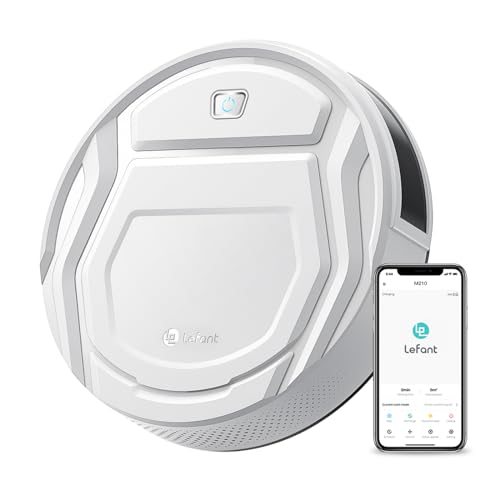
Lefant Robot Vacuum Cleaner
 Check On The Amazon.com
Disclaimer: As an Amazon Associate, I earn from qualifying purchases.
Pros
- Handles hard floors and low-pile carpets well.
- The slim body slides under most furniture where dust collects.
- Strong suction picks up dirt, hair, and allergens.
- Up to 120 minutes of continuous cleaning per charge.
- Quiet enough to run at any time of day.
- Multiple modes cover spot cleaning, edges, and scheduled runs.
- Works with Amazon Alexa and Google Assistant for voice control.
Cons
- Limited suction struggles on high-pile carpets.
- No mapping feature, so it does not remember your home layout.
- It can get stuck in tight or cluttered spots.
- No self-emptying bin; the dustbin needs manual emptying after use.
- Random navigation can miss spots in bigger rooms.
- Replacement filters and brushes add to long-term costs.
The Lefant keeps things simple: strong suction, a slim body, and up to 120 minutes of runtime for the money. Smart sensors steer it around furniture and tight gaps, and automatic recharging means it looks after its own battery. For big homes on a budget, it trades mapping for price and still covers daily dust duty.
Voice control through Alexa or Google Assistant, several cleaning modes, and quiet operation round it out. The honest trade-off is navigation: without mapping, big open rooms get random-path coverage, so occasional missed corners come with the deal. Buyers who want scheduled daily maintenance rather than perfect coverage will be happy here.
eufy Robot Vacuum 11S Max
 Check On The Amazon.com
Disclaimer: As an Amazon Associate, I earn from qualifying purchases.
Pros
- Slim and compact, reaching under furniture with ease.
- 2000Pa suction picks up dirt, dust, and pet hair.
- BoostIQ adjusts suction automatically based on the surface it is cleaning.
- Boundary strips block off rooms or zones you want it to skip.
- Quiet operation stays under the noise level of most competitors.
- Wi-Fi connection allows control through the eufyHome app.
- Up to 40 minutes of cleaning per charge.
Cons
- No mapping, so cleaning paths are less systematic than lidar models.
- No voice control through Amazon Alexa or Google Assistant.
- Charging is slow at around 4 to 5 hours for a full battery.
- The slim body carries a smaller dustbin, so it needs more frequent emptying.
- No self-emptying bin, carpet boost, or advanced navigation features.
- Some owners report app connectivity issues and occasional trouble finding the charging base.
The eufy 11S Max is the compact, budget-minded option here. It slides under low furniture, keeps noise down, and uses BoostIQ to raise suction when it hits a dirtier surface. Boundary strips give you simple zone control without a learning curve.
The 40-minute runtime and small dustbin make it a poor fit as the only vacuum for a big house, and that is worth saying plainly. Where it works well is targeted cleaning: one floor zone, a pet area, or a daily hard-floor sweep. As a secondary robot or a small-apartment primary, it is a solid value.
ROPVACNIC Robot Vacuum and Mop Combo with 4000Pa Suction
 Check On The Amazon.com
Disclaimer: As an Amazon Associate, I earn from qualifying purchases.
Pros
- 4000Pa suction gives deep cleaning on both hard floors and carpets.
- Shifts between vacuuming and mopping without manual swapping.
- Navigation technology maps rooms and works through them in order.
- Long battery life supports uninterrupted sessions across large areas.
- Voice control works through Amazon Alexa or Google Assistant.
- The slim, compact body reaches tight spaces.
Cons
- Some owners report the robot getting stuck or losing its position mid-clean.
- Mopping results are weaker on carpets and heavily textured floors.
- The large dustbin still needs frequent emptying because strong suction fills it fast.
- Noise runs slightly higher than some rival models.
ROPVACNIC brings 4000Pa of suction, pulling dirt out of carpet fibers as well as off hard floors. The mop function follows the vacuum in the same run, and navigation maps your rooms so coverage stays orderly. It is aimed squarely at big homes with mixed flooring.
Voice commands through Alexa or Google Assistant, plus a slim body for tight gaps, make daily operation easy. The trade-offs are real but manageable: expect some noise, plan on regular dustbin emptying, and keep the floor tidy so its navigation stays on track. For the price, the cleaning power per dollar stands out.
MONSGA Robot Vacuum and Mop Combo
 Check On The Amazon.com
Disclaimer: As an Amazon Associate, I earn from qualifying purchases.
Pros
- 5000Pa suction cleans hard floors and carpets with equal authority.
- The self-emptying station holds 3.5L of debris, so you empty it rarely.
- Lidar navigation maps your home and follows an efficient route.
- 180 minutes of runtime covers a large area on one charge.
- Multi-level mapping remembers different floor plans.
- Control via app, remote, or voice commands.
Cons
- It can get stuck under low furniture or struggle with floor-type transitions.
- Mopping is gentler than a dedicated mop on stubborn stains.
- The self-empty station takes up floor space and can be awkward to place.
- It runs loud during operation.
- Filters and brushes add recurring maintenance costs.
The MONSGA is the spec leader of this roundup: 5000Pa of suction, Lidar mapping, 180 minutes of runtime, and a 3.5L self-emptying station. Multi-level mapping means it can serve a two-story big house without relearning each floor. If you want the least hands-on time after setup, this is the machine doing the most work for you.
Day to day, the large dock bag and long runtime are what separate it from the cheaper picks: it cleans more, empties itself, and asks for attention mostly when filters and brushes wear. Noise during runs is the main complaint among owners, so schedule it for hours when that will not bother anyone. For maximum coverage with minimum upkeep, it earns the top slot.
Best Robot Vacuum Cleaners for Big Homes at a Glance
The table below lines up all seven models on the specs that decide big-house performance. Start with the runtime column, because the best robot vacuum cleaner for big house duty is the one that can finish your floor plan without giving up. A dash means the original roundup did not state a figure for that cell.
| Model | Suction | Runtime | Self-Emptying | Mop | Best For |
|---|---|---|---|---|---|
| Shark AI Ultra | – | Up to 3 hours | – | – | Voice control and long runtime |
| iRobot Roomba Plus 405 | – | – | Dock washes mop pads | Yes | Hands-off mop upkeep |
| Tikom Combo | 2000Pa | – | – | Yes | Quiet budget coverage |
| Lefant | – | Up to 120 minutes | No | – | Budget runtime, slim body |
| eufy 11S Max | 2000Pa | Up to 40 minutes | No | – | Targeted zone cleaning |
| ROPVACNIC Combo | 4000Pa | – | No | Yes | Carpet-heavy mixed floors |
| MONSGA Combo | 5000Pa | 180 minutes | Yes, 3.5L station | Yes | Biggest floor plans, least upkeep |
How We Selected These Robot Vacuums
This roundup screens every candidate through the demands of a large floor plan. Runtime came first, because a robot that recharges halfway through a big home leaves the far rooms undone. Navigation came next: lidar or smart mapping cleans in ordered passes, while random-path units cover the same area with more luck than plan.
Suction and bin handling decided the rest. Strong airflow matters on carpets, and a self-emptying dock or a large dustbin decides how often a big home stops to empty it. Price was weighed last, so the list spans premium machines and honest budget picks rather than only flagships.
Specs and drawbacks stay close to what the original roundup and retailer listings report. Where a figure was not stated, the table above says so instead of guessing.
Buying Guide: Choosing a Robot Vacuum for a Large Home
If none of the seven feels like an exact fit, judge any model you are considering against the factors below. They are the same tests our top picks had to pass.
Battery life and recharging: look for runtimes long enough to cover your floor plan in one pass, or auto-recharge and resume behavior that lets the robot continue where it stopped. A robot that dies mid-map leaves the far corners for another day. The Shark, Lefant, and MONSGA show what longer runtimes look like in practice.
Navigation: lidar and smart mapping units clean in ordered rows and remember where they have been. Random-path robots eventually cover the floor too, but they take longer and miss spots more often. In a big house, that difference adds up every single day.
Suction and flooring: carpet needs more pull than hard floors, so check the pascal rating if your bedrooms are carpeted. The ROPVACNIC and MONSGA lead this list on raw suction. Hard-floor homes can put that budget toward other features instead.
Docks and dustbins: a self-emptying station, like the MONSGA’s 3.5L dock, stretches the time between manual emptying from days to weeks. The Roomba’s AutoWash Dock solves the same problem for mop pads. Smaller bins mean more frequent trips to the trash, which gets old fast in a big home.
Control and boundaries: app control, scheduling, and no-go zones let a big home run in sections while you live in the others. Voice support through Alexa or Google Assistant adds convenience. Boundary strips handle zone control on models without app-based zones.
Noise. Strong suction is loud, and both the MONSGA and ROPVACNIC draw noise complaints from owners. If the robot runs during work calls or naps, put quieter models like the Tikom or eufy higher on your list.
Shopping on a tight budget? Our guide to the best inexpensive robot vacuum cleaner narrows the field, and the robot vacuum price guide tracks what each tier usually costs. For staircases, sofas, and car interiors, a portable vacuum for residential cleaning covers what a robot cannot reach.
Tips to Get the Most From a Robot Vacuum in a Large Home
- Place the dock in a central, open spot so recharges happen fast and runs start from the middle of the home.
- Use no-go zones or boundary strips to keep the robot away from cords, pet bowls, and fragile decor.
- Schedule runs twice daily in high-traffic zones; big homes collect dust faster than one pass can handle.
- Build multi-floor maps one level at a time if your model supports them.
- Check the dustbin or dock bag weekly, even with self-emptying stations.
- Wipe sensors and clean brushes on a routine so navigation stays reliable across a large space.
None of these tips cost money, and together they close most of the gap between a robot’s spec sheet and its real-world results in a big home.
Frequently Asked Questions
What Is the Suction Power of the MONSGA Robot Vacuum?
The MONSGA puts out 5000Pa of suction, which is enough for both hard floors and carpets. That is the highest figure in this roundup.
Does the MONSGA Robot Vacuum Come With a Self-Emptying Station?
Yes. Its station holds 3.5L of debris, so the dustbin empties itself and you deal with the bag only occasionally.
How Long Is the Runtime of the MONSGA Robot Vacuum?
A single charge runs for 180 minutes, which is enough to cover a big house in one session. The robot returns to its dock when the job is done.
Can the MONSGA Robot Vacuum Be Controlled Remotely?
Yes, through the app, the included remote, or voice commands. That flexibility means you can start a clean from another room or schedule it in advance.
What Navigation System Does the MONSGA Robot Vacuum Use?
It uses Lidar navigation, which maps your home and follows an efficient route. Multi-level mapping lets it remember more than one floor plan.
How Much Runtime Does a Big House Need?
It depends on square footage and layout, but longer is always safer. Models with 120 minutes or more, like the Lefant and MONSGA, handle large single-level homes in one pass. Shorter-runtime machines can still work as zone cleaners or with auto-recharge and resume.
Can a Robot Vacuum Clean Multiple Floors?
Only models with multi-level mapping, such as the MONSGA, remember more than one floor plan. You carry the robot between floors and it recalls the right map. Robots without this feature treat a new floor as unfamiliar territory.
How Often Should a Self-Emptying Dock Be Emptied?
The dock bag holds weeks of debris for most households, so checking it every couple of weeks is enough. Homes with shedding pets fill it faster. Filters and brushes still need their own cleaning schedule.
Do Robot Vacuums Handle Carpets and Pet Hair?
Suction rating decides most of it, and the 4000Pa and 5000Pa models here manage carpet decently. Motorized brushrolls pull hair out of fibers, and tangle-free designs like the Shark’s self-cleaning brushroll cut maintenance. Very high-pile carpets remain the hardest case, as the Lefant’s own drawbacks note.
Where Should the Dock Go in a Large Home?
Pick a central, open spot with clearance on both sides so the robot can dock and leave without obstacles. Central placement shortens recharging detours on big floor plans. Avoid cramped corners and spots behind doors.
🔍 Free Tool: Vacuum Finder Quiz
Answer 6 quick questions — get your top 3 vacuum matches.
Conclusion
Picking the best robot vacuum cleaner for big house cleaning comes down to matching runtime, navigation, and bin capacity to your floor plan. The MONSGA does the most work on its own, the Shark stretches runtime to three hours per charge, and the Roomba Plus 405 handles mop upkeep at the dock.
Budget buyers get real coverage from the Lefant and Tikom, while the eufy 11S Max makes a smart second unit for targeted zones. Compare current prices before you order, because robot vacuum deals move week to week. Whichever model you choose, a full floor map and a well-placed dock will do more for your results than any single spec.


