


A best robot vacuum for hard floors needs less power and more discipline than a carpet machine, because smooth surfaces release dust easily and show every missed strip. Airflow, edge pickup, and water control decide the result.
We researched six top-rated robots for tile, vinyl, laminate, and sealed wood, from a roborock with anti-tangle brushes to a Shark with sealed containment, verifying every capacity and mop detail against its listing. There are no lab tests and no prices here, only the practical differences that decide which robot keeps a hard floor genuinely clean.
Quick Verdict
Best Overall: roborock Q7 M5+ — airflow, anti-tangle brushes, and a seven-to-nine-week dock
Best Budget: VONKO Robot Vacuum and Mop — mapping and a sixty-day dock at the entry position
Best Containment: Shark AV2501AE — an XL HEPA base for the fine dust hard floors release
Quick Comparison Table
| Product | Best For | Key Spec / Feature | Check Price |
|---|---|---|---|
 roborock Q7 M5+ Robot Vacuum and Mop | Daily dust plus damp pass | 10,000Pa, 7-9 week dock, anti-tangle | Check Price on Amazon |
 VONKO Robot Vacuum and Mop | Mapping and dock on a budget | 8000Pa, 60-day dock, multi-level maps | Check Price on Amazon |
 Shark AV2501AE AI Robot Vacuum | Sealed fine dust | XL HEPA base, 60-day capacity | Check Price on Amazon |
 Tikom L8000 Plus Robot Vacuum and Mop | Daily cleaning, rare emptying | 90-day dock, 6000Pa, LiDAR | Check Price on Amazon |
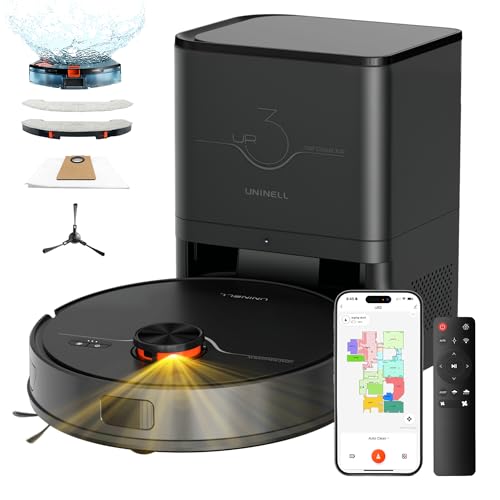 Uninell Robot Vacuum and Mop | Zones keep rugs dry | 7000Pa, no-go zones, self-empty | Check Price on Amazon |
 ILIFE A30s Plus Robot Vacuum | Long runtime on open floors | 150-minute runtime, 10,000Pa, self-empty | Check Price on Amazon |
Airflow Over Agitation — What This List Actually Checked
This list is for homes that are mostly hard floor, with rugs rather than wall-to-wall carpet.
- Airflow and filter condition, because hard floors release dust rather than holding it
- Edge pickup along skirting, where dust collects first
- Mop water control for sealed surfaces
- Dock capacity, since hard floors are cleaned often
Read the comparison table and each pick’s Best for and Skip if line, then open full reviews only for the robots whose mop suits your flooring.
These are researched picks from current listings rather than lab-tested claims, and every capacity and mop detail was verified on the product page.
1. roborock Q7 M5+ Robot Vacuum and Mop — Best Overall for Hard Floors
Best for: Hard-floor homes that want daily dust pickup and a light damp pass. | Skip if: You need to scrub dried spills.
Check On The Amazon.comDisclosure: As an Amazon Associate, I earn from qualifying purchases.
| Spec | Detail |
|---|---|
| Suction | 10,000Pa claimed |
| Dock | 7-9 weeks |
| Brush | Dual anti-tangle |
| Function | Vacuum and mop |
Reasons to Buy
- Airflow lifts fine dust
- Weeks between empties
- Light mop for sealed surfaces
Reasons to Avoid
- Maintenance mop only
- Dock needs space
Hard floors are a dust problem with a water risk, and this handles both with airflow and a light mop rather than aggressive agitation. The long dock interval is what keeps a daily routine going on a surface that shows dust within hours.
2. VONKO Robot Vacuum and Mop — Best Budget for Hard Floors
Best for: Small hard-floor homes that want mapping and self-emptying on a budget. | Skip if: You need a long support track record.
Check On The Amazon.comDisclosure: As an Amazon Associate, I earn from qualifying purchases.
| Spec | Detail |
|---|---|
| Suction | 8000Pa claimed |
| Dock | 60 days |
| Navigation | LiDAR, multi-level |
| Function | Vacuum and mop |
Reasons to Buy
- LiDAR at the entry position
- Sixty-day dock
- Voice control
Reasons to Avoid
- Newer brand
- Simpler app
Hard floors do not need flagship suction, so the entry-level machine is a sensible purchase rather than a compromise. A sixty-day dock and multi-level mapping keep the useful features intact, which matters more than an extra suction mode. It also helps that liDAR at the entry position.
3. Shark AV2501AE AI Robot Vacuum — Best Containment for Hard Floors
Best for: Allergy-prone hard-floor homes where fine dust must stay sealed. | Skip if: You want mopping included.
Check On The Amazon.comDisclosure: As an Amazon Associate, I earn from qualifying purchases.
| Spec | Detail |
|---|---|
| Dock | XL HEPA base |
| Capacity | 60 days |
| Navigation | LiDAR mapping |
| Control | Wi-Fi, Alexa |
Reasons to Buy
- Sealed HEPA containment
- Two months of capacity
- Consistent coverage
Reasons to Avoid
- No mop
- Large base
Fine dust on a hard floor hangs in the air when disturbed, and a sealed HEPA base keeps it out of the room during emptying. Two months of capacity means that event is rare rather than a weekly exposure. Worth noting: sealed HEPA containment.
4. Tikom L8000 Plus Robot Vacuum and Mop — Best Interval for Hard Floors
Best for: Hard-floor homes cleaned daily that want rare emptying. | Skip if: Carpet elsewhere needs more suction.
Check On The Amazon.comDisclosure: As an Amazon Associate, I earn from qualifying purchases.
| Spec | Detail |
|---|---|
| Dock | 90 days |
| Suction | 6000Pa claimed |
| Navigation | LiDAR mapping |
| Function | Vacuum and mop |
Reasons to Buy
- Ninety-day capacity
- LiDAR coverage
- Mop for dust film
Reasons to Avoid
- Modest on rugs
- Pad needs rinsing
Hard floors collect light debris often, so the dock interval is the specification that removes the most work. Ninety days between empties is the longest here and keeps a daily routine from turning into a bin routine. The useful part is that ninety-day capacity.
5. Uninell Robot Vacuum and Mop — Best Zones on Hard Floors
Best for: Hard-floor homes with rugs and mats that must stay dry. | Skip if: You have one open floor with no rugs.
Check On The Amazon.comDisclosure: As an Amazon Associate, I earn from qualifying purchases.
| Spec | Detail |
|---|---|
| Zones | Custom no-go zones |
| Dock | Self-empty station |
| Navigation | LiDAR, multi-floor |
| Suction | 7000Pa claimed |
Reasons to Buy
- Zones protect rugs and mats
- Multi-floor maps
- Quieter operation
Reasons to Avoid
- Lower suction
- Slower quiet mode
The usual hard-floor mistake is a damp pad reaching a rug, and mapped zones prevent it more reliably than sensors. Multi-floor support then covers hard floors on both levels without moving the machine by hand. In practice, zones protect rugs and mats.
6. ILIFE A30s Plus Robot Vacuum — Best Runtime for Open Hard Floors
Best for: Open-plan hard floors where a short battery leaves half the surface. | Skip if: Your home is compact.
Check On The Amazon.comDisclosure: As an Amazon Associate, I earn from qualifying purchases.
| Spec | Detail |
|---|---|
| Runtime | 150 minutes |
| Suction | 10,000Pa claimed |
| Dock | Self-empty station |
| Navigation | LiDAR mapping |
Reasons to Buy
- Covers large hard floors
- Competitive suction
- Self-empty station
Reasons to Avoid
- Station is not sealed
- Filter needs rinsing
Hard-floor cleaning is frequent and light, so endurance decides whether one machine covers the whole area. At 150 minutes this finishes an open plan without a recharge break, which is what keeps the routine to a single run. It also helps that covers large hard floors.
Quick Decision
The picks below are based only on product features — every bullet comes from that pick’s own spec table or its own Reasons to Buy.
Best all-round: roborock Q7 M5+ Robot Vacuum and Mop
- Airflow for dust
- Weeks between empties
- Light mop
Best budget: VONKO Robot Vacuum and Mop
- LiDAR mapping
- Sixty-day dock
- Voice control
Best containment: Shark AV2501AE AI Robot Vacuum
- Sealed HEPA base
- Sixty-day capacity
- Consistent coverage
Why Hard Floors Reward Clean Filters
Dust Moves With Air
On a smooth surface there is no pile to hold debris, so airflow lifts it directly. That makes filter condition the main variable, and a mid-range robot with a fresh filter beats a flagship with a loaded one.
Edges Collect First
Hard-floor dust gathers along skirting and under furniture, where a round head cannot reach. Side brushes do most of that work, and the rest needs an occasional tool pass.
Water Is the Only Risk
Sealed surfaces tolerate a damp pass, but standing water at seams or joints causes damage. Reduced water settings and pad lift are the safeguards.
What was left out and why: models without a stated mop function or dock capacity were excluded rather than estimated, and carpet-focused robots were left out because hard floors need less agitation. Water volume is not independently measured here.
FAQ: Robots on Hard Floors
Is suction important on hard floors?
Less than on carpet. Airflow, a clean filter, and edge brushes matter more, so a mid-range robot often performs as well as a flagship.
Can a robot mop sealed floors safely?
A damp maintenance pass is generally safe. Use the lowest water setting and remove the pad afterwards so moisture does not sit on seams.
How often should the robot run on hard floors?
Daily light passes keep grit from being walked in, which is what dulls a finish. A weekly edge pass with a crevice tool helps too.
Do robots scratch hard floors?
Not normally, provided the brush and wheels are clean. Grit trapped in a dirty brush is the usual cause of marks.
🔍 Free Tool: Vacuum Finder Quiz
Answer 6 quick questions — get your top 3 vacuum matches.
Conclusion
For hard floors the roborock Q7 M5+ is the best balance, because airflow handles fine dust and a long dock interval keeps the routine going. Choose the VONKO for value and the Shark AV2501AE where sealed containment matters more than mopping.
Next, check the mop water setting and edge access on the two robots that fit, since those decide how the floor looks after a month. If you are still comparing formats, the vacuum finder tool below narrows it by surface type.


