


Black vinyl tile makes a statement few floors can match. Done right, it reads modern and expensive.
Done carelessly, it shows every crumb, water spot, and scuff line, and the room feels smaller and darker.
The difference is planning. This guide covers sheen, grout lines, room fit, and the cleaning rhythm dark floors demand.
Key Takeaways
- Matte or textured finish is mandatory. Glossy black tile shows every footstep and scratch.
- Black floors need light walls or pale furniture to balance the room.
- Patterns like checkered or marble-vein hide soil far better than solid black.
- Dust shows on black within a day. A robot vacuum or quick daily sweep is the real maintenance plan.
- Matte finishes show water spots less, but no black tile is spot-proof in bright light.
Sheen: The Decision That Matters Most
Glossy black tile looks stunning in a photo and exhausting in real life. Every dust mote, footprint, and pet hair sits plainly visible.
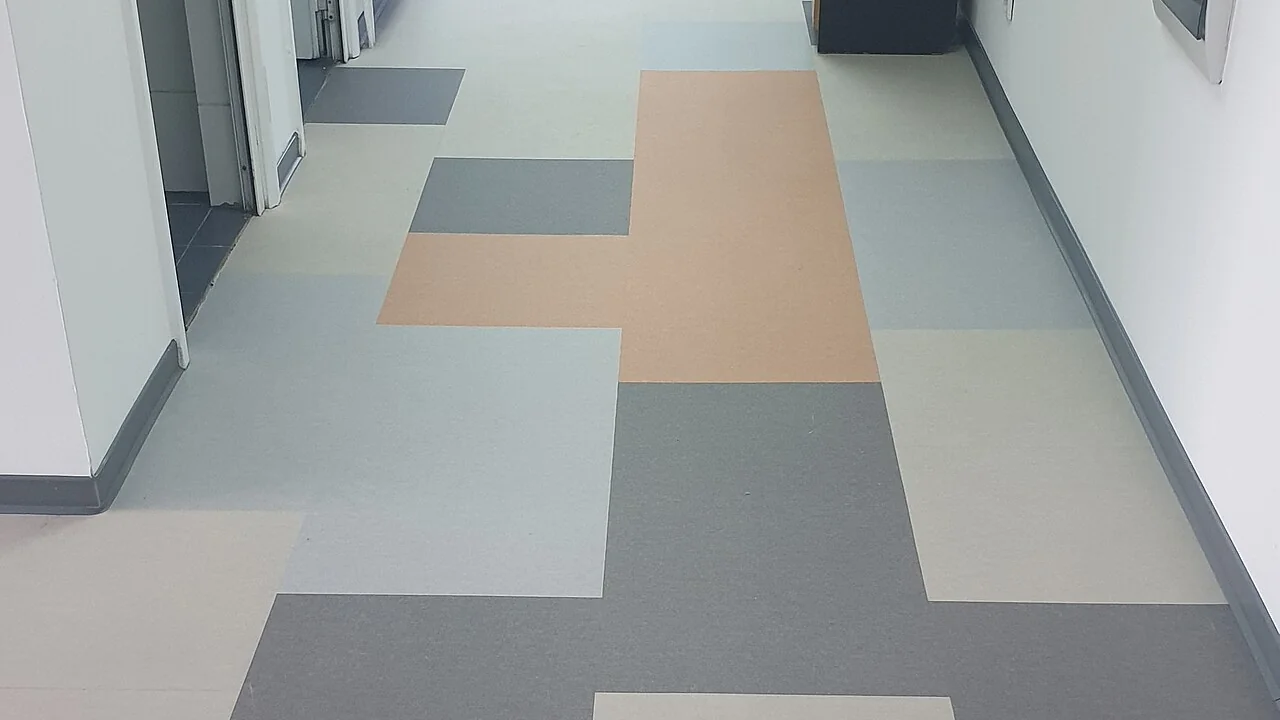
Matte black hides dust dramatically better and hides minor scratches entirely.
Textured surfaces, like embossed slate or stone grain, go one step further. They scatter light, so scuffs vanish.
If you want some shine, look for a satin finish on a textured surface. That mix is the practical compromise.
Pattern Beats Solid Black
Solid black tiles look bold but demand heavy cleaning. Veined marble-look tiles hide nearly everything between cleans.

Checkerboard with white is the classic. It reads retro in a kitchen and hides crumbs in the pattern itself. For pairing ideas, browse the full range of vinyl plank flooring colors.
Black slate-look tile with gray grain works beautifully in bathrooms and basements.
Pure solid black earns its keep in small doses: an entry, a powder room, an accent zone. Whole rooms of it need routine like a car’s paint.
Where Black Works, and Where It Fights Back
Kitchens with white cabinets and black tile look sharp. Soil shows near the stove, so keep a hand broom there. Dedicated kitchen floor coverings list similar tradeoffs at higher budgets.
Bathrooms do well. Matte black tile with gray veining reads spa-like, and water spots matter less on texture.
Small dark rooms without windows can handle black, but the walls and lighting must compensate.
Big living rooms with dark upholstery plus black floors turn cave-like. Balance comes from rugs, light walls, and warm lighting.
Grout Lines and Tile Format
Black tile with black grout disappears into a solid sheet. That look suits modern rooms and hides grout cleaning.
A contrasting gray or white grout line adds pattern and structure, and reads deliberate rather than heavy.
Larger tiles mean fewer grout lines to scrub. A 12-by-24 format keeps the floor calm in big rooms.
Tight, even grout lines matter more with dark colors. Uneven gaps that vanish on beige become visible geometry on black.
Subfloor and Installation Care
Dark floors telegraph subfloor ridges in raking light. Check flatness with a 10-foot straightedge before you start. A dip that rakes light across black deserves the uneven subfloor fixes first.
Dust the subfloor completely before laying tile. Any crumb under a black tile becomes a permanent shadow bump.
Stagger the seams if you are using plank-style black tiles. A herringbone or brick pattern adds motion and hides seams.
If you are gluing the tile down, use the adhesive the tile maker names. Black vinyl shows adhesive squeeze-through in the seams.
The Cleaning Reality
Dust shows on black within a day of sweeping. That is not a defect; that is how dark floors work.
A robot vacuum running daily solves most of it. Set it on a schedule and the floor always looks ready.
Mop weekly with a pH-neutral cleaner. Rinse the mop head often, or you will spread gray streaks across black.
Skip wax and oil-based polishes. They leave haze on matte finishes and collect dust on gloss.
Lighting and Pairings
Black floors need contrast from above. Warm lighting, pale walls, and light furniture keep the room balanced.
White walls with black tile is the sharpest combination. Gray walls soften it slightly if the room feels stark.
Wood accents warm up the room. A natural jute rug or oak table stops black from reading cold.
Avoid dark walls plus dark floors plus dark furniture. That combination only works in deliberately moody rooms with strong lighting.
Scratches, Repairs, and Longevity
Quality vinyl tiles with a 12-mil or better wear layer resist scratches well. Texture hides what does happen.
Deep scratches show white on black. A vinyl repair kit with a black filler blends them more easily than on any other color.
Keep felt pads on furniture and lift, never drag, heavy items. That advice matters 10x more on black.
A 15-to-20-year life is normal. The surface wears gracefully if the cleaning routine stays ahead of grit.
Black Tile in Commercial-Style Spaces
Salons, bars, and studios use black vinyl tile for the same reason boutiques do: it frames merchandise and lighting sharply.
Commercial installs need a higher wear layer, 20-mil or more, because traffic runs all day.
Matte finishes with texture are mandatory in wet commercial zones. Gloss black tile fails slip checks the moment it gets damp.
If the space has rolling loads, choose rigid-core tile. Hollow vinyl dents under casters over time.
Transition Strips and Room Flow
Black floors meet light floors at doorways all the time. A low-profile T-molding in satin black makes the junction deliberate.
Against medium oak, a wood-tone reducer looks better than black. Match the floor the strip sits on mostly, not the one it points to.
In open-plan rooms, change direction or pattern at the boundary instead of adding a strip. Black tile to pale plank can flow without hardware.
Keep transitions away from the center of a sight line. Mid-doorway is natural; mid-kitchen-run is not.
Slip Resistance and Safety Notes
Wet glossy black tile is the slickest common flooring combination. Choose textured surfaces wherever water appears.
Look for a listed coefficient of friction on the spec sheet, especially for bathroom and kitchen installs.
Rugs at tub edges and sink fronts solve most real-world slip moments in black-floored bathrooms.
Textured slate-look vinyl runs close to barefoot-friendly even damp, which is why it dominates spa-style bathroom designs.
Mistakes to Avoid
- Buying glossy solid black for a big bright room — every footstep and dust particle shows, and the honeymoon ends in a week.
- Skipping the flatness check — ridges that disappear under beige throw visible shadows across black.
- Using dark walls, dark furniture, and black floors together — the room goes cave-dark without serious lighting.
- Cleaning with wax or oil polish — it hazes the finish and attracts dust faster than no polish at all.
- Ignoring the robot vacuum option — manual daily sweeping is a chore no one keeps up.
Frequently Asked Questions
Does black vinyl tile flooring show dirt a lot?
Dust and crumbs show within a day. Mud and pet hair show even faster.
Is black vinyl tile good for kitchens?
Yes, especially matte or veined patterns with white or light cabinetry.
How do I keep black vinyl floors shiny?
Keep them clean first. Dust and film are what make black look dull.
Will black vinyl fade in sunlight?
The base color resists fading. The wear layer is what matters, so look for UV-cured coatings.
Can I use black vinyl tile in a small bathroom?
Yes, and it looks sharp with white fixtures and pale walls. Pattern and texture help most in small spaces.
What is the best grout color for black vinyl tile?
Matching black grout for a seamless modern look. Light gray grout if you want the tile pattern to read clearly.
Is black vinyl tile flooring good for dogs?
Claw scratches show the same as any dark floor, but a textured 12-mil wear layer hides most of them.
Can black vinyl tile handle underfloor heating?
Yes, quality vinyl tile works over radiant systems within the makers temperature limit, usually about 85 degrees Fahrenheit.
🧱 Free Tool: Tile & Grout Calculator
Tile count, grout bags and thinset bags — calculated for your room.
Conclusion
Black vinyl tile rewards three early decisions: matte or textured finish, some pattern or veining, and a contrast plan for walls and light.
Set up that way, a daily robot pass and a weekly damp mop keep it looking designed rather than dusty. That rhythm is the entire cost of the look.


