
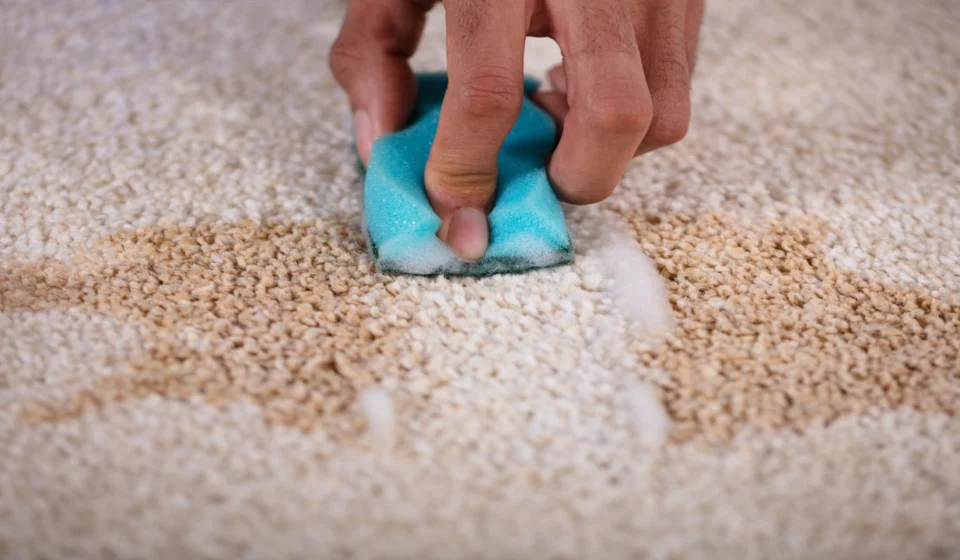

To clean carpet stains, blot the spot first to lift as much of the spill as you can, then treat it based on the stain type. Blotting pulls the stain up out of the fibers, while rubbing pushes it deeper and spreads it wider. Work from the outside edge toward the center so the spot does not grow.
Carpet stain removal works best when you act fast, but even an older stain can often be improved with patience and the right steps. The method matters more than the effort you put in. A gentle, repeated approach with plain water and a mild cleaning solution will do more good than one hard scrub. This guide covers the basics first, then each common stain type.

| Stain Type | First Step | Cleaning Approach | What to Avoid |
|---|---|---|---|
| Food | Scoop up solids | Blot with water, mild solution | Rubbing crumbs in |
| Drink | Blot up liquid | Blot with water, repeat if needed | Colored cleaners |
| Pet | Blot liquid, lift solids | Blot with water, treat odor | Scrubbing it deeper |
| Mud | Let dry, then vacuum | Vacuum, blot any mark left | Cleaning wet mud |
| Grease | Blot off extra grease | Blot, mild solution, light passes | Hot water |
| Ink | Blot gently | Dab lightly with water | Rubbing, which smears |
Carpet Stain Removal Basics
Start with the same steps for almost every stain. First, blot up as much as you can with a clean white cloth or paper towel. Then, work from the outside of the stain toward the middle so it does not spread. Rinse the cloth often and keep blotting with fresh water until the color is gone.
If water alone does not shift the mark, use a mild cleaning solution. A small amount of dish soap mixed with cool water is a safe place to start for most stains. Test it on a hidden spot first and wait a few minutes to make sure it does not change the color. For most stains, repeat the process several times rather than scrubbing hard once. A gentle, repeated approach keeps the carpet fibers in good shape and lifts the stain more effectively.
Food and Drink Stains
Food stains call for a careful first step. Scoop up any solid food with a spoon or butter knife before you touch the carpet with a cloth. Pressing crumbs into the pile makes them harder to remove. For a liquid, blot the spill, then work with small amounts of water and a mild dish soap solution. For drinks such as soda, milk, or juice, plain water and gentle blotting often work on their own. Coffee and tea need patience. Blot repeatedly with water, then use a mild solution and blot again until the color fades.
Avoid hot water and colored cleaners for food and drink stains. Hot water can set protein stains such as milk, egg, or baby food, while a colored cloth or cleaner can leave its own mark. Test any new cleaner first, then work from the outside edge inward. If the stain is still visible after several passes, repeat the steps later rather than pressing harder.

Pet Stains and Odor
Pet stains need a two-part approach that handles both the mark and the smell. Start by blotting up liquid and lifting any solid material. Then, rinse the area with plain water and blot it up again. Next, treat the odor with a solution made for pet stains, and follow the instructions on the bottle. Skipping the smell stage can leave the pet returning to the same spot.
For deep pet messes that hand blotting cannot reach, a machine built for this job can help — see our guide to the best carpet cleaner vacuum for pet stains. Repeat the rinse and blot steps until the water stays clear. Leave the carpet to dry fully, and open a window or run a fan to help air flow. Avoid hot water and harsh bleach, because heat can set protein stains and bleach can damage carpet color.
Mud and Outdoor Stains
Mud needs a different order of steps. Let it dry first, then vacuum up as much dried mud as you can. Trying to clean wet mud pushes it deeper into the fibers. After vacuuming, blot any mark that is left with plain water mixed with a small amount of dish soap. For marks left by shoes or outdoor grit, repeat the blot and rinse steps until the stain fades.
Pet and road salt can also leave marks on carpet. Vacuum first, then blot with water and a mild cleaner. Do not use hot water, which can set the stain. If a mud stain is old or dried in, work the area with a soft brush dipped in soapy water, then rinse and blot again. Use a fan to dry the spot well so it does not leave a ring.
Grease and Oil Stains
Grease and oil stains need to be lifted before they are washed away. Start by blotting off extra grease with a clean cloth, then use a mild dish soap solution to cut through the oil. Work with light passes of the cloth and refresh the water as you go. A paste of baking soda mixed with a few drops of water can help absorb surface oil on some carpets. Leave it for a few minutes, then vacuum it up and blot again with soapy water.
Do not use hot water on a fresh oil stain, because heat may make it more likely to set and spread. Avoid harsh solvents, as they may damage carpet fibers or leave a bleached spot. For a small kitchen spill, simple dish soap and patience will often do the job. If the stain remains, repeat the steps and let the carpet dry between attempts.
Old or Set-In Stains
Old or set-in stains are harder to remove because the color can bond with the carpet fibers. Start with cool water and gentle blotting to loosen the surface layer. Then, use a mild dish soap solution and a few light passes rather than one hard scrub. For tough spots, a cleaner made for old stains may help. Check the label and test it first on a hidden spot.
If the stain is still visible after several attempts, leave the area to dry first, then try again. Sometimes the stain will look lighter after the carpet is fully dry. Steam cleaners can also help on some carpets, but check the carpet type first. If a stain is deep and will not move even after many rounds, a professional cleaner may be needed.
What Not to Do to Carpet
Some habits make carpet stains worse rather than better. Avoid bleach, strong solvents, and colored cloths, which can leave new marks or damage the fibres. Avoid hydrogen peroxide, often used in home remedies, as it can remove carpet color. If bleach needs to be in the laundry basket, keep it away from carpet you have yet to clean.
Avoid scrubbing hard or rubbing in circles, as scrubbing can fray the fibers and spread the color. Let water or cleaner sit is fine, but do not flood the carpet, as too much moisture can reach the padding and cause a damp smell. Keep the room airy so the carpet dries well. When in doubt about a cleaner, test it first on a hidden area and wait a few minutes before using it on the stain.
FAQ: How to Clean Carpet Stains
How do you clean a carpet stain first?
Blot the spot first with a clean white cloth or paper towel and work from the outside edge toward the center. Lift as much of the spill as you can before you add any water or cleaner, so the stain does not spread.
What is the best homemade carpet stain cleaner?
A small amount of mild dish soap mixed with cool water is a safe place to start for most stains. Test it in a hidden spot first and wait a few minutes to make sure it does not change the carpet color.
Can rubbing make a carpet stain worse?
Yes, rubbing pushes the stain deeper into the fibers, spreads it wider, and can damage the pile. Blot with a clean white cloth or paper towel, rinse the cloth often, and repeat the steps rather than pressing harder.
How do you remove old carpet stains?
Start with cool water and gentle blotting to loosen the surface, then use a mild dish soap solution on light passes. Let the carpet dry fully between attempts, and if the stain is still there, repeat the steps or test a cleaner made for old stains. A professional is an option if the stain refuses to lift.
When should I call a professional carpet cleaner?
Call in a professional if a stain remains after several gentle attempts, if it is very large, or if it is pet urine in a main room. A professional can steam clean the area and check the padding without damaging carpet color or fibers.
Vacuum Finder Quiz
Answer 6 quick questions — get your top 3 vacuum matches.
Please answer all 6 questions to see your matches.
Your Top 3 Vacuum Matches
Frequently Asked Questions
How accurate is the quiz?
The quiz matches you against 12 vacuum archetypes using a transparent scoring system based on your floors, pets, home size, budget, cord preference and priority. It's a strong starting point, not a lab test — always read full reviews before buying.
Do you update the recommendations?
Yes. The vacuum archetypes and scoring are reviewed and updated as new vacuum types and features become mainstream on FloorCrafted.
Do you earn a commission on recommended vacuums?
Some links in our buying guides are affiliate links. If you buy through them, FloorCrafted may earn a commission at no extra cost to you. This never affects quiz results.
Can I share my result?
Yes! Use the Share or Copy results button under your top 3 matches to send your result to a friend or save it for later.
Conclusion
Cleaning carpet stains well comes down to two habits: act quickly and run the right steps in the right order. Start by blotting up what you can, work from the outside in, and use plain cool water and a mild solution in small, repeated passes. The same steps work for many common stain types, and the same steps work on carpeted stairs.
For stubborn marks, be patient, or call in professional help when it will not clear. With careful blotting, mild cleaning, and a good drying routine, most carpet stains can be lifted without new problems.


