🛠️ Free Tools

Calculators & quizzes for your floors — pick one:

🔍 Vacuum Finder QuizFind your perfect vacuum 📐 Flooring Box CalculatorHow many boxes do you need? 🚗 Car Mat FinderMats for your exact car 💰 Cost EstimatorCompare 5 flooring types 🧪 Adhesive CalculatorHow much glue per sq ft ⚡ Suction ConverterAir Watts ↔ Pa ↔ kPa 🪜 Stair CalculatorMaterial for your stairs 🧱 Tile & GroutTiles, grout & thinset 🏠 Room FinderBest floor for each room 🧹 Mop Finder QuizFind your perfect mop 🎨 Paint CalculatorHow many gallons? 🟧 Rug Size GuideRight size, visualized
View all 19 tools →
Skip to content
-
Subscribe to our newsletter & never miss our best posts. Subscribe Now!
FloorCrafted: Artisan Flooring Excellence | Explore expert flooring advice, creative designs, and practical solutions to transform your home into a stylish, durable, and comfortable space you’ll love. FloorCrafted: Artisan Flooring Excellence

Explore expert flooring advice, creative designs, and practical solutions to transform your home into a stylish, durable, and comfortable space you’ll love.

  • Home
  • Floor
  • Shower
  • Paint
  • Free Flooring & Vacuum Tools
    • Plank Layout Calculator — Rows, Planks & Last Row Width
    • Subfloor Calculator — How Many Panels Do I Need?
    • Carpet Quantity Calculator — Sq Yd for Rooms & Stairs
    • Tile Quantity Calculator — Tiles & Boxes for Floors & Backsplashes
    • Flooring Cost Breakdown Calculator — Material, Labor & Extras
    • Square Feet Linear Feet Converter — Area, Length & Sq Yd
    • Flooring Box Calculator
  • Glue
Close

Search

Subscribe
FloorCrafted: Artisan Flooring Excellence | Explore expert flooring advice, creative designs, and practical solutions to transform your home into a stylish, durable, and comfortable space you’ll love. FloorCrafted: Artisan Flooring Excellence

Explore expert flooring advice, creative designs, and practical solutions to transform your home into a stylish, durable, and comfortable space you’ll love.

  • Home
  • Floor
  • Shower
  • Paint
  • Free Flooring & Vacuum Tools
    • Plank Layout Calculator — Rows, Planks & Last Row Width
    • Subfloor Calculator — How Many Panels Do I Need?
    • Carpet Quantity Calculator — Sq Yd for Rooms & Stairs
    • Tile Quantity Calculator — Tiles & Boxes for Floors & Backsplashes
    • Flooring Cost Breakdown Calculator — Material, Labor & Extras
    • Square Feet Linear Feet Converter — Area, Length & Sq Yd
    • Flooring Box Calculator
  • Glue
Close

Search

Subscribe
micro cement flooring — polished concrete floor with a seamless grey finish
Floor

Micro Cement Flooring: Pros, Cost and Care Guide

Micro Cement Flooring: Pros, Cost and Care Guide
By Richard Delong
10/11/2026 6 Min Read
0

Micro cement flooring gives a room the look of polished concrete without pouring a new slab. It is a thin cement coating spread over a floor in layers, then sealed to resist water and stains. The finished surface is smooth and seamless, with no grout lines or joints.

Micro cement is popular in bathrooms, kitchens, and open-plan living spaces because the color runs through the whole floor and the seams never break the look. It will not feel like a plank floor or a tile floor — it feels flat, cool, and hard underfoot. This guide covers how micro cement is laid, where it works best, and what it costs.

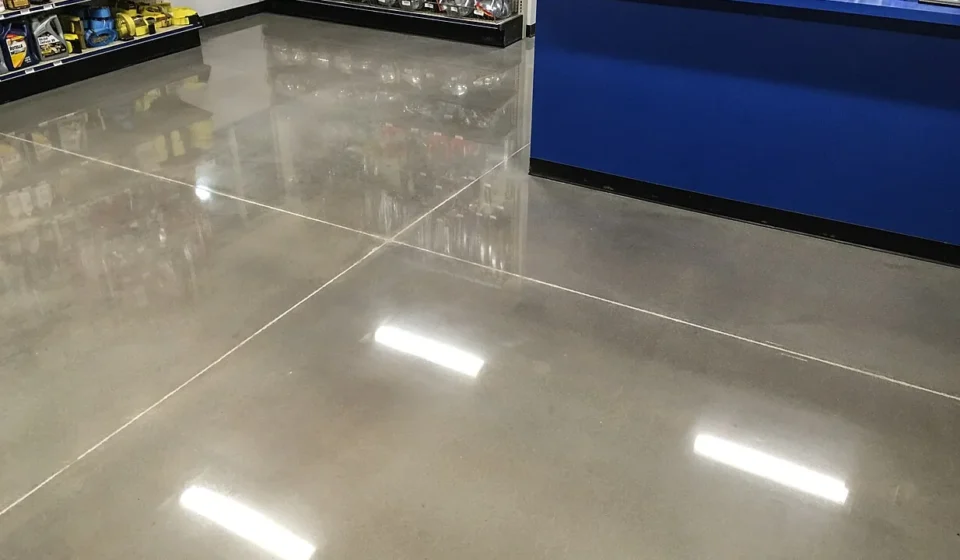
micro cement flooring — polished concrete floor surface close-up
Photo: Kgbo, via Wikimedia Commons, CC BY-SA 4.0
FloorLookThicknessWater ResistanceBest RoomsCare
Micro cementSeamless, matte concrete look, no jointsAbout 2–3 mmHigh when sealedBathrooms, kitchens, living roomsSweep and damp mop, re-seal from time to time
Polished concreteHard, glossy or matte stone lookThe slab itself, ground downMedium, needs sealingLarge living areas, lofts, garagesSweep and mop, re-seal every few years
Ceramic tileMany colours and patterns, with grout linesAbout 8–12 mm plus adhesiveHighBathrooms, kitchens, hallwaysMop and clean grout lines
Epoxy floorGlossy, smooth, often plain or fleckedAbout 2–5 mmHighGarages, workshops, utility roomsSweep and mop, avoid harsh solvents

Table of Contents

Toggle
  • How Micro Cement Flooring Is Applied
  • Where Micro Cement Flooring Works Best
  • Pros and Limits of Micro Cement Flooring
  • How to Clean and Care for Micro Cement Floors
  • Micro Cement Flooring Cost
  • FAQ: Micro Cement Flooring
    • Is micro cement flooring waterproof?
    • How long does micro cement flooring last?
    • Can micro cement go in a bathroom?
    • Can micro cement be laid over tiles?
    • Is micro cement cheaper than polished concrete?
    • Can you DIY micro cement flooring?
  • Flooring Cost Estimator
    • Frequently asked questions
    • Related articles
  • Conclusion

How Micro Cement Flooring Is Applied

Micro cement is made from a mix of fine cement, polymers, aggregates, and colour pigments. It is spread in thin layers, often two or three, over a base such as a concrete screed, tile, or plywood. Each layer dries before the next is spread, and the last coat is sanded to a smooth finish before a sealer is applied.

The base must be clean, dry, and stable before work starts. A floor that bounces or moves will crack the thin layer above it. If the base is tile, the grout lines must be filled. If it is wood, it must be stiff and glued down. If there are cracks, they must be repaired first. A professional will check the moisture level first and fix any weak spots.

Unlike vinyl, micro cement is not a DIY floor for most people. It needs skill and care to spread each thin layer evenly. Most professionals take two to four days to finish a small room, including drying time.

micro cement flooring — concrete floor in a modern living room and kitchen

Where Micro Cement Flooring Works Best

Micro cement works best in rooms that need a smooth, seamless floor with no grout to clean. It suits bathrooms, kitchens, open-plan living rooms, and hallways. It can also cover walls and worktops in the same finish for a matched look. In a wet room, the finish must be well sealed, because any gap in the sealer will let water through.

It feels cool and hard underfoot, which suits warm homes but can feel cold in winter. Underfloor heating works well beneath it. The finish is quiet underfoot, as there is no hollow sound when it is laid correctly. This makes it a good match for large, open spaces.

Micro cement is not the best floor for a room with a moving or weak base, or for a room that may need future repairs to pipes or cables below. If the base is weak or has growing cracks — fix the base first, or choose another floor.

Pros and Limits of Micro Cement Flooring

Micro cement is waterproof and easy to clean when it is sealed well. It adds no height to the floor, so it can be laid over an old floor without changing door clearances. It has no grout lines, so dirt and mold have less surface to gather on. It is also strong enough to take normal family use.

The same surface has limits worth knowing before you install it. It can scratch, mark, and show wear from shoes, furniture, and pet claws. It is not as soft or forgiving as vinyl or wood underfoot. It can crack if the base below moves, and it can stain if the sealer is not maintained.

Color and texture can change between batches. Small differences may show from one mix to the next, and the final color can be checked with a sample. Micro cement is also not a cheap floor once labor is included, and repairs are hard to hide if a small area is damaged.

How to Clean and Care for Micro Cement Floors

Micro cement is easy to care for once it is sealed. Sweep or vacuum with a soft brush to pick up dust and grit. Damp mop with plain warm water and a mild cleaner. Do not use bleach, strong acids, or harsh abrasive tools, as these damage the sealer and the colour.

Wipe up spills early, especially coffee, wine, juice, and strong cleaning fluids. These can mark the surface if they are left to dry. Place felt pads under chairs, sofas, and table legs to prevent scratches. Doormats at entry points help too, as grit from shoes is the main cause of fine marks.

Re-seal the floor from time to time, especially in a bathroom or kitchen. The sealer will wear from foot traffic and cleaning. A professional can re-seal a floor without replacing the whole finish. If a crack or stain becomes visible, it is worth calling in a professional for advice.

Micro Cement Flooring Cost

A micro cement floor costs more than vinyl or laminate, and the price depends on the size of the room, the condition of the base, and the number of layers. For most homes, the total cost of materials and labor is £70 to £140 per square metre, once the base repair and sealing are included.

A kitchen or bathroom floor will cost more per square metre than a large open area, because more time is spent on edges, drains, and fitting around fixed items. Material prices are lower than labor because most of the cost comes from the skill of the installer, not the product itself.

To estimate a cost for your room, work out the length and width of your floor, then multiply them to get the area. Use a flooring cost estimator to enter your area and see an approximate cost for a micro cement floor. Always ask for at least two or three quotes from local installers.

FAQ: Micro Cement Flooring

Is micro cement flooring waterproof?

Yes, once it is sealed properly, micro cement is waterproof. The thin layer resists water, but it only stays waterproof if the sealer is in good condition. Re-seal it from time to time to keep the barrier strong, especially in a bathroom or wet room.

How long does micro cement flooring last?

A micro cement floor lasts about 10 to 20 years with good care. Its life depends on the base, the sealer, and how the floor is used. Floors in kitchens and bathrooms need more care than those in a bedroom.

Can micro cement go in a bathroom?

Yes, micro cement is often used in bathrooms because it has no grout to clean. It can coat the shower walls and floor. It needs a good sealer and care in damp areas, and re-sealing will be needed more often in a wet room.

Can micro cement be laid over tiles?

Yes, micro cement can cover old tiles if they are sound and well fixed. The grout lines must be filled to make the surface level before the micro cement is layered. If tiles are loose or cracked, they must be repaired first.

Is micro cement cheaper than polished concrete?

Micro cement is often cheaper than polished concrete when it is installed over an old floor, because there is no need to remove the slab. Polished concrete needs a slab in good condition, and the grinding adds more labor than a micro cement overlay.

Can you DIY micro cement flooring?

A DIY kit can be used for a very small area, but it is hard to get a smooth coat without practice. Most owners hire a professional because the quality of the finish depends on how the layers are spread. A poorly applied finish may crack or stain.

💰

Flooring Cost Estimator

Compare vinyl, laminate, hardwood, tile and carpet costs for your room — prices fully editable.

Enter a valid area greater than 0.
Flooring typeMaterial $/sqftInstall $/sqft
Vinyl Plank
Laminate
Solid Hardwood
Ceramic Tile
Carpet
All prices must be 0 or higher.
TypeMaterialInstallTotal

Cost comparison

📝 Note: Estimates cover material + installation only. Underlayment, old-floor removal, trim and taxes are not included — add ~10–15% for those.

Frequently asked questions

Are these prices accurate for my area?

Prices vary a lot by region and by product quality. The defaults are reasonable US averages, but for a real quote you should edit the material and install prices above using 2–3 local quotes, then re-run the estimate.

Why is tile install so expensive?

Tile installation is slow, skilled work: subfloor prep, mortar, cutting, grouting and sealing. Labor often costs more than the tile itself, especially in bathrooms with plumbing cuts and waterproofing.

Does this include underlayment or old-floor removal?

No. This estimate covers material + installation only. Underlayment, tear-out of old flooring, baseboards and taxes typically add another 10–15% to the project — budget for them separately.

Should I DIY or hire a pro?

Click-lock vinyl and laminate are very DIY-friendly and can save you $2–$4 per sq ft in labor. Hardwood and tile demand experience and special tools — mistakes there get expensive fast, so a pro usually pays for itself.

Related articles

    Conclusion

    Micro cement flooring is a thin, seamless coating that gives a room a smooth concrete look. It is strong, easy to clean, and suits bathrooms, kitchens, and open-plan areas when the base is stable. It adds little height and feels hard and cool underfoot.

    Before you choose it, check the base is stable, hire an experienced installer, and plan for occasional re-sealing. If the room has a solid base and you want a clean, modern look, micro cement is worth serious thought.

    Related posts:

    1. Best Vacuum Cleaner for Short Carpet: Picks Worth Buying
    2. Best Cordless Vacuum Cleaners for Hardwood Floors and Carpet That Handle Both Surfaces
    3. Best Dyson Vacuum Cleaner for Pet Hair: 8 Models That Beat Hair Wrap
    4. Best Pet Wet Vacuum Cleaner: Buyer Favorites
    Micro Cement Flooring: Pros, Cost and Care Guide
    Author

    Richard Delong

    Follow Me
    Other Articles
    cleaning a carpet stain — blotting a stain on carpet with a cloth
    Previous

    How to Clean Carpet Stains: A Step-by-Step Guide

    wide plank wood flooring — warm-toned hardwood floorboards in a room
    Next

    Wide Plank Wood Flooring: Widths, Species and Costs

    No Comment! Be the first one.

    Leave a Reply Cancel reply

    Your email address will not be published. Required fields are marked *

    🛠️ Free Tools
    Calculators & quizzes for your floors
    🔍 Vacuum Finder Quiz 📐 Flooring Box Calculator 🚗 Car Mat Finder 💰 Flooring Cost Estimator 🧹 Mop Finder Quiz 🟧 Rug Size Guide
    View all 19 tools →

    Recent Posts

    • Wood Parquet Flooring: Patterns, Types, Costs and Care
    • Wide Plank Wood Flooring: Widths, Species and Costs
    • Micro Cement Flooring: Pros, Cost and Care Guide
    • How to Clean Carpet Stains: A Step-by-Step Guide
    • How Much Does Carpet Cost? Complete Guide

    Table of Contents

    Toggle
    • How Micro Cement Flooring Is Applied
    • Where Micro Cement Flooring Works Best
    • Pros and Limits of Micro Cement Flooring
    • How to Clean and Care for Micro Cement Floors
    • Micro Cement Flooring Cost
    • FAQ: Micro Cement Flooring
      • Is micro cement flooring waterproof?
      • How long does micro cement flooring last?
      • Can micro cement go in a bathroom?
      • Can micro cement be laid over tiles?
      • Is micro cement cheaper than polished concrete?
      • Can you DIY micro cement flooring?
    • Flooring Cost Estimator
      • Frequently asked questions
      • Related articles
    • Conclusion

    Categories

    • Floor
    • Glue
    • Paint
    • Shower
    • Uncategorized
    • Home
    • Floor
    • Shower
    • Paint
    • Free Flooring & Vacuum Tools
      • Plank Layout Calculator — Rows, Planks & Last Row Width
      • Subfloor Calculator — How Many Panels Do I Need?
      • Carpet Quantity Calculator — Sq Yd for Rooms & Stairs
      • Tile Quantity Calculator — Tiles & Boxes for Floors & Backsplashes
      • Flooring Cost Breakdown Calculator — Material, Labor & Extras
      • Square Feet Linear Feet Converter — Area, Length & Sq Yd
      • Flooring Box Calculator
    • Glue
    FloorCrafted

    Welcome to FloorCrafted, your premier destination for exquisite flooring solutions that elevate spaces and inspire creativity. Founded by Richard Delong, FloorCrafted is dedicated to providing top-quality flooring options that combine innovation, durability, and timeless design. With a passion for craftsmanship and a commitment to customer satisfaction, Richard and the FloorCrafted team are here to help you transform your space with beautiful floors that tell a story.

    Quick Links

    • About Us
    • Privacy Policy
    • Terms
    • Contacts Us
    • Affiliate Disclaimer
    • Disclaimer
    • Free Tools

    Categories

    • Floor
    • Glue
    • Paint
    • Shower
    • Uncategorized

    Free Tools

    Free calculators for flooring, carpet, tile and vacuums.

    Browse all free tools

    Copyright 2026 — FloorCrafted: Artisan Flooring Excellence. All rights reserved. Blogsy WordPress Theme