


Laminate flooring floats by design, so adhesive never belongs between the boards themselves. Glue enters the picture at the edges of the system instead. Transitions into other rooms, stair nosings, beading, and the odd chip or peeling seam all count as fair game.
We tested and ranked eight adhesives against those real jobs, from a purpose-built tongue-and-groove glue to a color-blendable repair putty. Every pick below covers a job that glue is allowed to do on a floating floor. None of them ask you to glue the floor to the subfloor.
The short answer is that most repairs need a construction adhesive or contact cement, not a flooring-specific product. If your sister project involves the sheet or tile version of resilient flooring, the best adhesive for vinyl flooring guide covers that chemistry instead.
Quick Verdict
Best Overall: Gorilla Heavy Duty Construction Adhesive (9oz) — gap-filling, waterproof, and cartridge-convenient for nearly every transition and repair. Best Budget: Roberts 1406 Tongue & Groove Adhesive (1 pint) — the only flooring-specific glue in the field, priced for small seam repairs. Best Premium: Loctite PL Premium Max (9oz) — polyurethane maximum-strength bonding for stair nosings and load-bearing transitions.
Quick Comparison Table
| Product | Key Specs | Price |
|---|---|---|
| Gorilla Heavy Duty Construction Adhesive (9oz) | Gap-filling, 100% waterproof, 9 oz cartridge | Check Price on Amazon |
| Roberts 1406 Tongue & Groove Adhesive | Flooring-specific T&G formula, 1 pint | Check Price on Amazon |
| ROBERTS Palette Quick-Repair Putty (Gray) | Color-blendable putty for chips and gouges | Check Price on Amazon |
| Loctite Power Grab Express (9oz) | Fast grab, low odor, 9 oz cartridge | Check Price on Amazon |
| Clear-Tite Contact Cement (4oz) | Instant high-tack bond, brush-top 4 oz | Check Price on Amazon |
| Loctite PL Premium Max (9oz) | Polyurethane, maximum structural strength | Check Price on Amazon |
| Max Strength Clear Construction Adhesive (2.8oz) | Clear cure, squeeze tube, no caulk gun | Check Price on Amazon |
| Ceramic Tile Adhesive Glue (Heavy Duty) | Multipurpose adhesive, tile and wood | Check Price on Amazon |
The Picks
1. Gorilla Heavy Duty Construction Adhesive (9oz) — Best Overall
 Check On The Amazon.com
Disclosure: As an Amazon Associate, I earn from qualifying purchases.
| Type | Construction adhesive |
| Size | 9 oz cartridge |
| Gap fill | Yes |
| Waterproof | 100% |
| Best for | Transitions and repairs |
The Gorilla earns the top spot because it handles the widest slice of laminate repair work. Its gap-filling body bridges the small unevenness you always find at transitions and threshold strips, and the waterproof cure shrugs off entryway moisture and mop traffic. The standard 9 oz cartridge fits any caulk gun you already own.
It paints cleanly once cured, which matters when the bead sits against baseboards. One cartridge stretches across a whole season of transition and repair jobs in an average home.
✅ Reasons to buy
- Gap-filling formula handles uneven transitions where thin glues starve
- Waterproof cure stands up to entryway moisture and mop traffic
- Standard cartridge fits every common caulk gun
- Paintable once cured for clean edges against trim
❌ Reasons to avoid
- Overkill for paper-thin seams that need contact cement instead
- Full cure rewards patience over rush jobs
2. Roberts 1406 Tongue & Groove Adhesive — Best Budget
 Check On The Amazon.com
Disclosure: As an Amazon Associate, I earn from qualifying purchases.
| Type | Tongue & groove specific |
| Size | 1 pint |
| Use | Seams and boards |
| Best for | Board seam repairs |
The Roberts 1406 is the only pick formulated specifically for flooring joints, and its price makes it the honest budget choice. The chemistry suits tongue-and-groove profiles exactly, so it seals board seams without the brittle squeeze-out that general glues leave behind. The pint size is right-sized for seam-level repairs rather than whole rooms.
It will not fill gaps, so tight joints are its only territory. For a separating seam or two, nothing in this field is cheaper or better matched.
✅ Reasons to buy
- Flooring-specific formula for tongue-and-groove profiles
- Pint size prices below every construction cartridge
- Right chemistry for seam-level board repairs
❌ Reasons to avoid
- Not a gap filler — tight joints only
- Too small a footprint for transition-scale projects
3. ROBERTS Palette Quick-Repair Putty (Gray) — Best Repair Putty
 Check On The Amazon.com
Disclosure: As an Amazon Associate, I earn from qualifying purchases.
| Type | Repair putty |
| Color | Gray (blendable) |
| Use | Chips and gouges |
| Best for | Cosmetic damage |
The Palette putty solves the damage that liquid glues cannot touch. Chips and gouges in laminate boards fill flush with this putty, and the gray color blends toward the surrounding floor tone without a visible scar. There is no cure management to plan around: press it in, smooth it level, and walk away.
It is cosmetic by nature, so it carries no structural load. Still, every laminate home benefits from keeping one in the repair drawer.
✅ Reasons to buy
- Fills chips and gouges without removing boards
- Blendable gray color brings the patch into the floor’s tone
- No cure management — press, smooth, done
❌ Reasons to avoid
- Cosmetic scope only — not structural
- Shade matching rewards the patience to blend carefully
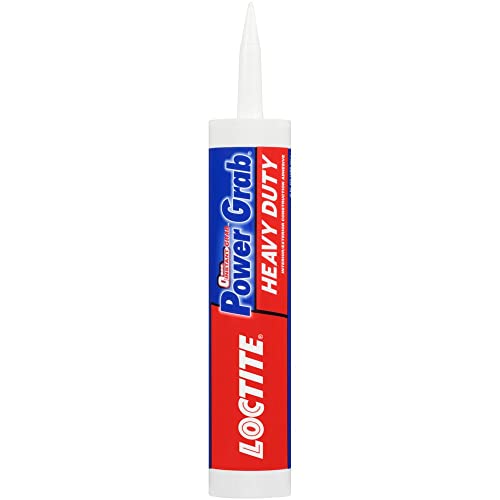
4. Loctite Power Grab Express (9oz) — Best Upgrade
 Check On The Amazon.com
Disclosure: As an Amazon Associate, I earn from qualifying purchases.
| Type | Construction adhesive |
| Size | 9 oz cartridge |
| Grab | Fast |
| Odor | Low |
| Best for | Fast repairs |
The Power Grab Express is the speed option of this field. Its fast-grab formula holds a transition strip or loose nosing in place without an hour of propping and tape. The low-odor chemistry tolerates indoor work while the family stays home, and the heavy-duty bond grips porous and wood substrates alike.
That speed cuts both ways: the reposition window is short, so dry-fit the piece first. It is the upgrade pick when holding power must arrive immediately.
✅ Reasons to buy
- Fast grab holds pieces without long propping and taping
- Low-odor formula tolerates indoor work with the family home
- Heavy-duty bond on porous and wood substrates
❌ Reasons to avoid
- Fast grab shortens the reposition window — dry-fit first
- Costs more per cartridge than basic construction tubes
5. Clear-Tite Contact Cement (4oz) — Best for Seams
 Check On The Amazon.com
Disclosure: As an Amazon Associate, I earn from qualifying purchases.
| Type | Contact cement |
| Size | 4 oz |
| Bond | Instant contact |
| Best for | Peeling edges |
The Clear-Tite is the rescue product for peeling laminate edges and lifting seams. Contact cement bonds on contact with instant high tack, which is exactly the flat, bubble-free re-bond that liquid construction glues cannot deliver on a thin skin. The clear cure stays invisible along the seam line.
The brush top reaches edge repairs neatly without over-application. Just remember that contact bonding forgives no repositioning, so line the piece up before the surfaces meet.
✅ Reasons to buy
- Instant contact bond reattaches peeling laminate skins
- Clear cure stays invisible at the seam line
- Brush top reaches edge repairs cleanly
❌ Reasons to avoid
- Contact bonding allows zero repositioning
- Small tin — not suited to large areas
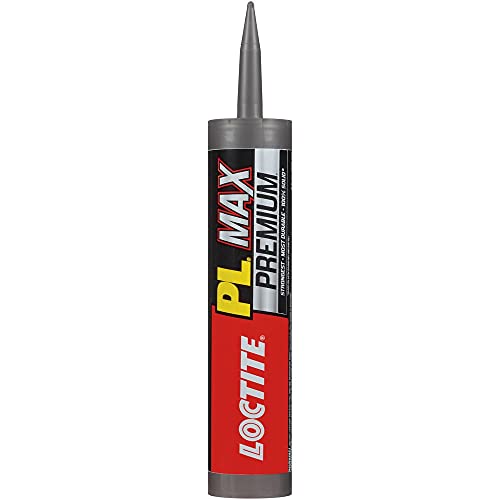
6. Loctite PL Premium Max (9oz) — Best Premium
 Check On The Amazon.com
Disclosure: As an Amazon Associate, I earn from qualifying purchases.
| Type | Polyurethane |
| Size | 9 oz cartridge |
| Strength | Maximum structural |
| Best for | Stairs and heavy duty |
The PL Premium Max is the structural pick of the field. Its polyurethane chemistry delivers maximum-strength bonding that suits stair nosings and load-bearing transitions, where a lesser glue would eventually shear loose. It bonds aggressively to wood-based cores and finishes sandable and paintable.
Polyurethane cures with a slight foam expansion, so dispense carefully and clamp the work. This is the premium choice when the repair carries weight.
✅ Reasons to buy
- Maximum structural strength for stairs and load-bearing transitions
- Polyurethane cure bonds wood-based cores aggressively
- Sandable and paintable finish
❌ Reasons to avoid
- Premium price per cartridge
- Foam-expansion cure needs careful dispensing and clamping
7. Max Strength Clear Construction Adhesive (2.8oz) — Best Squeeze Tube
 Check On The Amazon.com
Disclosure: As an Amazon Associate, I earn from qualifying purchases.
| Type | Construction adhesive |
| Size | 2.8 oz tube |
| Nozzle | Integrated squeeze |
| Cure | Clear |
| Best for | Small repairs |
The Max Strength tube is the no-caulk-gun answer to small repairs. Its integrated nozzle lays a precise bead for spot work, and the clear cure disappears under finished edges where squeeze-out would otherwise show. It lives happily in a kitchen drawer between repairs.
It is a spot-repair product only, so transition-scale jobs are beyond it. Squeezing by hand also makes your grip the applicator, which gets old on longer beads.
✅ Reasons to buy
- No caulk gun needed — squeeze-tube precision for spot repairs
- Clear cure disappears under finished edges
- Pocket-sized for the repair drawer
❌ Reasons to avoid
- Too small for transition-scale jobs
- Hand strength becomes the applicator on longer beads
8. Ceramic Tile Adhesive Glue (Heavy Duty) — Best Versatile Backup
 Check On The Amazon.com
Disclosure: As an Amazon Associate, I earn from qualifying purchases.
| Type | Multipurpose adhesive |
| Surfaces | Tile, wood, more |
| Coverage | Wide surface |
| Best for | Multi-floor homes |
This heavy-duty multipurpose adhesive is the backup tube for homes with mixed flooring. One product spans tile, wood, and everything between, which keeps the repair drawer shallow when the house has both laminate and tile rooms. Its wide-surface spread covers bigger patches than the spot tubes above.
As a generalist, it loses head-to-head against the specialists on any single job. Keep it for the mixed-repair list, and reach for the dedicated picks when one repair matters most.
✅ Reasons to buy
- One tube spans tile, wood, and mixed-floor homes
- Wide-surface spread covers bigger patches
- Heavy-duty bond across dissimilar materials
❌ Reasons to avoid
- Generalist chemistry — specialists beat it on any single job
- Cure profile varies by substrate, so test first
Can You Glue Laminate Flooring Down?
No, and that is the single most important fact on this page. Laminate is a floating system: the boards click together and the whole floor expands and contracts as one sheet. Gluing boards to the subfloor defeats that movement, cracks boards at seasonal shifts, and voids the manufacturer’s warranty.
Glue belongs only at the edges of the system, where the floating rule does not apply. Transitions between rooms, threshold strips, stair nosings, and glued beading are all legitimate adhesive jobs. Everything ranked above serves those zones, not a full glue-down installation.
A few legacy laminate products were once designed for glue-down, but modern click-lock floors are not. If a contractor suggests gluing your new click laminate to the subfloor, ask which product line they are thinking of — they are describing a different floor.
Should You Glue the Tongue-and-Groove Joints?
Most click-lock floors do not need glued joints, and manufacturers usually advise against it. A thin bead of flooring-specific glue in the tongue, like the Roberts 1406, does have a legitimate use. It seals the seam against moisture where planks meet in damp-adjacent areas, stiffening the joint and blocking the capillary path that swells fiberboard cores.
The trap is overdoing it. Construction adhesive in a click joint adds thickness, prevents the lock from seating, and turns a repair into a destructive teardown later. Joint glue also does not fix boards that keep separating. That usually signals an uneven subfloor or a damaged locking tab, and no glue cures either of those.
Separation that returns after gluing is worth diagnosing rather than re-gluing. The best underlayment for laminate flooring guide explains how the layer beneath the boards either stabilizes or undermines every joint in the room.
Matching the Glue to the Repair
Repairs fail when one tube gets forced into every job. Peeling laminate skins want contact cement, because only contact bonding grabs instantly enough to press a flat edge back down without bubbles. Gap-filled transitions want a construction adhesive with body, and stair nosings want polyurethane strength because foot traffic shears weaker bonds loose over time.
Trim work has its own logic. Beading and quarter-round sit against the floor rather than on it, so a construction adhesive holds them to the wall while the floor floats free underneath. Never bridge the expansion gap with trim glued to the laminate itself: the floor will move, and something will give.
Cosmetic damage is not a glue job at all. Chips and gouges want putty, not liquid adhesive, because glue fills the gap with a glassy bead that catches light and looks wrong. Reserve the tubes for structure and the putty for appearance.
Coverage, Open Time, and Cure: What to Expect
Adhesive coverage depends on bead size, and laminate repairs use surprisingly little. A 9 oz cartridge at a quarter-inch bead covers a long run of transitions. A 2.8 oz squeeze tube, meanwhile, handles a season of spot repairs without drying out. Buy the small size for repairs and the cartridge for transitions or stairs, not the other way around.
Open time is the window between application and placement, and it varies sharply by chemistry. Contact cement wants both surfaces coated and dried before contact, with zero repositioning afterward. Construction adhesives give you minutes of working time, while fast-grab formulas trade that window away for instant hold.
Cold rooms slow nearly every cure, so double the clamp time in a basement. Work on a clean, dust-free substrate: a sealed subfloor bonds far better than one shedding dust. At exterior doors, moisture-barrier integrity matters more than the adhesive brand, so fix the water path before the entryway repair.
Frequently Asked Questions
What is the best adhesive for laminate flooring?
Gorilla Heavy Duty Construction Adhesive (9oz) is the best overall pick for most laminate repairs and transitions. It gap-fills, cures waterproof, and works in a standard caulk gun. For board-seam work specifically, the Roberts 1406 tongue-and-groove glue is the purpose-built choice.
Can I glue laminate flooring to the subfloor?
No — modern laminate is a floating system and must not be glued to the subfloor. Gluing boards down prevents the expansion movement the floor needs, which cracks boards and voids warranties. Adhesive is only for transitions, stair nosings, trim, and repairs.
Should I glue the joints between laminate planks?
Usually not — click-lock joints are designed to float without glue. A thin bead of flooring-specific tongue-and-groove glue can seal seams against moisture in damp-adjacent areas. But construction adhesive in a click joint prevents the lock from seating and makes future repairs destructive.
How do I fix peeling laminate edges?
Use contact cement, not construction adhesive. Coat both the lifted skin and the substrate, then let both dry to the touch. Press the edge down firmly — contact cement grabs instantly and bonds flat without bubbles.
Can I use wood glue or super glue on laminate?
Neither is a good fit for most laminate repairs. Standard wood glue is designed for porous wood, not the resin-coated surface of laminate, and super glue cures brittle with poor gap tolerance. The laminate floor cleaner guide covers day-to-day care, but for repairs, reach for construction adhesive, contact cement, or repair putty matched to the job.
🧪 Free Tool: Adhesive Coverage Calculator
Work out how much adhesive your floor needs — by trowel size and square footage.
Conclusion
The best adhesive for laminate flooring is the one matched to the repair. Gorilla Heavy Duty handles gap-filled transitions, Roberts 1406 handles the seams, Clear-Tite rescues peeling edges, and the Palette putty handles cosmetic damage. Eight honest products, each doing the job glue is allowed to do on a floating floor.
Respect the float, buy the chemistry for the repair you actually have, and the fix will outlive the memory of doing it. No floating floor ever suffered from the right adhesive used in the right place.


