


A stiff broom does more damage to a wood floor than dirty shoes. It drags grit across the finish instead of lifting it. The scratches show up months later in raking light, when the only fix is a sand and refinish. The right tool depends on what you are clearing. Fine dust wants soft bristles or microfiber. Pet hair needs a rubber edge that grabs rather than pushes.
We compared ten options on bristle stiffness, edge material and how much floor each sweep clears. A dustpan mattered as much as the broom, because a pan whose lip does not meet the floor leaves a dust line behind every sweep. Weight decided the rest, since a heavy broom makes you sweep less often.
The picks below name the softest bristle broom, the best pet-hair grabber and the best value set for daily use. Once the loose dust is gone, most routines need a damp pass next, and our best mop for wood floors covers that half of the job.
Quick Verdict
Best Overall: Soft Bristle Indoor Angle Broom — soft flagged bristles sweep dust up without dragging grit across the finish. It is the safest all-round pick for finished wood floors.
Best Budget: Angle Broom for Hardwood Floors — the same soft-bristle angled design at a much lower outlay. A solid spare for upstairs or a rental.
Best Premium: O-Cedar Pet Pro Broom with Step-On Dustpan — rubber bristles for hair plus a hands-free pan in one complete set. The full hair solution with no bending.
Quick Comparison Table
| Product | Key specs | Price |
|---|---|---|
| Soft Bristle Indoor Angle Broom | Soft flagged bristles, angled head, indoor use | Check Price on Amazon |
| O-Cedar Pet Pro Broom with Step-On Dustpan | Rubber bristles, step-on dustpan, pet hair | Check Price on Amazon |
| kelamayi Broom and Dustpan Set, Long Handle | Soft-to-medium bristles, flush dustpan, comb edge | Check Price on Amazon |
| CLEANHOME Microfiber Dust Mop | Microfiber head, dry dusting, hardwood and laminate | Check Price on Amazon |
| Angle Broom for Hardwood Floors | Soft bristles, angled cut, budget daily use | Check Price on Amazon |
The Picks
1. Soft Bristle Indoor Angle Broom — Best Overall
 Check On The Amazon.com
Disclosure: As an Amazon Associate, I earn from qualifying purchases.
| Bristle | Soft, flagged |
| Head | Angled |
| Handle | Long |
| Floor type | Hardwood, tile |
| Best for | Daily dusting |
The angled head slides under cabinet toe-kicks and runs along baseboards where dust gathers. Soft flagged bristles lift dust instead of scraping it across the finish. It moves a wide path of fine dust in each pass without flinging debris sideways.
It is a finishing broom, not a shop tool. Spilled cereal or tracked gravel needs a stiffer brush first. Buy it for daily passes in kitchens and hallways, where fine dust settles every day.
✅ Reasons to buy
- Flagged bristle tips lift fine dust without grinding grit into the finish
- Angled cut reaches under toe-kicks and into corners in one sweep
- Light build suits one-handed passes down hallways
- Gentle enough for daily use on satin and matte finishes
❌ Reasons to avoid
- Struggles with heavier debris like gravel or spilled dry goods
- No dustpan included, so you need a separate pan
- Not built for outdoor or workshop sweeping
2. O-Cedar Pet Pro Broom with Step-On Dustpan — Best for Pet Hair
 Check On The Amazon.com
Disclosure: As an Amazon Associate, I earn from qualifying purchases.
| Bristle | Rubber |
| Dustpan | Step-on, hands-free |
| Handle | Long |
| Floor type | Hardwood, tile |
| Best for | Shedding pets |
Rubber bristles pull hair into a pile instead of skating over it. In a house with a shedding dog, that turns ten minutes of chasing fur into a single sweep. The rubber edge grips hair the way bristles never quite manage.
Rubber also rinses clean, which matters because wrapped hair lingers on bristle brooms. A rinse under the tap restores it, and the step-on pan means you never bend over a dust pile. It is the complete hair solution in one purchase.
✅ Reasons to buy
- Rubber bristles gather pet hair into a pile instead of pushing it around
- Step-on dustpan keeps you standing through the whole sweep
- Rinses clean under a tap when hair wraps the edge
- No tangled bristles to pick apart after each use
❌ Reasons to avoid
- Rubber edge can chatter on high-gloss finishes
- Heavier than a plain bristle broom
- Moves ultra-fine dust less neatly than flagged bristles
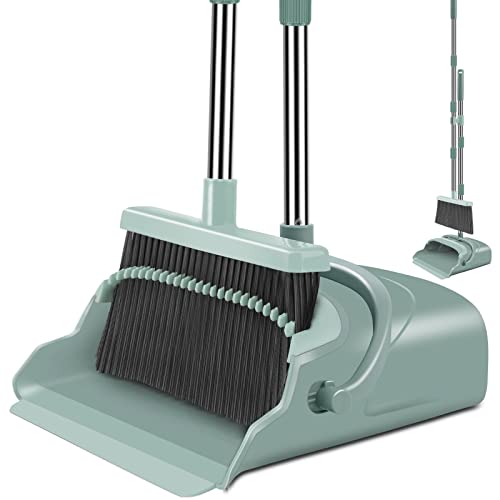
3. kelamayi Broom and Dustpan Set, Long Handle — Best Value Set
 Check On The Amazon.com
Disclosure: As an Amazon Associate, I earn from qualifying purchases.
| Bristle | Soft to medium |
| Dustpan | Included, comb edge |
| Handle | Long |
| Floor type | Multi-surface |
| Best for | Whole-house sweeping |
The dustpan is the star of this set. Its lip sits flush against the floor, and comb teeth strip hair off the bristles as you pull them through. You get no leftover dust line and no picking hair out by hand afterward.
The bristles sit between soft and medium, so crumbs and dust both move in one pass. It is not the gentlest choice for a high-gloss finish. The long handle suits taller users for whole-house runs.
✅ Reasons to buy
- Dustpan lip sits flush, so no dust line trails behind each sweep
- Comb teeth clear hair from the bristles in seconds
- Long handle suits taller users without bending
- Mid-range bristles handle crumbs as well as dust
❌ Reasons to avoid
- Bristles are stiffer than a dedicated soft broom
- Bulkier to store than a broom alone
- Not the gentlest pick for high-gloss finishes
4. CLEANHOME Microfiber Dust Mop — Best for Fine Dust
 Check On The Amazon.com
Disclosure: As an Amazon Associate, I earn from qualifying purchases.
| Head | Microfiber |
| Use | Dry dusting |
| Handle | Long |
| Floor type | Hardwood, laminate |
| Best for | Fine dust, allergens |
Microfiber builds a slight static charge that holds fine dust instead of lofting it into the air. In an allergy household that is the difference between moving dust and removing it. The low-profile head slides under beds and sofas that a broom cannot reach.
It is not a broom replacement. Crumbs and grit need bristles or a vacuum first, and a dirty mop head spreads dust back across the floor. Wash the head regularly to keep the static working.
✅ Reasons to buy
- Static-charged microfiber traps fine dust that bristles push into the air
- Washable head means no replacement costs over time
- Low profile reaches under low furniture
- Safe on every finish, including high-gloss floors
❌ Reasons to avoid
- Not for crumbs, grit or heavier debris
- Head needs washing regularly to stay effective
- A dirty head redeposits dust instead of collecting it
5. Angle Broom for Hardwood Floors — Best Budget
 Check On The Amazon.com
Disclosure: As an Amazon Associate, I earn from qualifying purchases.
| Bristle | Soft |
| Head | Angled |
| Handle | Long |
| Floor type | Hardwood, tile |
| Best for | Budget daily use |
This is the same soft-bristle angled design as the top pick, for a much lower outlay. It suits a spare broom kept upstairs or a rental you do not want to overspend on. The angled cut runs cleanly along corners and edges.
The savings show up in longevity. The bristles splay and lose their flagging sooner, so expect a year or two of daily use rather than many. As a backup broom, that tradeoff is easy to accept.
✅ Reasons to buy
- The softest bristle design here at the lowest outlay
- Angled cut reaches corners and edges cleanly
- Light enough for quick daily passes
❌ Reasons to avoid
- Bristles splay sooner than pricier options
- No dustpan included
- Shorter lifespan under daily heavy use
Why Bristle Stiffness Decides Everything on Wood Floors
Soft flagged bristles lift dust off the surface. Stiff bristles scrape it across the surface, and on a sealed floor that scraping is what dulls a finish in the traffic lanes. The difference is not visible after one sweep, which is why people keep using the wrong broom for years before the wear shows.
Stiff is only correct for concrete, decks and outdoor sweeping. Indoors, on any finished floor, soft wins every time. A broom labelled heavy-duty is a workshop tool, not a kitchen tool, whatever the packaging suggests. If your floors already look tired in the walkways, stiffness was probably the cause.
Rubber vs Bristle vs Microfiber: Which Clears What
Bristle brooms move debris. Rubber edges grab hair and pull it into a pile rather than skating over it. Microfiber holds fine dust through a slight static charge, which is why it beats bristles on the final pass over an already-swept floor. Each one covers the weakness of the others.
Most homes need two of the three rather than one. A pet household should start with rubber, an allergy household with microfiber, and everyone needs a soft bristle broom for crumbs. If dry dusting is your whole routine, our best dust mop for wood floors compares microfiber heads in more depth.
Why the Dustpan Matters More Than the Broom
A pan whose lip does not meet the floor leaves a line of dust behind every sweep. That is the single most common complaint in broom reviews, and it matters more than the broom because it happens every single time you use it. A great broom with a bad pan still leaves dirt behind.
Look for a lip that flexes flush against the floor and a comb edge that strips hair from the bristles. Step-on designs save bending but add weight to the tool. Sweep toward the pan in short, light strokes rather than long heavy ones, and the line disappears.
What Never to Use on a Wood Floor
Never use a stiff outdoor broom indoors, and never sweep with a wet or damp head. Moisture plus grit is how finish layers get abraded, and the damage looks like normal wear rather than a cleaning mistake. Keep outdoor tools outside the door.
Dust mops are safe dry but should not replace a vacuum on a gritty floor. Pushing a dry mop across grit moves abrasive material at speed, which is the opposite of cleaning. When you do go damp, reach for a hardwood floor cleaner made for wood finishes, not an all-purpose cleaner with unknown pH.
Frequently Asked Questions
What broom is safest for hardwood floors?
A soft flagged-bristle broom or a microfiber dust mop is the safest choice. Stiff bristles drag grit across the finish and dull it over time, so anything labelled stiff or heavy-duty belongs outdoors.
Do rubber brooms scratch wood?
No, rubber brooms do not scratch wood floors in normal use. The rubber edge can chatter or skip on high-gloss finishes, so they work best on satin and matte surfaces where the edge stays in full contact.
How often should I sweep a wood floor?
Sweep daily in kitchens and entryways, and two or three times a week elsewhere. Grit underfoot acts like sandpaper on a finish, so high-traffic zones deserve the frequent passes.
Should I use a broom or a vacuum first?
Vacuum first when the floor has grit, tracked dirt or lots of hair. A vacuum lifts abrasive grit that a broom mostly redistributes, so the vacuum pass protects the finish and the broom handles the quick follow-up.
Can I use a broom on laminate?
Yes, as long as the bristles are soft. Stiff bristles can catch at seam edges over time, and a microfiber dust mop is the gentlest option of all for laminate surfaces.
How do I clean a broom?
Rinse the bristles, comb out wrapped hair and let the head dry head-down. Never store a broom bristle-down on a damp floor, because trapped moisture warps the bristles and breeds odor.
Conclusion
Broom choice comes down to bristle stiffness, and most floor damage comes from getting that wrong. Soft bristles belong indoors, rubber handles pet hair, and microfiber takes the final pass after the grit is gone. The picks above cover every household mix without overlap.
Fix the pan first and sweep daily in the traffic zones. Follow with a damp pass using a cleaning product made for hardwood when the floor needs more than dry dusting.


