


The best concrete floor coating for most garages is a two-part epoxy, because it bonds harder than acrylic paint and resists oil and tyre marks. Polycuramine beats it only where hot tyres park daily, while acrylic suits dry storage floors. Choose chemistry first, then kit size, and your floor stands a better chance of surviving its first winter.
Most coatings fail for three reasons, and none of them is the brand on the tin. Moisture vapour pushes coatings off from below, rushed prep leaves nothing to grip, and acrylic peels under hot tyres. A simple plastic-sheet test reveals trapped vapour before you open a kit, and our guide to basement floor paint options explains how moisture changes the choice.
We compared five coatings on chemistry, coverage, and cure window, because those three factors decide whether a floor survives daily use. The winner handles a one-car garage with a tough gloss finish, the budget pick covers a large slab, and the premium kit shrugs off hot tyres. Read on to match the right coating to your slab and traffic.
Quick Verdict
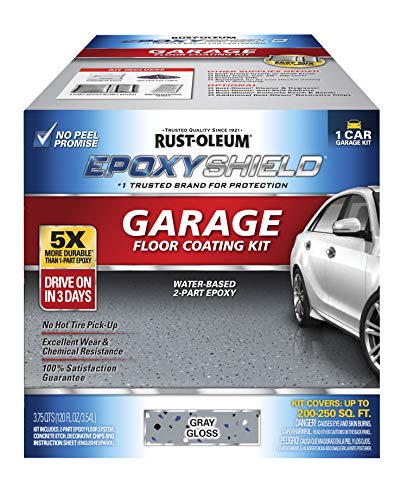
Best Overall: Rust-Oleum EpoxyShield Garage Floor Coating, 1-Car Kit. This two-part epoxy kit covers a one-car garage with a hard gloss finish that resists oil and tyre marks.
Best Budget: 5 Gallon Professional Floor Paint, Slate Gray. One pail covers a large slab, which makes it the only single-order option for a big open floor.
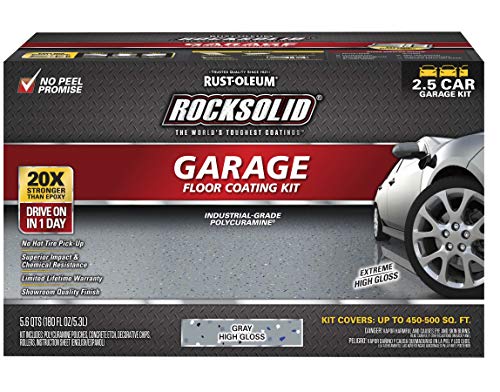
Best Premium: Rust-Oleum RockSolid Polycuramine Kit, 2.5-Car. This polycuramine kit covers about 500 square feet, drives on within two days, and is rated for hot tyres.
1. Rust-Oleum EpoxyShield Garage Floor Coating, 1-Car Kit — Best Overall
 Check On The Amazon.com
Disclosure: As an Amazon Associate, I earn from qualifying purchases.
A two-part epoxy cures into a hard coating rather than a soft paint film, which is why it survives oil, tyre marks, and daily garage traffic. The one-car kit suits most home garages, and its gloss finish wipes clean after spills and wet weather.
Budget a full week before parking on the new floor, even though foot traffic is fine after a day. Parking too early ruins most epoxy jobs, and the marks left behind are permanent rather than cosmetic.
2. 5 Gallon Professional Floor Paint, Slate Gray — Best Budget
 Check On The Amazon.com
Disclosure: As an Amazon Associate, I earn from qualifying purchases.
One pail covers a large open floor, which makes it the only single-order option for a big basement or workshop. The paint is ready to use with no mixing ratio, so the job starts as soon as the slab is prepped and clean.
It is acrylic, so it cannot handle hot tyres or a slab that wicks moisture from below. Measure the floor first, because a second pail may come from a different batch and show a slight colour shift.
3. Rust-Oleum RockSolid Polycuramine Kit, 2.5-Car — Best Premium
 Check On The Amazon.com
Disclosure: As an Amazon Associate, I earn from qualifying purchases.
Polycuramine is the chemistry that survives a hot tyre, and that single property separates it from every epoxy in this guide. The self-levelling formula fills minor pitting, so a worn garage floor looks far more even after coating.
Pot life is short, so mix the whole kit at once and keep moving until the floor is covered. Drive-on time falls within two days, which makes this the fastest route back to a working garage.
4. KILZ Decorative Slip-Resistant Concrete Coating — Best for Safety
 Check On The Amazon.com
Disclosure: As an Amazon Associate, I earn from qualifying purchases.
A gloss coating on a wet garage floor is genuinely dangerous, and this textured coating grips where smooth finishes turn slippery. It works on basement steps and garage aprons, where wet feet and tyres meet a hard surface every day.
Coverage per gallon runs lower than a smooth coating, because the texture itself consumes more material on every pass. Budget for the extra material on a large floor, and sweep the texture often to stop dirt building up.
5. Epoxy Colored Sand Floor Paint for Concrete — Best Decorative
 Check On The Amazon.com
Disclosure: As an Amazon Associate, I earn from qualifying purchases.
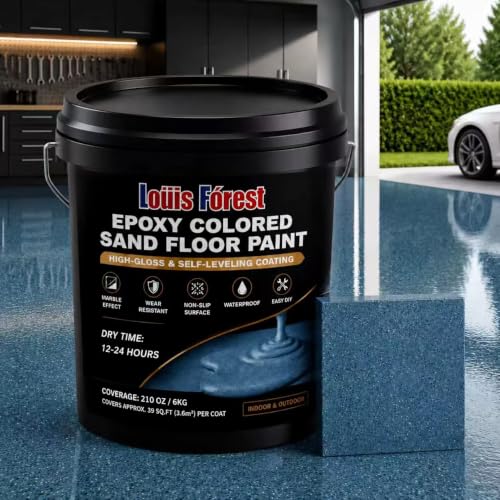
Coloured sand epoxy hides the patches and stains that a plain gloss puts on full display. The texture also grips underfoot, which matters in a workshop where dust and damp feet are part of daily work.
Order a sample before committing to a whole floor, since the colour is fixed once the kit is mixed. The texture collects dirt like any rough finish, so plan on sweeping more often than a smooth floor needs.
Comparison Table
| Product | Best For | Price |
|---|---|---|
| Rust-Oleum EpoxyShield Garage Floor Coating, 1-Car Kit | One-car garages | Check Price on Amazon |
| 5 Gallon Professional Floor Paint, Slate Gray | Large slabs | Check Price on Amazon |
| Rust-Oleum RockSolid Polycuramine Kit, 2.5-Car | Parked cars and hot tyres | Check Price on Amazon |
| KILZ Decorative Slip-Resistant Concrete Coating | Wet steps and aprons | Check Price on Amazon |
| Epoxy Colored Sand Floor Paint for Concrete | Feature floors | Check Price on Amazon |
Buying Guide
Use this guide to narrow five coatings down to one, starting with the slab and ending with the calendar. Every factor below affects the result, so work through them in order before ordering a kit.
Match the Chemistry to Your Slab
Acrylic suits dry storage areas with light foot traffic, and it fails fastest where cars park or moisture rises. Two-part epoxy suits basements and garages with steady foot traffic, while polycuramine is the only chemistry here built for a parked car.
Getting this choice wrong is the most expensive mistake in the project, because the failure shows up months later as peeling. Match the coating to the slab and the traffic before you compare brands or colours.
Test for Moisture Before You Buy
Tape a plastic sheet to the slab for a full day, then check for condensation underneath it. Condensation means vapour is rising through the concrete, and that vapour will push a fresh coating off from below.
A damp slab needs a moisture-tolerant system or a different plan, not a thicker coat of the wrong product. If the test shows vapour, fix the moisture source first and retest before spending on any kit.
Prep the Slab Properly
Concrete needs etching or grinding before coating, because a smooth slab gives the coating nothing to grip. Compare garage floor paint choices only after the prep plan is set, since prep decides whether any coating stays down.
Skipping the etch is the most common shortcut, and the first winter of temperature cycling lifts a poorly prepped floor in sheets. Clean oil stains fully too, because oil trapped in the concrete stops the coating bonding at all.
Work Out Coverage and Coats
Measure the floor in square feet, then divide by the coverage per kit to find how many kits the job needs. Buy for the recommended coat count plus touch-ups, because running short mid-floor risks a visible batch mismatch.
Two thin coats beat one heavy pour, and the second coat is where the colour evens out across a patchy slab. Check concrete floor paint coverage figures on the label too, since stated coverage assumes a smooth and sealed surface.
Choose Safety and Finish
Wet steps and garage aprons need grip, so a textured or sand finish beats a smooth gloss in those spots. Decorative finishes also hide patches and stains, which makes them a smart pick for older slabs with visible repairs.
Textured finishes collect dirt faster than smooth ones, so budget extra sweeping time into the routine. A smooth gloss cleans fastest, which suits a tidy garage where wet feet are rare.
Respect the Cure Window
Foot traffic after a day is normal for most kits, but cars take far longer than most people expect. Epoxy kits often need a full week before parking, while polycuramine drives on within two days of coating.
Recoat too early and the finish never cures properly, while recoating too late stops the layers bonding well. Plan the project around the cure window, not the painting day, and keep the floor clear until the label allows traffic.
Frequently Asked Questions
Epoxy or acrylic for a garage floor?
Epoxy or polycuramine wins for a garage floor, because acrylic cannot handle hot tyres and peels under parked cars. Save acrylic for dry storage rooms with light foot traffic and no vehicle heat.
How much coating does a 500 square foot floor need?
One polycuramine kit sized for a 2.5-car garage covers about 500 square feet in this guide. Two smaller epoxy kits also reach that area, so check the coverage figure on the kit you choose.
Do I need to etch concrete first?
Yes, etch smooth or sealed slabs before coating, because a slick surface gives the coating nothing to grip. Skipping the etch is the top cause of peeling, and grinding works as an alternative on rough floors.
How do I test for moisture?
Tape a plastic sheet to the slab and leave it for a full day. Condensation underneath the sheet means vapour is present, so fix the moisture source before coating.
How long before I can park on it?
Epoxy kits need up to seven days before parking, while polycuramine drives on within two days. Check the label on your kit, because cure times vary with temperature and humidity.
Why does floor coating peel?
Moisture vapour, poor etching, and coating outside the recoat window cause most peeling. Fix the slab, prep it well, and follow the cure window to stop the same failure repeating.
Can I coat over old paint?
Coat over old paint only after testing adhesion and scuffing the surface well. Remove any loose coating first, because new coating bonds to the old layer and lifts with it.
How do I clean a coated concrete floor?
Sweep the floor often, then mop with a mild cleaner and clean water. Avoid harsh solvents on a fresh coating, since they can dull the finish and weaken the bond over time.
🎨 Free Tool: Paint Coverage Calculator
Enter your room size — see how many gallons you need, coats included.
Conclusion
Concrete coating is a chemistry decision before it is a colour decision, so match the product to the slab first. Acrylic suits dry storage, two-part epoxy suits a garage with foot traffic, and polycuramine is the only pick here built for a parked car.
Test the slab for moisture, etch it well, and respect the cure window to give the floor its best chance. For a closer look at garage-only options, see our epoxy garage floor coating guide before you order.


