


A record cleaner has one job a brush cannot do: lift dirt out of the groove rather than push it deeper. A vacuum machine wets the record, agitates the groove and pulls the fluid back out. The best vacuum record cleaner is judged on pickup and on how safely it holds a disc. Speed matters less than a dry groove.
We researched five machines, from a dual-sided vacuum unit to an ultrasonic bath and a manual washer. Each listing was checked for pickup method, drying and record support. These are researched picks, not lab tests, and no price is quoted. Where a machine is a washer rather than a vacuum, the entry says so plainly.
Quick Verdict
Best Overall: Record Doctor XI — a dual-sided vacuum machine with carbon fibre brush
Best Value Vacuum: Record Doctor VI — a single-sided vacuum washer at a lower level
Best Ultrasonic: HumminGuru HG01 — a 40 kHz bath with auto drying and no vacuum arm
Quick Comparison Table
| Product | Best For | Key Spec / Feature | Check Price |
|---|---|---|---|
 Record Doctor XI | you want a one-step bath | Vacuum record cleaner, dual sided | Check Price on Amazon |
 Record Doctor VI | you clean dozens at a time | Vacuum record cleaner, single sided | Check Price on Amazon |
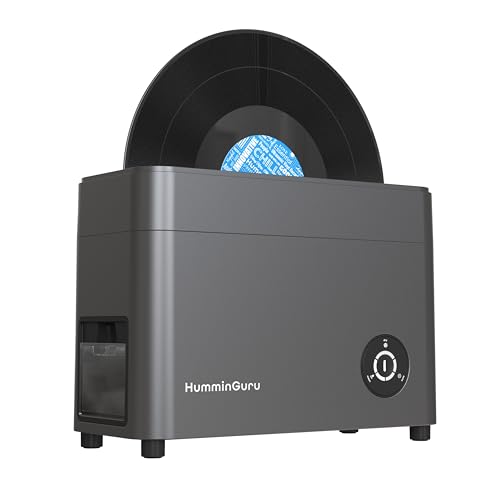 HumminGuru HG01 | you want a vacuum arm | Ultrasonic cleaner, auto drying | Check Price on Amazon |
 Pro-Ject VC-S3 | you want a budget entry | Premium vacuum record cleaner | Check Price on Amazon |
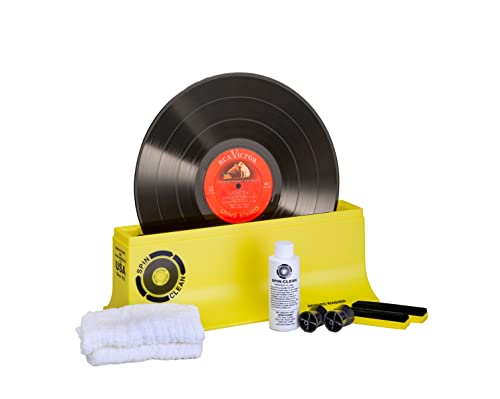 Spin-Clean Record Washer | you want a vacuum machine | Manual record washer kit | Check Price on Amazon |
Groove Pickup and Record Support – What This List Actually Checked
This list is for someone with a collection worth cleaning properly, not for a quick brush before playing.
- Pickup: a vacuum arm removes fluid and dirt together
- Support: the record has to be held flat and turned safely
- Drying: fluid left in the groove attracts dust again
- Throughput: one record at a time is normal, two sides is a bonus
Read the comparison table first, then the Best for and Skip if line on each pick; the long reviews are optional.
Every pick is researched from a current listing rather than lab-tested, and no claim is made about audible improvement on any record.
1. Record Doctor XI — a dual-sided vacuum machine
Best for: a collection that needs a proper clean | Skip if: you have no space for a machine
Check On The Amazon.comDisclosure: As an Amazon Associate, I earn from qualifying purchases.
| Spec | Detail |
|---|---|
| Type | Vacuum record cleaner |
| Sides | Dual sided |
| Brush | Carbon fibre |
| Method | Wet vacuum |
| Use | Vinyl maintenance |
Reasons to Buy
- Cleans both sides in one setup
- Carbon fibre brush agitates the groove
- Vacuum pickup removes fluid
- Handles a batch
- Purpose-built for vinyl
Reasons to Avoid
- Takes bench space
- One record at a time
A dual-sided machine is the practical choice for a collection, because flipping a record mid-clean is where a wet label and a scratched surface happen. The carbon fibre brush works the fluid into the groove, and the vacuum arm pulls it back out with the dirt. That sequence is the whole method. The arm is the part that decides whether the record dries evenly.
It is the all-round pick. The trade is bench space.
2. Record Doctor VI — a single-sided vacuum washer
Best for: a small collection on a budget | Skip if: you want an ultrasonic bath
Check On The Amazon.comDisclosure: As an Amazon Associate, I earn from qualifying purchases.
| Spec | Detail |
|---|---|
| Type | Vacuum record cleaner |
| Sides | Single sided |
| Method | Wet vacuum |
| Use | Vinyl maintenance |
| Build | Bench top |
Reasons to Buy
- Vacuum pickup
- Simpler than a dual-sided unit
- Bench-top footprint
- Straightforward process
- Purpose-built for vinyl
Reasons to Avoid
- One side per setup
- Manual fluid application
A single-sided machine does the same job with one more step: clean a side, turn it, clean the other. For a small collection that is a fair trade for a lower entry point. The vacuum arm still removes the fluid, which is the part a brush cannot do. The trade is time, not results.
It is the value vacuum pick. The trade is one side at a time.
3. HumminGuru HG01 — a 40 kHz ultrasonic bath with drying
Best for: records with deep dirt or mould | Skip if: you need a large throughput
Check On The Amazon.comDisclosure: As an Amazon Associate, I earn from qualifying purchases.
| Spec | Detail |
|---|---|
| Type | Ultrasonic cleaner |
| Frequency | 40 kHz |
| Drying | Automatic |
| Filter | Water reuse |
| Size | 12 inch |
Reasons to Buy
- Reaches dirt a brush cannot
- Automatic drying cycle
- Water reuse filter
- Compact body
- Handles a batch in a bath
Reasons to Avoid
- No vacuum arm
- Takes time per record
An ultrasonic bath works differently: it lifts dirt with cavitation rather than pulling fluid out with a vacuum. That reaches mould and deep grit a brush misses, and the auto-drying cycle stops fluid sitting in the groove. It is not a vacuum machine, which the entry should say first. The bath is slow, which is why it suits a batch rather than a single disc.
It is the deep-clean pick. The trade is time and no vacuum arm.
4. Pro-Ject VC-S3 — a premium vacuum machine
Best for: a collection treated as an investment | Skip if: you need portability
Check On The Amazon.comDisclosure: As an Amazon Associate, I earn from qualifying purchases.
| Spec | Detail |
|---|---|
| Type | Vacuum record cleaner |
| Method | Wet vacuum |
| Build | Premium |
| Use | Vinyl maintenance |
| Format | Bench top |
Reasons to Buy
- Vacuum pickup
- Premium build
- Bench-top format
- Purpose-built for vinyl
- Handles a collection
Reasons to Avoid
- Costs more
- One record at a time
A premium vacuum machine buys build quality and consistency rather than a different method: fluid in, vacuum out. For a collection that gets cleaned regularly, the arm and the platter are the parts that last. It is the same job as the cheaper units with better hardware. The build is what you pay for here, not a different method. A flat platter is what stops a warped record from leaving fluid behind.
It is the premium pick. The trade is cost.
5. Spin-Clean Record Washer — a manual washer, no vacuum
Best for: a first clean on a tight budget | Skip if: you have a large collection
Check On The Amazon.comDisclosure: As an Amazon Associate, I earn from qualifying purchases.
| Spec | Detail |
|---|---|
| Type | Manual washer |
| Fluid | Alcohol free |
| Method | Bath and brushes |
| Format | Basin kit |
| Use | Vinyl maintenance |
Reasons to Buy
- No power needed
- Alcohol-free fluid
- Dirt sinks to the basin floor
- Cheap entry point
- Simple process
Reasons to Avoid
- No vacuum pickup
- Drying is manual
This is a washer, not a vacuum machine: the fluid sinks dirt to the basin floor and the brushes work the groove. It is a genuine first step for a small collection and it costs far less. The missing part is pickup, so the record has to be dried by hand before it is played. The basin is the whole machine, so storage is simple.
It is the manual pick. The trade is no vacuum and manual drying.
Quick Decision
The picks below are based only on product features — every bullet comes from that pick’s own spec table or its own Reasons to Buy.
Best all-round: Record Doctor XI
- Dual sided
- Carbon fibre brush
- Vacuum pickup
Best value vacuum: Record Doctor VI
- Vacuum pickup
- Bench top
- Lower entry
Best deep clean: HumminGuru HG01
- 40 kHz bath
- Auto drying
- Water filter
Why a Brush Cannot Reach the Groove
What Is in a Groove?
Mould release compound from pressing, dust, grease from fingers and paper fibres from the sleeve. They sit below the surface, where a brush passes over them.
Why Does a Vacuum Work?
Fluid lifts the dirt into suspension and the vacuum arm pulls the fluid out of the groove. That is the only consumer method that removes rather than redistributes.
Why Not Just Water?
Water alone does not wet a vinyl groove evenly, and it leaves residue as it dries. A purpose-made fluid is formulated to suspend dirt and evaporate clean.
What About Ultrasonic?
Cavitation reaches dirt that a brush cannot, including mould in a deep groove. It is slower per record and it is a bath rather than a pickup, so drying matters more.
Why Does Drying Matter?
Fluid left in the groove attracts new dust and can leave a dried film that sounds worse than the dirt. A vacuum arm or an auto-dry cycle is the difference.
How Often Should a Record Be Cleaned?
Once when it arrives, then only when it sounds noisy. Over-cleaning is not a risk, but wetting a label is.
What Does a Cleaning Arm Actually Do?
It lays fluid behind a brush and pulls it back through a slot, so dirt leaves with the liquid. The arm pressure and the platter flatness decide whether that works on a warped record.
Is One Machine Enough?
For a collection under a few hundred records, yes. Above that, a machine that cleans both sides in one setup saves enough time to matter, and a second unit becomes a spare rather than a luxury.
Does the Machine Need Cleaning?
Yes. The arm and the slot collect the dirt that came out of the record, and a dirty arm puts it back on the next disc. Wipe the slot after every session and rinse the reservoir monthly.
How Do You Hold a Record?
By the edge and the label only. A fingerprint on the playing surface is oil, and oil holds dust in the groove better than anything else in the room.
What About Warped Records?
A warped disc may not sit flat on a platter, and an uneven seal on the vacuum arm leaves fluid behind. Clean it last, and check the surface before it goes back in the sleeve.
What was left out and why: anti-static brushes, stylus cleaners and record weights were excluded because this list covers cleaning machines, and no claim is made about sound quality or resale value. Related reading: our vacuum cleaner for home, handheld vacuum cleaner and vacuum cleaner for dust.
FAQ: Record Cleaning Machines
Do record cleaning machines really work?
Yes, for dirt that a brush cannot reach. The fluid suspends it and the vacuum removes it, which is a different process from brushing.
Is ultrasonic better than vacuum?
For deep dirt and mould, an ultrasonic bath reaches more. For a quick, repeatable clean, a vacuum machine is faster and leaves less fluid behind.
Can I clean a record without a machine?
A manual washer works for a small collection, but drying by hand leaves residue. A machine removes the fluid as part of the process.
Will cleaning damage a record?
Not if the label stays dry and the record is supported flat. The common damage comes from handling, not from the fluid.
How often should a record be cleaned?
When it arrives, and again only when surface noise returns. Wetting a label is the main thing to avoid.
Do I need a special fluid?
Yes. A purpose-made fluid suspends dirt and evaporates without residue. Household cleaners leave a film that attracts dust, which is worse than the dirt you removed.
🔍 Free Tool: Vacuum Finder Quiz
Answer 6 quick questions — get your top 3 vacuum matches.
Conclusion
The Record Doctor XI is the best vacuum pick because it cleans both sides in one setup, with the VI for a small collection and the HumminGuru for deep dirt. Pickup is the point of a machine.
Check the pickup method and record support on the listing, then compare the Best for lines. The vacuum finder below filters by use.


