

Engineered hardwood complicates the wax question the way it complicates everything: the wear layer is real wood but thin, factory finishes are usually aluminum-oxide (which generally should not be waxed at all), and the products that say “hardwood” on the label often mean solid-ugeot chemistry that clouds or peels on engineered surfaces. What actually works in 2026: liquid polishes and restorers formulated for factory-finished engineered wear layers – they add a sacrificial shine coat, fill micro-scratches, and wipe away when tired. These five are the honest lineup, with the when-not-to-wax rules that protect your warranty.
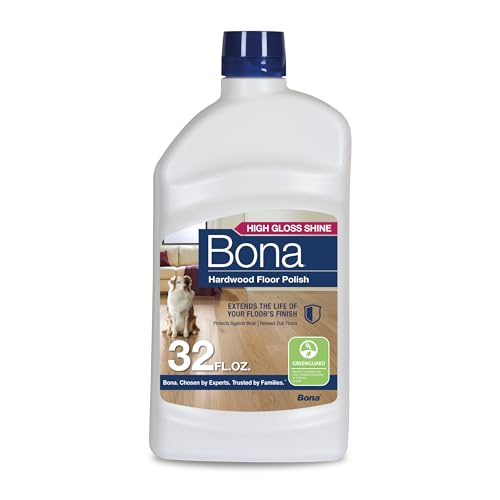
1. Bona Hardwood Floor Polish (High Gloss) – best overall for engineered wear layers
Disclosure: As an Amazon Associate, I earn from qualifying purchases.
| Type | Liquid polymer polish |
| Finish | High gloss option |
| Drying | About 1 hour |
| Best for | Restoring dulled traffic lanes |
Bona’s polish is the safe default precisely because the company engineers around factory finishes rather than against them: the polymer layer sits on top, fills light scratches optically, and – critically – strips with their remover when it has served its year, rather than building toward a clouding mess. High gloss reads dramatic in showrooms; the satin variant calms down in lived rooms. One 32-oz bottle covers a large living space twice. check current price on Amazon
- ✅ Engineered around factory finishes rather than against them
- ✅ Polymer layer fills light scratches optically
- ✅ Strips with the matched remover instead of building toward a clouding mess
- ✅ One 32-oz bottle covers a large living space twice
- ❌ High gloss reads dramatic – the satin variant calmer in lived rooms
- ❌ Needs its own remover at end of life – stay in-brand
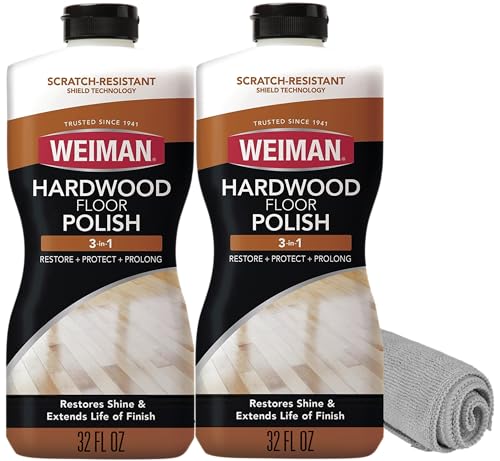
2. Weiman Wood Floor Polish & Restorer (3-pack) – best value bundle for whole floors
Disclosure: As an Amazon Associate, I earn from qualifying purchases.
| Format | 3 x 32 oz bottles |
| Claim | Scratch-removal micro-fill |
| Scent | Low-odor formula |
| Best for | Multi-room application and repeats |
The three-pack exists because polish is a rhythm product – traffic lanes want a refresh every few months, and one bottle runs out mid-hallway. Weiman’s restorer self-levels, fills the micro-scratches that make finish look tired, and dries walkable fast. At per-bottle pricing under every rival, it is the workhorse for households that actually maintain rather than rescue. check current price on Amazon
- ✅ Three bottles sustain the every-few-months traffic-lane rhythm
- ✅ Self-levels and fills the micro-scratches that tire a finish
- ✅ Dries walkable fast
- ✅ Per-bottle pricing under every rival
- ❌ Same formula regardless of gloss preference
- ❌ One bottle runs out mid-hallway – hence the three-pack
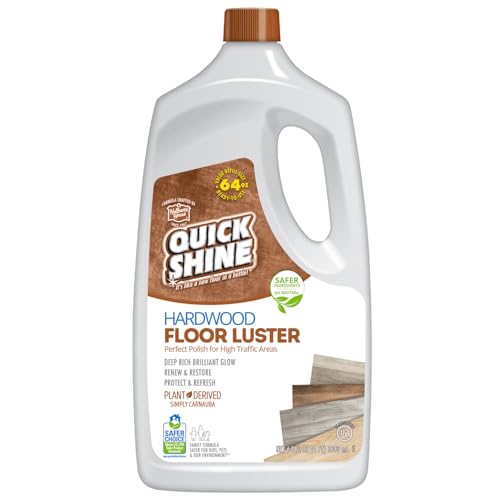
3. Quick Shine Hardwood Floor Luster – best plant-derived / no-PFAS pick
Disclosure: As an Amazon Associate, I earn from qualifying purchases.
| Chemistry | Carnauba-based, plant-derived |
| Safety | EPA Safer Choice, no PFAS |
| Size | 64 oz value |
| Best for | Homes with kids/paws licking floors |
Quick Shine’s carnauba chemistry earns its shelf slot with certifications rather than slogans: EPA Safer Choice listing, no PFAS, non-slip when dry – the honest spec sheet for homes where floor chemistry meets toddlers and tongue-bearing pets. The luster is a soft natural glow rather than mirror-gloss, and the 64-oz jug refills the applicator several times. A gently different aesthetic, chosen with safety receipts. check current price on Amazon
- ✅ EPA Safer Choice listing, no PFAS
- ✅ Non-slip when dry – the honest spec for toddler and pet floors
- ✅ Carnauba chemistry with certifications rather than slogans
- ✅ 64-oz jug refills the applicator several times
- ❌ Soft natural glow rather than mirror-gloss
- ❌ A gently different aesthetic – check it matches your sheen
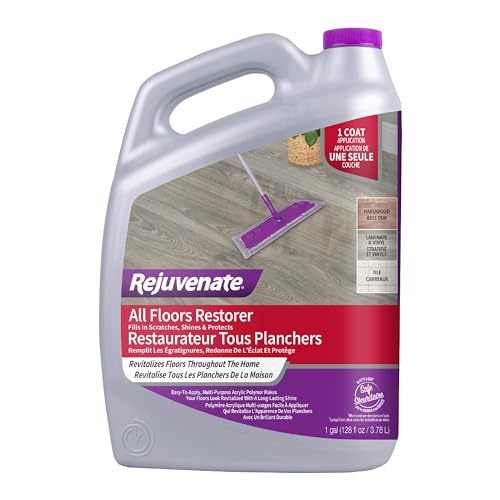
4. Rejuvenate All Floors Restorer – best for mixed-floor homes
Disclosure: As an Amazon Associate, I earn from qualifying purchases.
| Coverage | Sealed hardwood, laminate, vinyl, tile |
| Format | 1-gallon |
| Action | Fills scratches, adds shine |
| Best for | Open-plan homes with several floor types |
The restorer is the one-bottle answer for renovators whose “hardwood” flows into laminate and LVP mid-room: one formulation covers the sealed hard surfaces without switching products mid-hallway. The gallon pour is genuinely economical for whole-floor applications, and the scratch-filling action reads well on older engineered floors. On specialized premium finishes, Bona remains the safer engineer – for everything else, this is the pragmatist’s gallon. check current price on Amazon
- ✅ One formulation covers sealed hard surfaces mid-room without switching products
- ✅ The one-bottle answer when hardwood flows into laminate and LVP
- ✅ Gallon pour is genuinely economical for whole-floor applications
- ✅ Scratch-filling reads well on older engineered floors
- ❌ Generic chemistry – patch test on premium finishes
- ❌ On specialized aluminum-oxide, Bona stays the safer engineer
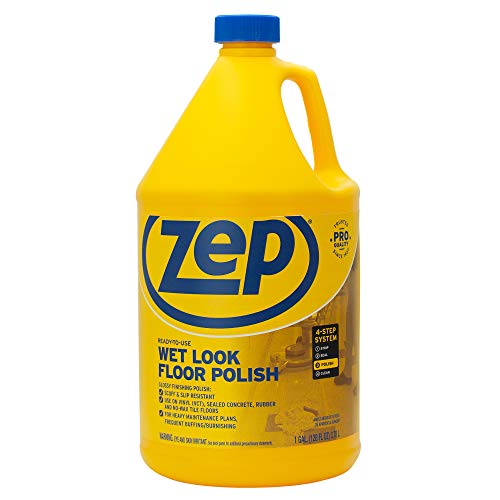
5. Zep Wet-Look Floor Polish (Gallon) – best high-durability wet-look (test first)
Disclosure: As an Amazon Associate, I earn from qualifying purchases.
| Finish | High-build wet look |
| Format | 1-gallon commercial |
| Durability | Longest-lasting shine class |
| Best for | Gloss fans with resilient subfloor stack |
Zep’s wet-look is commercial-floor chemistry: a far more durable, glossier build than residential polish, priced by the gallon. The caution deserving bold type: it is designed for resilient and sealed surfaces – on engineered hardwood with aluminum-oxide finish it can bond aggressively and cloud, so the test patch is not optional, it is the whole procedure. Where it works (sealed vinyl-wood-look planks,ight-traffic engineered), the shine lasts a season. Know your finish before pouring. check current price on Amazon
- ✅ Commercial-floor chemistry – more durable and glossier than residential polish
- ✅ Priced by the gallon
- ✅ Shine that lasts a season where it suits
- ❌ Can bond aggressively and cloud aluminum-oxide finishes
- ❌ The patch test is not optional – it is the whole procedure
What We Compared (and What This Is Not)
The five come from live Amazon listing data pulled in October 2026, filtered to products safe for factory-finished engineered hardwood, ranked by chemistry class (polymer vs. carnauba vs. commercial build), coverage economics, and removal behavior – because a polish you cannot strip becomes a refinishing problem. What this is not: a laboratory test; analysis is research-based on manufacturer specifications and maintenance-pattern data, stated plainly because wax claims rarely come with chemistry disclosure.
Check Your Finish First: The 60-Second Test
Two questions decide everything. One: does your floor have an aluminum-oxide factory finish (most engineered boards after ~2005)? Press packing tape to the boards in a hidden spot and peel – if faint haze lifts, the finish is vulnerable and polishing adds risk rather than value. Two: is the surface genuinely dulled, or just dirty? A proper pH-clean (Bona cleaner class) restores much “dull” without any polish. Polish is for wear-layer wood that cleaned well but shines poorly – adding a sacrificial layer, never a rescue product for finish failure, which is a resanding-or-replace conversation.
Application Rhythm That Prevents Buildup
The discipline that separates maintained floors from cloudy ones: clean thoroughly first (fines under polish = sandpaper on every footstep), apply thin coats with a flat-applicator pad, respect dry times before furniture returns, and keep a removal product matched to your polish family from day one. Traffic lanes want refreshing every 3-6 months; whole-floor applications once or twice a year. If a second coat stops bonding evenly, that is the removable-layer warning – strip and restart rather than stacking, because the stack is what turns polish into a refinishing bill.
Traffic Lanes: The Targeted Refresh Method
Whole-floor polishing is for rebuilds; the living rhythm is lane work. The path from kitchen to couch, the pivot at the hallway turn, the two feet in front of the sofa – these dull first because finish micro-scratches are footstep-shaped. The targeted method: clean the lane thoroughly, tape clean edges with low-tack masking tape at doorways for an invisible seam, apply polish with a small applicator pad along the lane only, and remove tape as the film sets. Fifteen minutes quarterly beats the annual day-long chore, and the untouched floor never accumulates the stacked-layer clouding that whole-room over-polishing produces. Save full applications for the moment lanes stop matching the rest of the floor even after their refresh – that contrast is the real signal it is time.
What Never to Use on Engineered Wear Layers
Four products disqualify themselves on engineered hardwood. Paste wax (carnauba or otherwise) bonds into finish joints and blocks future factory-compatible recoating. Oil soaps leave residues that every polish applies over, clouding the film within one cycle. Vinegar-and-water home brews etch modern urethane finishes dull – the acid wears the sheen that the polish is supposed to restore. And steam mops force moisture and heat into board seams where engineered cores swell; the damage is board-edge peaking, and it is permanent. The safe chemistry space is narrow on purpose: pH-neutral cleaner for maintenance, factory-finish-safe polish for restoration, matched remover when layers tire. Everything outside that trio is a gamble with someone else’s finish warranty.
Sheen Selection: Matching Polish to Your Floor’s Personality
Sheen is the one genuinely aesthetic decision in this category, and it deserves a real opinion rather than shelf default. High gloss amplifies light in small rooms and reads formal – genuinely handsome in dining rooms with dark-stained boards, genuinely relentless in hallways where every footprint shows as texture. Satin and low-lustre polishes hide traffic texture better and photograph like oiled wood; they suit open-plan family rooms where the floor plays backdrop rather than centerpiece. The compatibility note: sheen layers on sheen – switching families requires the full strip-and-restart, not a direct application over the old gloss. Pick once, stay consistent, and let the boards’ own grain do the decorating; the polish’s job is disappearing into the floor, not announcing itself from the doorway.
How We Chose
Polishes and restorers were compared on finish-chemistry safety first: compatibility with factory aluminum-oxide and polyurethane wear layers, strippability rather than buildup, and certifications where floor chemistry meets kids and pets. Gloss level, coverage economics, and refill formats came second. Prices are from October 2026 pulls; the analysis is research-based, not a lab test – and the 60-second finish test in this guide outranks any product pick.
Frequently Asked Questions
Can you wax engineered hardwood floors?
Not traditional paste wax on factory aluminum-oxide finishes – it prevents future recoating and voids warranties. Liquid polishes/restorers designed for engineered wear layers (the products above) are the compatible approach: they sit on the finish as a renewable sacrificial layer.
How do I know if my engineered floor has aluminum-oxide finish?
Check documentation first; otherwise a finish test in a closet – glossy, extremely hard, near-glass feel suggests factory aluminum-oxide. When in doubt, contact the manufacturer with the product line name before applying anything beyond cleaner.
How often should I polish engineered hardwood?
Traffic lanes every 3-6 months, whole floors once or twice yearly, in homes that want the restored-look rhythm. Between polishes, pH-neutral cleaning does the real maintenance; polish is presentation, not hygiene.
Will polish hide scratches in engineered hardwood?
Light micro-scratches in the finish – yes, optically, by filling. Gouges through the wear layer into core – no; those need repair filler or board replacement. Polish is an even-sheen product, not a scratch repair system.
What removes floor polish buildup?
The polish maker’s matched remover (Bona makes one for Bona polish) or ammonia-free strippers rated for urethane finishes, applied in a ventilated room with a scrub pad. Buildup prevention – thin coats, matched remover from day one – beats any removal project.
Is wax or polish better for engineered wood?
For factory-finished engineered boards: liquid polish, clearly. Paste wax suits oil-finished and site-finished solid woods with their own maintenance culture. Mixing the two systems on engineered boards is how cloudy, peeling floors get made.
🧹 Free Tool: Mop Finder Quiz
Which mop type actually fits your floors? Answer 3 quick questions.
Conclusion
Engineered hardwood wants maintenance chemistry that respects the factory finish: liquid polishes that sit on the wear layer, fill light scratches, and strip cleanly when their year is done. Bona High Gloss is the engineered-safe default, Weiman’s bundle sustains whole-floor rhythms, Quick Shine earns the pet-and-toddler household with receipts, Rejuvenate covers mixed-floor homes, and Zep rewards only the test-patch brave with commercial wet-look durability. Clean first, polish thin, strip before stacking – and the floor keeps its showroom answer to the question “is that real wood?” years longer.
