

Order floorboards in the wrong size and the floor you imagined turns into wasted boards, patched-in offcuts, and a bill for material you never used. Floorboard size decides how a room looks, how much you throw away, and how fast the floor goes down.
Most floorboards sold today are 5½–8 inches (140–200 mm) wide, come in bundles of random lengths from about 2 to 7 feet (600 mm–2.1 m), and measure ¾ inch (18–20 mm) thick in solid wood; engineered boards match those widths at 10–21 mm total thickness. Narrow 2¼–4 inch strip boards and premium wide-plank boards over 9 inches round out the range.
This guide breaks down standard widths, lengths, and thicknesses, then shows you how to measure your existing boards and choose the right size for your room.
Key Takeaways
- Width: most floorboards run 5½–8 inches (140–200 mm); medium-plank boards are the bestselling size.
- Length: boards come in random lengths of roughly 2–7 ft (600 mm–2.1 m), not one fixed size — staggered joints look better and waste less.
- Thickness: solid boards are ¾ in (18–20 mm); engineered boards run 10–21 mm, and only the wear layer can be sanded.
- Measure before ordering: width across the face, thickness where an edge is visible, length across several full boards — in millimetres.
- Order 7–10% extra (10–15% for diagonal layouts) to cover cuts and defects.
Standard Floorboard Widths: Narrow, Medium, and Wide
Floorboard width is the face measurement across the board, and almost everything on the market today falls between 2¼ and 12 inches (57–300 mm). Width changes how a floor reads more than any other dimension — narrow boards look traditional and busy, wide boards look modern and calm.

Narrow boards: 2¼–4 inches (57–100 mm)
Narrow strip flooring is the classic format — 2¼ inch (57 mm) oak strips dominated older homes for decades. The many joints create a rhythmic, period-appropriate look, and short boards are easier to fit in small or awkward rooms. If you are patching or extending an older floor, match the narrow width first; a mixed-width repair always shows.
Medium boards: 5–8 inches (127–200 mm)
Medium plank widths are the workhorse of today’s market. The 5½ inch (140 mm) board is arguably the single most common size sold worldwide — wide enough to show the grain, narrow enough to stay stable in everyday rooms. Most engineered ranges are centred in this band, and it is the safest choice when you are replacing a floor rather than matching one.
Wide boards: 9–12 inches (229–300 mm+)
Wide-plank boards show the full grain pattern and need far fewer joints, which is why they suit large, open rooms. The trade-off is movement: a wide solid board expands and contracts more across its width, so gaps open up in dry winters. For widths above 9 inches, engineered construction or carefully quarried quarter-sawn boards are the safer pick. Our main floorboards guide explains how solid, engineered, and floating boards differ and where each size fits.
Standard Floorboard Lengths
Floorboards are almost never sold in one fixed length. They are bundled in random lengths, typically from 2 ft up to about 7 ft (600 mm–2.1 m), averaging around 4 ft (1.2 m) per board. The installer staggers the end joints from row to row — and that staggering is exactly why random lengths exist: they spread the joints out so no weak line runs across the floor.

Two exceptions are worth knowing. Some premium engineered ranges are sold in fixed or extra-long lengths — commonly 1.8–2.4 m, occasionally up to 3 m — which gives a more uniform, high-end look at a higher price. And the short offcuts in every bundle (300–600 mm) are not waste: they are meant to be used against the walls where end joints meet skirting and casing.
How Thick Are Floorboards? A Quick Recap
Solid boards are normally ¾ in (18–20 mm) thick — thick enough to sand and refinish for decades. Engineered boards run 10–21 mm in total, of which only the top wear layer (roughly 2–6 mm) can ever be sanded. We cover both formats in depth in how thick is a floorboard and standard floorboard thickness.
How to Measure Your Existing Floorboards
Measure width across the exposed face, thickness where a board edge is visible, and length across several complete boards — always in millimetres, because flooring is sold metric-first in most of the world. Work through it in this order:
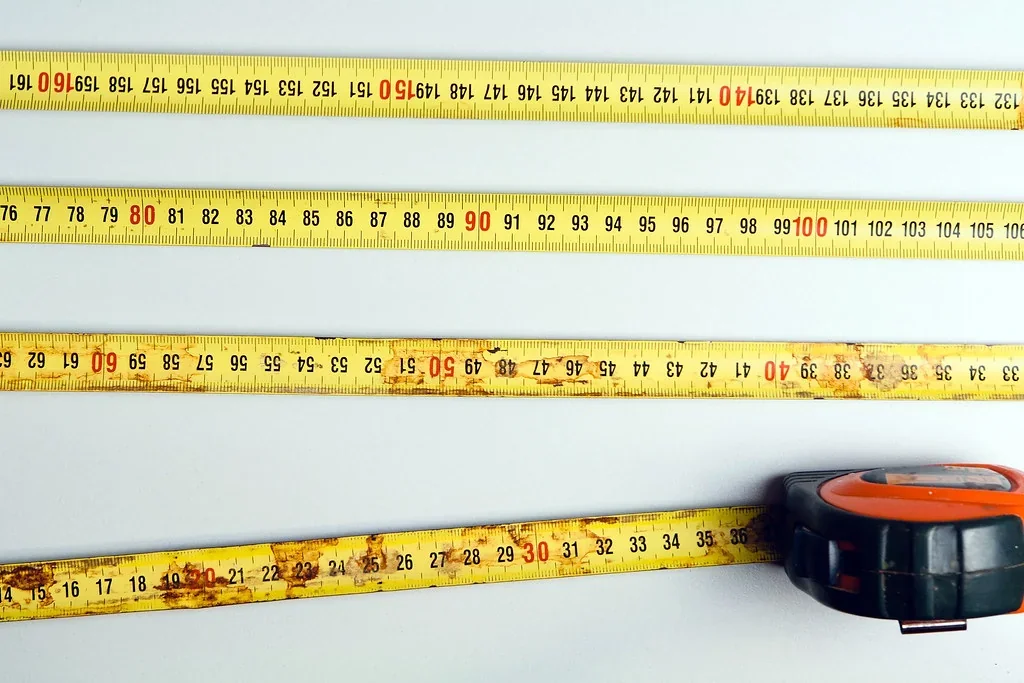
- Clear and clean a stretch of floor so the full board face and at least one joint line are visible.
- Width: measure straight across the face of one board, from edge to edge, not including the tongue hidden in the next groove.
- Thickness: measure where the board edge shows — at a doorway threshold, a radiator-pipe hole, a ventilation gap, or a lifted board. Do not guess from the floor surface alone.
- Length: measure 3–5 full boards wall to wall and note the range; in an old floor, lengths usually vary a lot.
- Write everything down in millimetres and take photos of the joint profile — tongue-and-groove adds hidden depth that is NOT part of the face width or the wear thickness you can see.
Choosing the Right Floorboard Size for Your Room
For most rooms, a 5–8 inch medium board in a random-length bundle is the sweet spot — it balances cost, stability, and a current look. From there, adjust for the room: narrow boards (2¼–4 in) suit small rooms and period properties, while wide planks (9–12 in) flatter large, open spaces. Laying boards along the longest wall also makes a room feel longer.
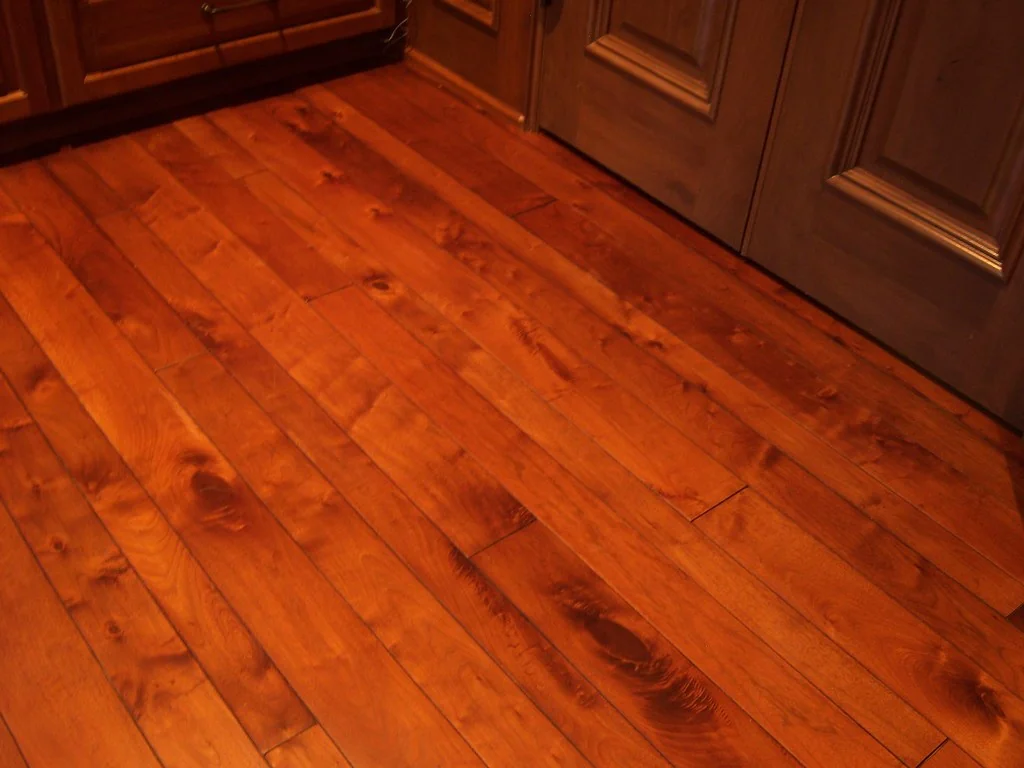
Style and practicality pull in the same direction more often than not. Period homes look right with narrower strips; modern interiors carry wide, calm planks. But remember that wide solid boards move more with humidity and are the first to show winter gaps — an engineered core solves both, and it is the standard recommendation under underfloor heating.
Finally, size your order properly: measure the room, add 7–10% for straight layouts (10–15% for diagonal patterns), and let the free flooring calculator do the maths before you buy.
Frequently Asked Questions
What size are floorboards?
Most floorboards today are 5½–8 inches (140–200 mm) wide and come in random lengths of 2–7 ft (600 mm–2.1 m). Solid boards are ¾ in (18–20 mm) thick; engineered boards run 10–21 mm. The full retail range spans 2¼–12 inches wide (57–300 mm), from narrow oak strips to wide engineered planks.
What is the most common floorboard width?
For modern plank flooring, 5½ inches (140 mm) is the most common width sold — it is the default across most engineered ranges. In older North American homes, the 2¼ inch (57 mm) strip is the traditional standard you are most likely to find under existing carpets.
Are floorboards sold in fixed lengths?
Usually no — bundles mix random lengths so the installer can stagger end joints, which spreads structural stress and looks natural. Only some premium engineered products ship in fixed or extra-long lengths, and they cost more per square metre. Budget for offcuts at the walls; they are part of the plan, not a defect.
Do wider floorboards move more?
Yes. Wood expands and contracts across its width, so a 12 inch board moves roughly three times as much as a 4 inch strip — wider gaps open in dry winters. Engineered boards counter this with a cross-grained core, which is why wide-plank products are almost always engineered, especially over underfloor heating.
What width floorboard makes a small room look bigger?
Narrow boards, around 2¼–4 inches, make a small room feel larger because the many joint lines visually stretch the floor. Laying the boards parallel to the longest wall extends the effect further. Wide planks in a small room can feel close and heavy, but light finishes soften that.
How much extra should I order for cutting waste?
A common rule is 7–10% extra for straight layouts and 10–15% for diagonal or herringbone patterns, on top of the measured area. Random-length bundles make achieving that easier because offcuts reuse well. Running short mid-install means a second batch whose grain and colour may not match the first.
📐 Free Tool: Flooring Calculator
Enter your room size — see exactly how many boxes you need, waste included.
Conclusion
Floorboard size comes down to three numbers: width (most commonly 5½–8 in / 140–200 mm), random bundled length (2–7 ft), and thickness (¾ in solid, 10–21 mm engineered). Measure your existing boards in millimetres before matching them, choose the width for your room’s size and style rather than the trend of the week, and always add a waste margin to the order.
If your floor mixes several widths, a patchwork repair has failed before, or the boards sit over underfloor heating, bring in a local fitter before you order — matching an existing floor is a specialist job, and getting the size wrong twice is expensive.

