


SPC vinyl plank flooring — stone plastic composite — is the rigid-core branch of vinyl flooring. A core of limestone powder and PVC that is dimensionally stable, waterproof, and firm enough to hide minor subfloor flaws.
This guide covers what the stone core actually changes, where it outperforms WPC and click-lock vinyl, and where its tradeoffs bite.
Key Takeaways
- SPC core is roughly 60–70% limestone powder fused with PVC — the density that keeps planks flat, dent-resistant, and stable in sunlit rooms.
- Fully waterproof: spills, pets, and bathroom-grade humidity do not swell the core, unlike laminate or engineered wood.
- Rigid core bridges minor subfloor dips better than flexible click vinyl — but it does not fix uneven concrete, only tolerates small variation.
- Thinner total build than WPC (typically 4–6 mm plus pad) — expect more hollow sound underfoot unless you add an underlayment.
- Thickness of the wear layer (12–20 mil) matters more than core thickness for lifespan — buy wear layer first.
What SPC Actually Is
The core of an SPC plank is a dense composite of calcium carbonate (limestone powder) and polyvinyl chloride, extruded into a flat board. Where traditional luxury vinyl plank is flexible — you can roll it — SPC is rigid; it snaps rather than bends. That rigidity is the point.
It resists indentation from furniture feet, it will not telegraph small subfloor bumps through the surface the way flexible LVP can. And it holds its dimension in rooms with big temperature swings or strong sunlight through windows.
The tradeoff is on the other foot. Because the core barely flexes, the floor transmits more sound — a sharper, hollow click underfoot — and it demands a cleaner, flatter subfloor over large spans.
Small dips (3–4 mm over 6 feet) are absorbed; larger ones are not, and will show up as click-points or eventual seam stress.
SPC vs WPC vs Flexible LVP
WPC (wood plastic composite) is the sibling: same click-lock vinyl format, but a foamed, airier core that is thicker, softer underfoot, and quieter. Flexible LVP is the classic thin vinyl plank: cheapest, easiest to install on imperfect floors, but the most vulnerable to dents and telegraphing.
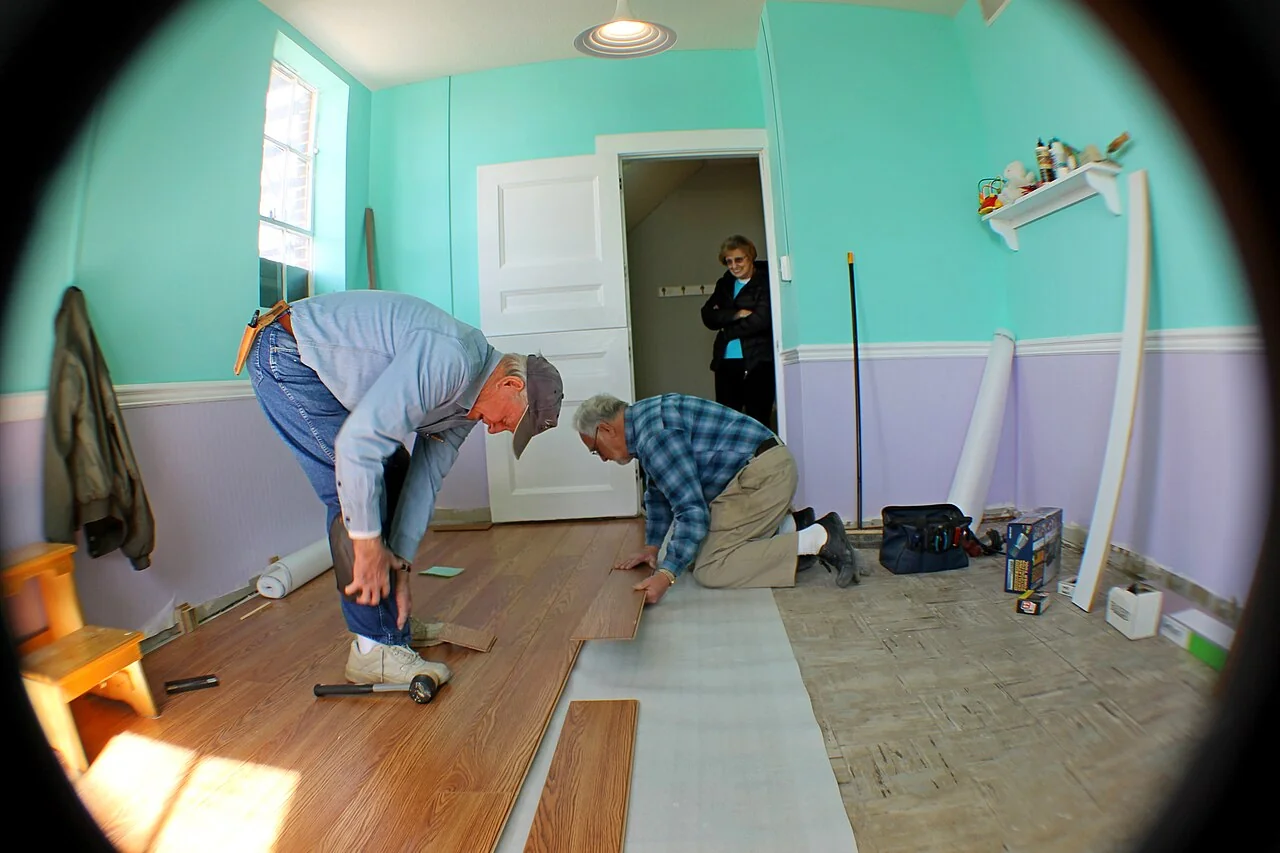
Choose SPC when the floor will take punishment — pets, chairs, kids, heavy traffic — or in sun-heavy rooms where thinner vinyls cup. Choose WPC when comfort rules: bedrooms, basements where you stand long hours, anywhere underfoot softness and quiet matter more than dent resistance.
Choose flexible LVP when budget rules and the subfloor is already flat.
Where SPC Wins
Pet claws and chair casters — the two classic vinyl killers — barely mark a 20-mil wear layer over stone core. Kitchens and bathrooms: full waterproofing means a dropped pot of water, an overflowing dishwasher, or standing bathroom humidity simply does not hurt it.
Sunrooms and storefronts: dimensional stability in heat means gaps stay closed where flexible vinyl would stretch and buckle.
Where SPC Bites
Cold, hard underfoot feel — it reads like laminate, not like luxury vinyl; in a bedroom you will want a rug. More transmitted noise than WPC; in a second-story apartment this is the difference your downstairs neighbor notices.
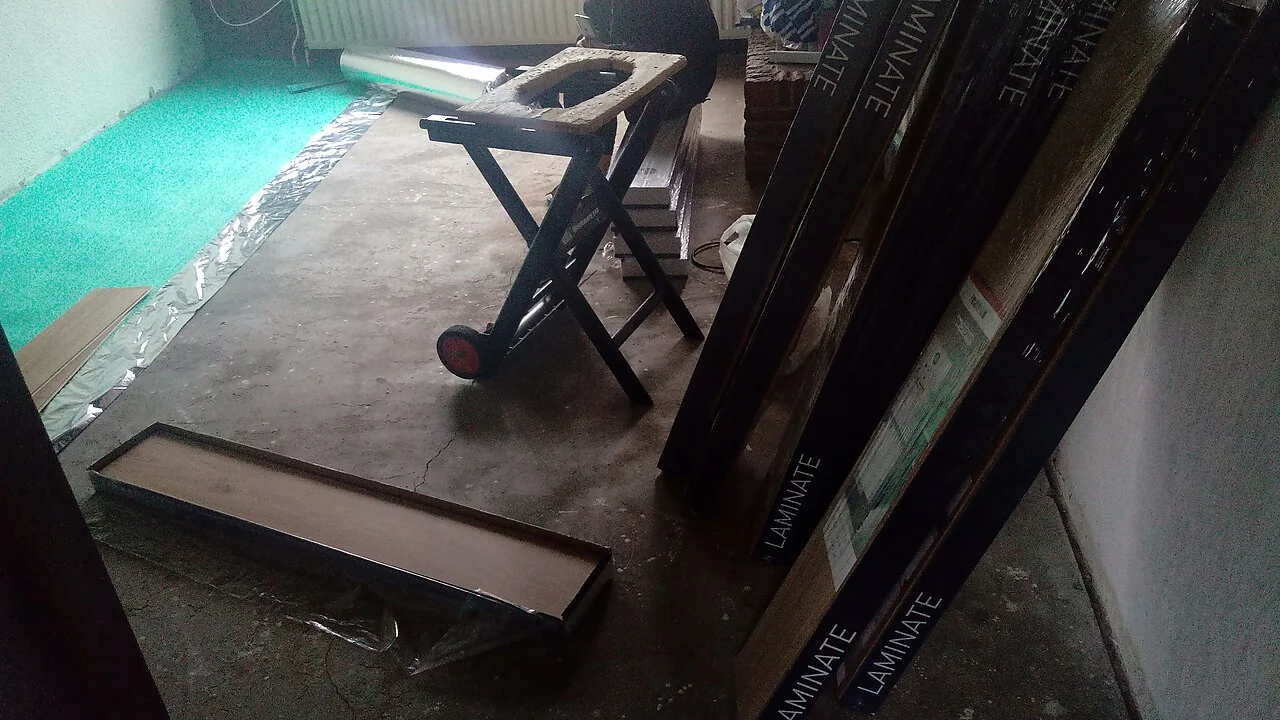
Thinner planks (4–5 mm) mean stair nosings and transitions may need shims. Rigid cores can also lip at seams over a hump. Check flatness before you order.
Lifespan and Day-to-Day Care
A residential SPC floor with a 12–20 mil wear layer realistically serves 15–25 years. The stone core does not wear out — the printed wear layer does, and only on traffic lanes.
Care is deliberately boring: dry dust or vacuum (hard-floor mode, brushroll off) for grit, then a damp mop with pH-neutral vinyl cleaner weekly. Never steam-mop — repeated 100°C+ steam attacks the seam lock and edge adhesives even though the core itself is waterproof.
The real damage pattern is mechanical, not chemical: appliance moves and furniture drags are what break seams and gouge floors. Lift refrigerators with appliance rollers during moves, fit felt pads to everything with legs, and keep chair casters to Class-B or soft-wheel types. Sun is the slow variable.
Blinds or UV film on hard western exposure keep the color even, since any vinyl can fade differentially under intense sustained light.
Radiant Heat, Stairs, and Special Cases
SPC works over embedded radiant heat, within limits. Keep the surface at or below the manufacturer cap, usually 85°F (29°C). Ramp the heat slowly at season start, a few degrees a day, so the seams never take a thermal shock.
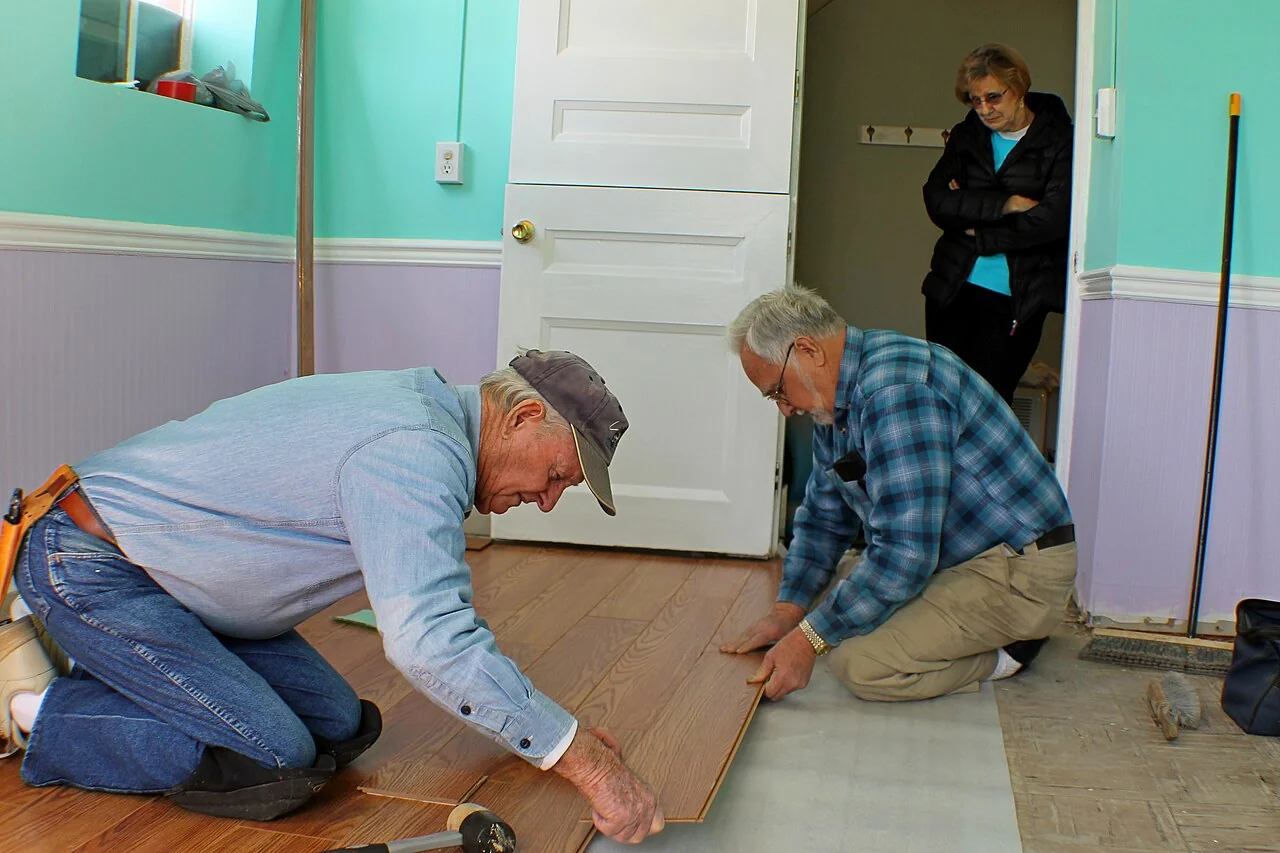
Verify the product carries an explicit radiant rating; most mid-grade and up do.
Stairs take full-spread adhesive plus a matched stair nose — SPC’s rigidity makes click-lock float unsuitable for treads. Rooms over 50 feet long or 30 feet wide need expansion gaps per the installation sheet, filled with T-molding.
And in second-story rooms, remember the acoustic point from earlier: the attached pad softens footfall. But a separate foam layer under non-padded SPC is the difference neighbors actually notice.
UV, Windows, and Sunrooms
Full-sun exposure is SPC’s quietest stress test: the core stays dimensionally stable where flexible vinyl cups. But the printed wear layer can fade differentially — darker planks show rug-lines after seasons of hard western light.
Low-E or UV window film cuts the fading spectrum dramatically, blinds on a timer do the same job manually. And sunroom-grade lines with UV-cured ceramic coatings exist for four-season glass rooms. Pair the protection with the expansion rules from the installation basics.
Sun-warmed rooms grow and shrink daily, and perimeter gaps sized for that cycle keep the floor silent.
A quick site check before ordering: note which rooms face west or south, whether windows are single-pane, and whether blinds exist. Two hard-sun rooms in the plan justify spending the extra tier on UV-cured wear surfaces.
The same logic as buying marine-grade paint for a seawall, matched to exposure rather than to fashion.
What SPC Costs in 2026
Materials run $2.50–$5.50 per square foot for mid-grade residential SPC with a 12-mil wear layer and attached pad. Premium lines with 20-mil wear layers, EIR texture, and thicker cores reach $6–$8. Installed prices with pad removal, leveling, and transitions typically land at $5–$10 per square foot.
The spec that moves price fastest is wear layer. Stepping from 8-mil to 20-mil on the same brand changes the bill roughly 30–40% — and it is the right place to spend. Because the wear layer is what actually ages.
Box math matters on ordering day: SPC ships in boxes covering 20–25 square feet, heavier than WPC boxes of the same coverage.
Order the whole project from one dye-lot; the carton states the lot number. Add 7–10% cutting overage, or 12% on diagonal layouts. Keep one full box in storage for future plank swaps.
Molding, stair noses, and reducers are sold separately and often out of stock in fast-moving colors, so buy them with the floor.
Mistakes to Avoid
- Buying total thickness instead of wear layer — a 7 mm SPC with 8-mil wear layer wears out sooner than 5 mm with 20-mil.
- Skipping the flatness check: SPC tolerates small dips but not humps; sliding a straightedge will save a seam-gap headache — our vinyl adhesive guide covers repairs.
- Assuming the attached pad covers bad acoustics — multi-story builds still want foam underlayment under SPC.
- One-room orders without spare planks: dye-lots sell out; buy 7–10% overage for cuts and future repairs.
Frequently Asked Questions
Is SPC vinyl plank flooring waterproof?
Yes — the stone-PVC core does not absorb water at all; waterproofing depends on watertight seams, which click-lock provides when installed correctly.
Which is better, SPC or WPC?
SPC for dent resistance, stability, and heavy traffic; WPC for comfort, quiet, and warmer feel. Kitchens and pets favor SPC; bedrooms favor WPC.
How thick should SPC plank be?
Count the wear layer first: 12 mil for homes, 20 mil for pets and heavy furniture. Total build of 4–6 mm plus pad is standard and fine.
Does SPC need underlayment?
If the product has an attached pad, usually no (check the manual for multi-story). Without attached pad, a basic foam underlayment quiets the hollow click noticeably.
Can SPC be installed on uneven concrete?
Only up to about 3–4 mm variation over 6 feet. Humps must be ground down and dips filled, or seams will stress and click underfoot.
Is SPC safe for bathrooms and kitchens?
Yes — it is the standard pick there. Seal the perimeter silicone at wet walls and use waterproof transitions at doorways; our underlayment guide covers the multi-story case.
Is SPC or laminate flooring better?
For water exposure, SPC — laminate cores swell permanently on wet events. For barefoot warmth and price at equal tiers, laminate edges ahead; kitchens, baths, basements, and pet homes belong to SPC.
How long does SPC vinyl plank flooring last?
15–25 years residential at 12–20 mil wear layer with normal care; commercial-grade traffic shortens the wear layer’s life toward 10–15 years.
📐 Free Tool: Flooring Calculator
Enter your room size — see exactly how many boxes you need, waste included.
Conclusion
SPC vinyl plank flooring is the rigid, dent-proof, fully waterproof branch of vinyl — the floor for pets, chairs, carts, sun. And spills, at the cost of a firmer, noisier underfoot feel that a good underlayment mostly tames.
Shop wear layer first, check the subfloor flat, and SPC will outlast most of the house around it. For picks, see our best-rated vinyl plank flooring ranking.


